Maddy summaryThis bill designates the Route 66 National Historic Trail, covering approximately 2,400 miles from Chicago, Illinois, to Santa Monica, California, along all historical alignments of U.S. Highway 66 (1926-1985). It directs the National Park Service to administer the trail while respecting its unique character, requiring tribal consultation for significant impacts on Native American tribes, and explicitly prohibiting land acquisition beyond 1/4 mile on either side of the trail. The bill clarifies it does not create buffer zones, disrupt energy infrastructure (including pipelines or renewable projects), or designate the trail as part of the National Park System, while affirming existing authority for easements and rights-of-way.
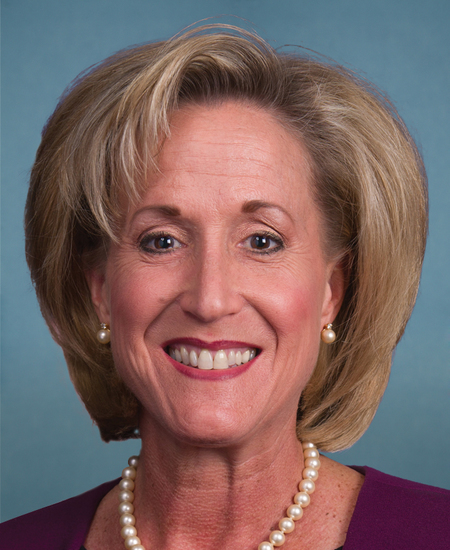
Rep. Ann Wagner
Sponsored bills
Maddy summaryThis bill requires credit reporting resellers to use reasonable procedures to ensure the accuracy of consumer information they transmit to other agencies or end users. It limits reseller liability when they accurately pass on data obtained from another consumer reporting agency without making changes. The law defines resellers according to existing Fair Credit Reporting Act definitions and focuses on maintaining data integrity during the transfer process. These changes directly affect companies that sell consumer credit reports to other businesses or individuals.
Maddy summaryThis bill prohibits the Securities and Exchange Commission (SEC) from requiring national securities exchanges, associations, or their members to report investors' personally identifiable information (PII) for consolidated audit trail purposes. It directly affects financial market participants whose personal details - like names, addresses, Social Security numbers, email addresses, or IP addresses - would otherwise be shared under SEC rules. The law specifically blocks the SEC from mandating this PII for order or reportable event reporting under existing regulations. This is a policy change to limit the types of data collected and shared in market transparency systems.
Maddy summaryH.Res. 1497 is a House resolution that commemorates the fifth anniversary of the Abbey Gate bombing, in which 13 U.S. servicemembers were killed during the withdrawal from Afghanistan. The bill lists the names of the fallen soldiers and formally condemns the Biden-Harris administration for what it describes as dereliction of duty and the forfeiture of military property to the Taliban. It asserts that the withdrawal was a disastrous failure that ignored security warnings and left Americans at risk, while also criticizing the lack of accountability from officials involved in the decision-making process.
Maddy summaryThis bill reauthorizes and expands the Radiation Exposure Compensation Act, extending the program's funding through 2043 and allowing new claims to be filed until 2042. It increases compensation amounts for downwinders and Manhattan Project waste claimants from $100,000 or $50,000 to $150,000, respectively, and introduces a provision for reimbursing documented out-of-pocket medical expenses not covered by insurance. The legislation broadens eligibility by adding new geographic areas in states such as Colorado, Montana, Washington, Illinois, and Ohio, as well as the territory of Guam, while also permitting the use of third-party affidavits to verify employment history or physical presence in affected zones. Additionally, it establishes a discretionary process for the President to designate new groups of radiation-exposed individuals for compensation and mandates several health studies regarding the long-term effects of nuclear testing on specific populations.
Maddy summaryThe Lindsey O. Graham Sanctioning Russia and Iran Act of 2026 imposes comprehensive economic restrictions on the Russian Federation, including blocking assets of government officials, state-owned financial institutions, and entities supporting the defense sector. The bill prohibits new U.S. investments in Russia, bans the purchase of Russian sovereign debt, and restricts the importation of uranium and energy products from the country. Additionally, it authorizes the imposition of tariffs up to 500 percent on goods imported directly from Russia and up to 100 percent on goods from foreign nations that continue to purchase significant volumes of Russian crude oil or natural gas. The legislation also extends the Iran Sanctions Act through 2031 and includes a five-year sunset provision for the new measures, subject to specific humanitarian and safety exceptions.
Maddy summaryHR 7008, the Stop Insider Trading Act, restricts Members of Congress, their spouses, and dependent children from purchasing certain investments like stocks in publicly traded companies. It requires 7-14 days' advance public notice before selling any such investment, including the sale date, description, and number of shares. Exceptions apply for work-related transactions (e.g., employer compensation) and reinvesting dividends. Violations trigger a fee of $2,000 or 10% of the investment’s value (whichever is greater), plus any net gain, paid from personal funds - not congressional allowances or campaign donations. The bill aims to prevent conflicts of interest by increasing transparency around congressional financial dealings.
Maddy summaryThis bill updates the official address for the Specialist Jeffrey L. White, Jr. Post Office. It amends a previous public law to change the street number for the facility from 324 to 211 in all official records.
Maddy summaryThe Main Street Capital Access Act reduces regulatory burdens for smaller banks, particularly those with less than $10 billion in assets. Key provisions include a 3-year phase-in period for new banks to meet capital requirements, lower leverage ratio requirements for rural banks (7.5% for the first 2 years), and a 30-day review process for business plan deviations. The bill also establishes an Office of Independent Examination Review, sets specific timelines for examinations (270 days) and reports (90 days), and creates a "least cost exception" for bank resolutions to prevent excessive concentration of the banking system. These changes aim to promote new bank formation, improve regulatory efficiency, and support community banking while maintaining financial stability.
Maddy summaryThis bill establishes the INCLUDE Project at the National Institutes of Health (NIH) to advance research on Down syndrome and related health conditions. It requires NIH to fund high-risk studies on trisomy 21, support inclusive clinical trials for people with Down syndrome across all ages, and investigate co-occurring conditions like Alzheimer’s disease and autoimmunity. The law mandates NIH coordination across its institutes, consultation with patient advocates, and biennial reports to Congress detailing funded research and its real-world applications. The project directly affects individuals with Down syndrome, their families, and medical researchers, aiming to improve diagnosis, treatment, and quality of life through targeted scientific efforts.