Issue · Housing

Housing (Property Development)

Every housing bill, vote, and legislator stance in North Carolina, automatically classified by Maddy, our AI policy reader.

Total bills
36
2025-2026 Session
Top supporter
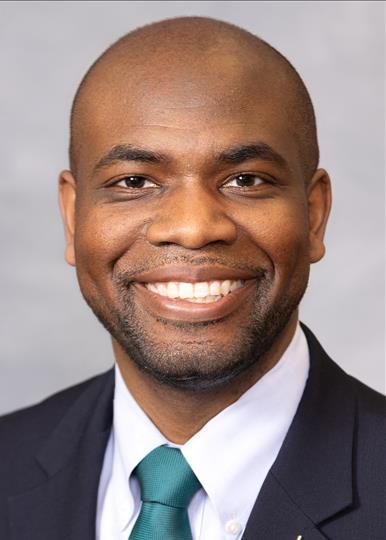
Aisha Dew
67% support rate
Top opponent
Brian Turner
0% support rate
Ranked legislators
10
5 support · 5 oppose
Key legislators

Who's moving property development in North Carolina

Legislators moving property development in North Carolina
Legislator Party Stance Support rate Votes
Aisha Dew
Aisha Dew House · District 107
D
Support
67% 3
Allen Buansi
Allen Buansi House · District 56
D
Support
67% 3
Allison Dahle
Allison Dahle House · District 11
D
Support
67% 3
Amos Quick
Amos Quick House · District 58
D
Support
67% 3
Becky Carney
Becky Carney House · District 102
D
Support
67% 3
Brian Turner
Brian Turner House · District 116
D
Strong −
0% 3
Carla Cunningham
Carla Cunningham House · District 106
I
Strong −
0% 3
Eric Ager
Eric Ager House · District 114
D
Strong −
0% 3
James Roberson
James Roberson House · District 39
D
Strong −
0% 3
Lindsey Prather
Lindsey Prather House · District 115
D
Strong −
0% 3
Showing 21–30 of 36 bills

All housing bills

signed · North Carolina · House Jun 30, 2025

HB 173: Various Local Provisions III.

HB 173 freezes Wake County municipalities' ability to expand extraterritorial jurisdiction (ETJ) beyond their 2025 boundaries until 2028, directly affecting local governments in Wake County. It removes one specific property parcel (tax ID 966773980500000) from Asheville's city limits, effective June 2025, while preserving existing tax liens. The bill also revises rules for commercial development moratoria, requiring four hearings (two in-person in affected areas) and detailed justifications for any 60-day moratorium, which cannot be renewed. These changes apply to all North Carolina municipalities adopting commercial development moratoria after the bill's effective date.
in committee · North Carolina · Senate Mar 26, 2025

SB 688: Local Government Land Use Reform.

SB 688 amends North Carolina's local government planning and development laws, directly affecting cities and counties by limiting their zoning authority. It prohibits local governments from regulating specific building design elements (like exterior colors, roof styles, or window placement) except in historic districts or for safety code compliance. The bill also bans minimum building size requirements for residential properties, overly large parking space standards (beyond ADA requirements), and unnecessary road design rules. All changes take effect January 1, 2026, making inconsistent local ordinances void.
Sub-Topics Land Use Property Development Zoning Tags Local Government
in committee · North Carolina · Senate Mar 3, 2025

SB 212: Restore Down-Zoning Auth./Granville and Wake.

SB 212 restores local government authority to initiate down-zoning in Granville and Wake Counties without requiring written consent from affected property owners. Down-zoning refers to changes that reduce development density or limit permitted land uses (e.g., from commercial to residential). The bill specifically applies to properties within these two counties and their municipalities, reversing a prior requirement that down-zoning amendments needed owner consent. It takes effect immediately upon enactment but applies retroactively to December 11, 2024, to restore pre-existing zoning ordinances affected by a previous law. This policy change directly impacts property owners in Granville and Wake Counties by altering how local governments can modify zoning regulations.
Sub-Topics Property Development Property Taxes Zoning Tags Local Government
died · North Carolina · House Feb 3, 2025

HB 25: Restore Down-Zoning Authority/Stanly and Catawba.

HB 25 restores local governments' authority to initiate down-zoning in Stanly and Catawba Counties without requiring written consent from all affected property owners. The bill amends state law to remove the current requirement that down-zoning (reducing development density or permitted land uses) needs all property owners' written consent, allowing counties or municipalities to proceed with such changes directly. This applies specifically to Stanly and Catawba Counties and their municipalities, with retroactive effect to December 11, 2024. The change affects how local governments can adjust zoning maps to limit development intensity or land uses on specific properties.
introduced · North Carolina · Senate Jan 29, 2025

SB 11: Restore Down-Zoning Auth./Multiple Counties.

SB 11 restores local governments' authority to initiate down-zoning in ten specific North Carolina counties (Bertie, Camden, Currituck, Dare, Gates, Hertford, Northampton, Pasquotank, Perquimans, and Tyrrell) without requiring written consent from all affected property owners. The bill reverses a previous law that mandated such consent for down-zoning, which reduces development density or limits permitted land uses. It applies retroactively to December 11, 2024, making existing down-zoning ordinances effective as they were before that date. This change directly affects property owners and developers in those counties by altering how local zoning changes can be implemented.
in committee · North Carolina · House Feb 26, 2025

HB 204: Restore Down-Zoning Authority/Cabarrus County.

HB 204 restores local government authority to initiate down-zoning in Cabarrus County and its municipalities by removing the requirement for all affected property owners' written consent. The bill amends state law to allow county or municipal governments to change zoning (e.g., reducing density or permitted building types) without unanimous owner approval, as long as the change is government-initiated. This directly affects property owners in Cabarrus County whose land may be subject to zoning changes that limit development potential. The law applies retroactively to December 11, 2024, meaning existing down-zoning actions taken after that date under the previous rule would be invalid.
in committee · North Carolina · Senate Feb 25, 2025

SB 137: Restore Down-Zoning/Farmland Preservation.

SB 137 requires written consent from all property owners for any zoning change that reduces development density or permitted land uses (down-zoning), except when local governments initiate down-zoning specifically for farmland preservation. It directly affects property owners in Henderson County and specific towns within the county (Fletcher, Mills River, Flat Rock, Laurel Park, and Saluda) by giving them veto power over most down-zoning proposals. The key mechanism is the consent requirement, with the exception allowing local governments to protect farmland without owner approval. This bill applies retroactively to January 31, 2025, and modifies existing zoning law to prioritize property owner consent in zoning decisions.
in committee · North Carolina · House Feb 24, 2025

HB 170: Restore Down-Zoning/Union County.

HB 170 restores local government authority to initiate down-zoning in Union County and its municipalities without requiring written consent from all affected property owners. The bill specifically targets zoning changes that reduce development density or limit permitted land uses (e.g., making areas less dense or restricting building types). It applies only to Union County and its municipalities, with retroactive effect to December 11, 2024, meaning existing down-zoning actions since that date are treated as if they followed the pre-2024-57 rules. This changes the current requirement (from S.L. 2024-57) that mandated owner consent for all down-zoning amendments.
died · North Carolina · Senate Mar 25, 2025

SB 473: Capital for Communities Act.

SB 473 creates the Capital for Communities Special Fund, a dedicated state fund that will receive 3.5% of certain investment earnings (when quarterly returns exceed 7%) from state funds managed by the Treasurer. The fund will provide grants for economic development projects in North Carolina, specifically targeting affordable housing, childcare centers, healthcare facilities addressing shortages, medical research, workforce development, living-wage jobs, and nonprofit education facilities. These grants must directly support community-based initiatives meeting the specified criteria. The bill establishes clear eligibility rules for fund usage but does not detail application processes or allocation priorities.
died · North Carolina · Senate Mar 26, 2025

SB 542: Western NC Support; Expand Comm. Eco. Dev.

SB 542 allocates $20.3 million in one-time funding and $1 million annually to support Western North Carolina recovery and economic development. It provides $10 million specifically for long-term housing recovery for residents impacted by Hurricane Helene, $5 million to Community Development Corporations (CDCs), $300,000 for women’s business centers, and $5 million for broader economic development programs. The bill also includes $1 million in recurring funds to assist with ongoing housing recovery, match federal disaster funds, and support community services statewide. This legislation directly affects Western NC residents recovering from Hurricane Helene, CDCs, and women’s business centers in Western NC, the Triad, and Piedmont regions.
Showing 21 to 30 of 36 bills
Previous 1 2 3 4 Next