Maddy summaryThis joint resolution seeks to block a specific rule issued by the Office of the Comptroller of the Currency regarding how federal banking laws interact with state interest-on-escrow laws. If passed, the measure would declare the federal rule invalid and prevent it from taking effect. The primary impact would be to allow states to maintain their own regulations on interest earned on escrow accounts without interference from this particular federal directive.
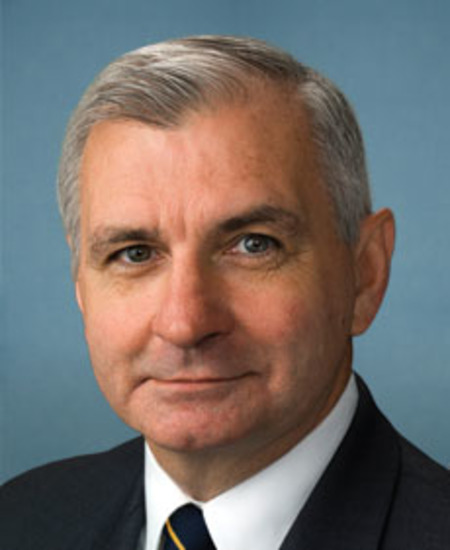
Sen. Jack Reed
Sponsored bills
Maddy summaryThis bill, known as the EMPOWER for Health Act, extends federal funding for health workforce programs through fiscal year 2030, directly supporting medical schools, residency programs, and health education centers. It increases annual appropriations for various initiatives that train and place healthcare professionals in underserved areas, including specific programs for pediatric care and area health education centers. The legislation also updates eligibility requirements and service obligations for participants, ensuring that training programs align with current medical practice standards and that graduates serve in communities with healthcare shortages.
Maddy summaryThis Senate resolution recognizes the importance of independent living and economic self-sufficiency for individuals with disabilities, emphasizing their right to live in their own homes and communities. It calls on the Department of Justice to rescind a recent opinion that the Senate views as undermining the legal requirement to provide community-based services instead of institutional care. The document also urges various federal agencies to improve funding for home and community-based services, increase accessible housing and transportation, and promote competitive employment opportunities for people with disabilities. Additionally, the resolution pledges bipartisan efforts to address barriers faced by individuals with disabilities, including those of color, and opposes cuts to the Medicaid program that could limit access to essential support services.
Maddy summaryThe Right to IVF Act of 2026 establishes federal protections to ensure individuals can access assisted reproductive technology and intrauterine insemination without state-imposed restrictions, while also mandating that health insurance plans, Medicare, Medicaid, and the Federal Employees Health Benefits program cover these services. The bill defines these procedures broadly to include treatments like egg and embryo freezing and requires coverage regardless of whether a patient has been diagnosed with infertility. It further directs the Department of Defense and the Department of Veterans Affairs to provide fertility preservation and reproductive assistance to uniformed service members and veterans, including funding for egg or sperm retrieval and storage. Additionally, the legislation grants federal courts the authority to challenge and block any state laws that limit access to these reproductive treatments or discriminate against providers and patients based on protected characteristics.
Maddy summaryThis bill expands existing rules to prevent foreign nationals from influencing U.S. elections by tightening restrictions on domestic businesses that are owned or controlled by foreign interests. It requires companies with significant foreign ownership or control to file a sworn certification confirming they are not foreign entities before making any political contributions or spending money on election activities. Additionally, the law prohibits recipients of these funds from using them for further political spending unless they receive and verify the original certification, while also clarifying that these rules apply to state and local ballot measures as well as corporate political committees.
Maddy summaryThis concurrent resolution formally recognizes the significant wage gap between Black women and white, non-Hispanic men in the United States. The document cites data showing that Black women earn roughly 65 cents for every dollar earned by white men and highlights how this disparity impacts their ability to support families and accumulate wealth. By referencing existing laws like the Equal Pay Act and the Civil Rights Act, the bill reaffirms Congress's support for equal pay for equal work without proposing new legislation or policy changes. Ultimately, the measure serves as a symbolic acknowledgment of the economic challenges faced by Black women due to dual discrimination based on race and gender.
Maddy summaryThis bill reauthorizes and modifies the American Battlefield Protection Program through 2035, extending funding deadlines and increasing grant percentages for battlefield preservation. It raises the maximum federal share for battlefield acquisition, interpretation, and restoration grants from 50% to 75% and sets a $2 million annual appropriation for these programs. The bill also mandates new studies to identify, assess, and propose preservation options for sites tied to the French and Indian War (1754-1763) and Mexican-American War (1846-1848), requiring consultation with states, tribes, and preservation groups. The studies must be completed within two years and reported to Congress, focusing on site significance, threats, and potential preservation strategies.
Maddy summaryThis resolution honors the life and legacy of the late Senator Lindsey Olin Graham from South Carolina. It formally acknowledges his extensive career in the military, state government, and Congress, noting his service as a Senator and his roles as Chairman of the Judiciary and Budget committees. The Senate expresses its sorrow over his death and requests that this tribute be shared with the House of Representatives and Graham's family.
Maddy summaryThis bill establishes a comprehensive sanctions framework targeting the Russian government and its affiliated entities in response to ongoing military actions. It authorizes the President to block assets, revoke visas, and prohibit financial transactions for Russian officials, military leaders, and foreign persons supporting Russia's defense industry or undermining Ukraine. The legislation also bans U.S. investments in Russian energy sectors, prohibits the purchase of Russian sovereign debt, and imposes high tariffs on Russian imports while restricting crude oil purchases by specific foreign nations. Additionally, the bill prevents Russian companies from listing on U.S. stock exchanges and includes mechanisms for terminating sanctions only if Russia signs a peace agreement accepted by Ukraine and ceases hostilities.
Maddy summaryThe Disaster Relief Fairness Act of 2026 would automatically approve major disaster declarations requested by state or tribal leaders between January 20, 2025, and January 20, 2029, provided the damage meets specific federal thresholds. Under this bill, the President must provide the requested assistance if the incident meets certain cost or per capita damage indicators, or if a regional Federal Emergency Management Agency official determines individual aid is warranted. Additionally, the legislation prevents the President from denying disaster aid solely because a state or tribe missed a submission deadline. This law directly affects state governors, tribal chiefs, and the federal government by streamlining the approval process for disaster relief during the specified five-year period.