

Booster Seat Safety Act This bill addresses labeling requirements and testing standards for booster seats used in motor vehicles. Specifically, the bill requires labels on booster seats to include the minimum recommended age (4 years) and weight (40 pounds) for a child to use the seat. It also requires that a label on a car seat or combination car seat list the maximum weight and height limits of the seat, as well as a recommendation to continue using the seat until the child exceeds the listed limits. Additionally, the National Highway Traffic Safety Administration (NHTSA) must either establish a minimum height recommendation for booster seats or a method for manufacturers to use to determine a minimum height recommendation. Once the minimum height or method is established, booster seat labels must also contain the minimum height recommendation. The NHTSA must also establish a standard for side-impact crash tests for booster seats and provide guidelines for creating a testing dummy that approximates a six-year old child for such crash tests. Further, the NHTSA must study systems for tethering child restraint systems in vehicles and make recommendations about using or modifying tether systems to maximize child safety.
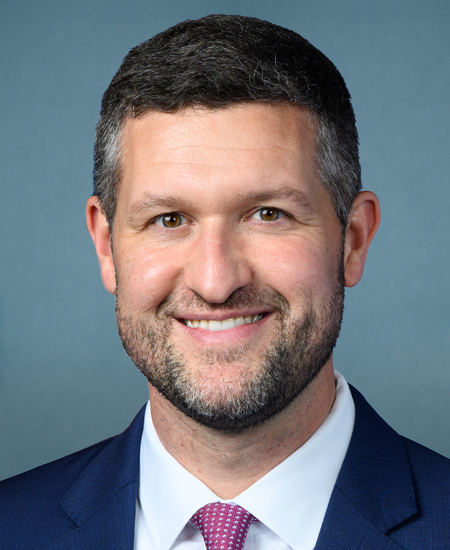
Rep. Patrick Ryan
Sponsored bills
Maddy summaryThe HEAL Act (HR 603) requires the U.S. Holocaust Memorial Museum Director to study how public elementary and secondary schools teach about the Holocaust and related antisemitism. The study will examine curriculum requirements, teaching methods (like project-based learning), instructional materials, and assessment approaches across states and school districts. It specifically analyzes whether Holocaust education is mandatory, optional, or integrated across subjects, and how schools address antisemitism and genocide prevention. The resulting report, due within 180 days of the study or three years after enactment, will inform Congress but does not change current school policies. This is a data-gathering measure, not a policy mandate.
Maddy summaryHRES 61 is a symbolic resolution introduced in the U.S. House of Representatives on January 26, 2023, to support the recognition of Dominican Heritage Month. It formally endorses observing a national month from January 21 to February 27 - marking key Dominican cultural and historical dates - to celebrate Dominican American contributions to U.S. society. The resolution encourages public observance through ceremonies and activities but does not create new policies or alter existing laws. It specifically recognizes the cultural, economic, and social impact of the approximately 2.4 million people of Dominican origin in the United States. As a non-binding resolution, it directly affects no individuals or entities but serves as a formal expression of support.
Maddy summaryHR 525, the Mentoring to Succeed Act of 2023, creates a federal grant program to fund school-based mentoring for at-risk students in high-need schools. The bill defines "at-risk" students as those facing challenges like academic failure, homelessness, foster care, trauma, or involvement with juvenile justice. Grantees must provide mentors who complete trauma-informed training and background checks, while programs must track academic progress, social-emotional growth, and workforce readiness through annual reports. The initiative aims to improve school engagement, reduce dropout rates, and prepare students for postsecondary education and careers.
Maddy summaryThis bill expands foreign investment review to cover U.S. agriculture by requiring transactions involving foreign control of agricultural businesses to undergo scrutiny by the Committee on Foreign Investment (CFIUS). It classifies agricultural supply chains as both critical infrastructure and critical technologies, directly affecting foreign entities seeking to acquire or influence U.S. farms, food production, and supply chains. The bill mandates annual reports from the Secretary of Agriculture and the Government Accountability Office on foreign investments in agriculture, including risks to food security and intellectual property. These provisions aim to mitigate potential threats to U.S. food supply chains from foreign adversaries through enhanced oversight.
Maddy summaryHR 396, the Closing the Bump Stock Loophole Act of 2023, defines "bump stock" as any device or modification that increases the firing rate of a semi-automatic weapon to mimic a machine gun. The bill amends federal tax and firearms laws to classify bump stocks as prohibited devices under the National Firearms Act, requiring existing owners to register them within one year of enactment. It directly affects individuals who currently own bump stocks by mandating registration to avoid future possession prohibitions. The law takes effect immediately for new sales but provides a one-year grace period for existing owners to comply with registration requirements.
Maddy summaryHRES 30 is a ceremonial House resolution recognizing two milestones: the 94th anniversary of Dr. Martin Luther King, Jr.'s birth (January 15, 1929) and the 40th anniversary of the federal Martin Luther King, Jr. Holiday (observed January 16, 2023). It contains no policy changes or binding requirements, as it is purely commemorative. The resolution urges the House to observe both dates and encourages the public to honor Dr. King’s legacy and his vision of equality. It does not affect any individuals, groups, or government programs.
This resolution condemns all acts of political violence, as well as attacks on health care facilities, health care personnel, and patients. The resolution also states that all people have the freedom to access reproductive health care services and medical advice without fear of violence, intimidation, or harassment. Finally, the resolution calls on the Biden Administration to use all appropriate authorities to uphold public safety, protect health care facilities, and safeguard health care personnel and patients.
This joint resolution proposes a constitutional amendment authorizing Congress and the states to (1) regulate and impose reasonable viewpoint-neutral limitations on the raising and spending of money by candidates and others to influence elections; and (2) regulate and enact public campaign financing systems, including those designed to restrict the influence of private wealth by offsetting the raising and spending of money by candidates and others with increased public funding. The amendment grants Congress and the states the power to implement and enforce this amendment by legislation. They are allowed to distinguish between natural persons and corporations or other artificial entities created by law, including by prohibiting such entities from spending money to influence elections.
Maddy summaryHR 51, the Washington, D.C. Admission Act, would admit Washington, D.C. as the 51st state, named "Washington, Douglass Commonwealth," granting its residents full representation in Congress with two Senators and one Representative. The bill establishes procedures for admission, including elections for state officials, with the state initially having one Representative until the next congressional apportionment. It would create a "Capital" area (including the White House, Capitol, and other key federal buildings) that remains under federal jurisdiction as the seat of the U.S. government, while the rest of the District becomes the new state. The bill also includes provisions to ensure continuity of federal services, property management, and legal procedures during the transition to statehood.