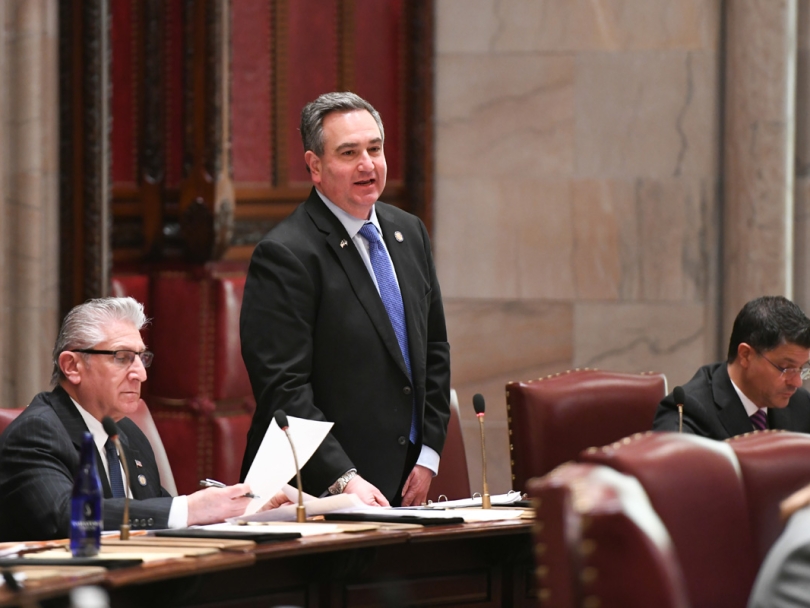
This bill requires gas and electric utility companies in New York to provide customers with 45 days' written notice before implementing any service rate or charge increase. It directly affects all residential and business customers of these utilities by giving them advance warning of upcoming cost changes. The key provision mandates that notices must be delivered in writing at least 45 days prior to the effective date of the increase. This policy change aims to provide customers with greater transparency and time to adjust their budgets or explore alternatives.
This bill changes how New York property taxes are calculated for solar and wind energy systems. It requires tax assessors to use a new discounted cash flow method that accounts for regional costs and includes specific expenses like community benefit payments, decommissioning costs, and subscriber management fees. Federal tax credits and renewable energy credits (like clean energy certificates) are no longer counted as income when valuing these systems. The law directly affects property owners with solar/wind systems, local assessors, and communities receiving benefit payments. It aims to create fairer tax assessments by reflecting actual system costs and revenue streams.
Requires the state fire administrator to make available a specialized electric vehicle emergency response training program to provide training to individuals responsible for providing emergency response and recovery following incidents involving electric vehicles; defines emergency medical services agency.
Requires contractors and subcontractors performing construction work for covered renewable energy systems to use apprenticeship agreements; requires thermal energy networks to require contractors and subcontractors to use pre-apprenticeship direct entry providers registered with the department of labor.
Establishes the mechanical insulation energy savings program to provide grants for qualified mechanical insulation expenditures to school districts, public hospitals, public housing buildings, and political subdivisions that have completed a qualified audit.
Extends the moratorium on the issuance of certificates of environmental safety for the siting of facilities and certification of routes for the transportation of liquefied natural or petroleum gas.
Creates the state office of the utility consumer advocate to represent interests of residential utility customers including a proposed change of rates, charges, terms and conditions of service, the adoption of rules, regulations, guidelines, orders, standards or final policy decisions.
Extends the moratorium on the issuance of certificates of environmental safety for the siting of facilities and certification of routes for the transportation of liquefied natural or petroleum gas.
Enacts the "home utility weatherization jobs act"; requires each gas corporation, electric corporation, or combination gas or electric corporation to submit to the public service commission for review and approval at least one and up to ten neighborhood scale weatherization and electrification-ready projects.
Ensures energy services companies are subject to the same consumer protection regulations regarding unclaimed deposits and refunds currently facing utility companies.