Issue · Criminal Justice

Criminal Justice (Domestic Violence)

Every criminal justice bill, vote, and legislator stance in New York, automatically classified by Maddy, our AI policy reader.

Total bills
99
2025 Regular Session
Top supporter
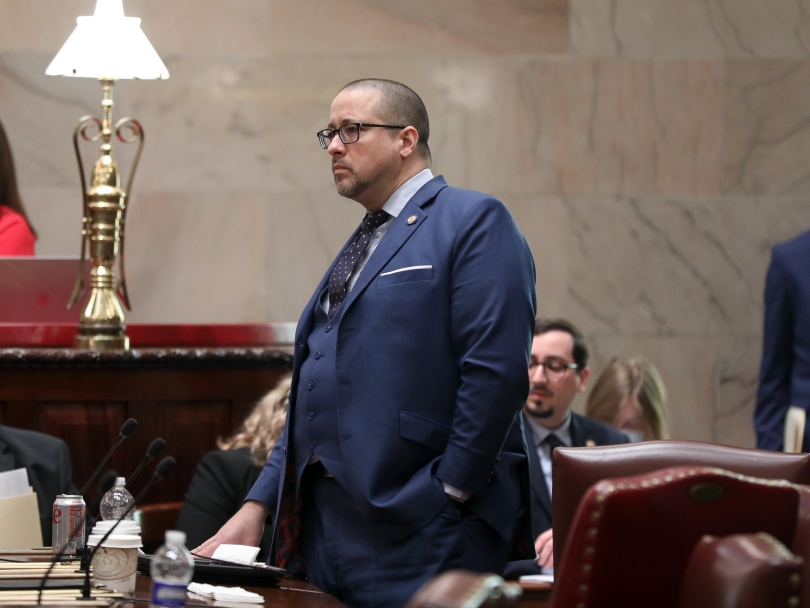
Gustavo Rivera
100% support rate
Top opponent
George Borrello
0% support rate
Ranked legislators
10
5 support · 5 oppose
Key legislators

Who's moving domestic violence in New York

Legislators moving domestic violence in New York
Legislator Party Stance Support rate Decisive votes
Gustavo Rivera
Gustavo Rivera Senate · District 33
D
Strong +
100% 10
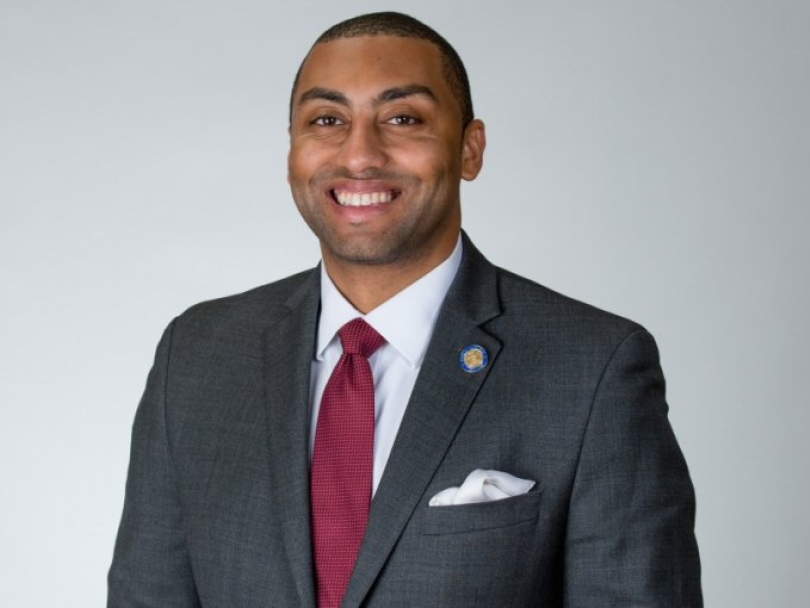
Jamaal Bailey
Jamaal Bailey Senate · District 36
D
Strong +
100% 10
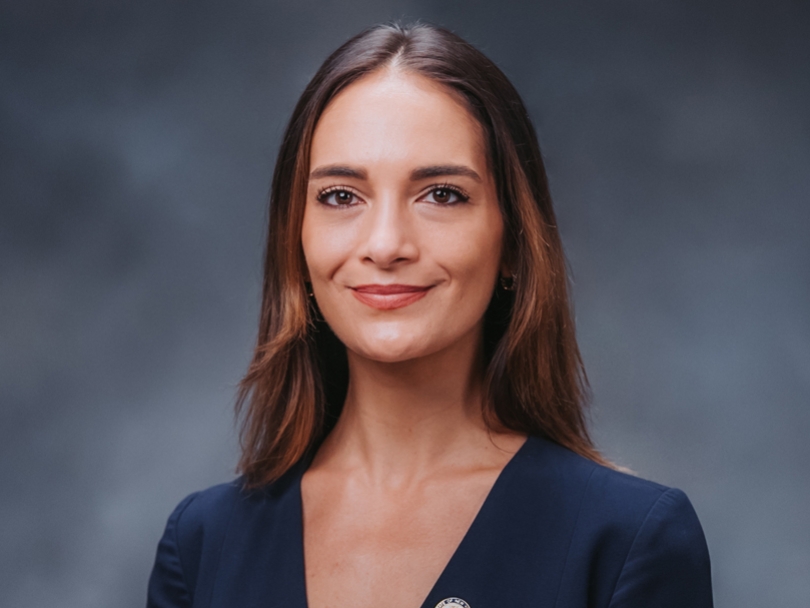
Julia Salazar
Julia Salazar Senate · District 18
D
Strong +
100% 10
Luis Sepúlveda
Luis Sepúlveda Senate · District 32
D
Strong +
100% 10
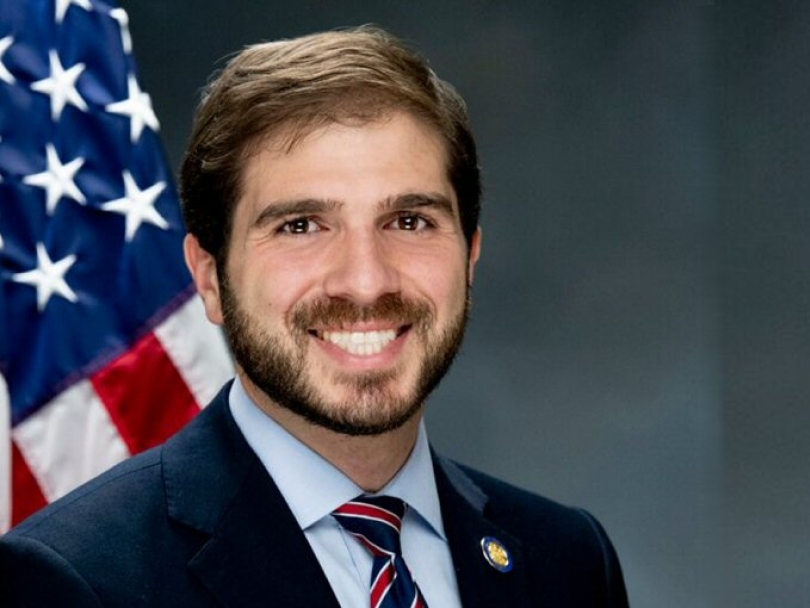
Andrew Gounardes
Andrew Gounardes Senate · District 26
D
Strong +
100% 9
George Borrello
George Borrello Senate · District 57
R
Strong −
0% 9
Joe Griffo
Joe Griffo Senate · District 53
R
Strong −
0% 9
Pam Helming
Pam Helming Senate · District 54
R
Strong −
0% 9
Patrick Gallivan
Patrick Gallivan Senate · District 60
R
Strong −
0% 9
Tom O'Mara
Tom O'Mara Senate · District 58
R
Strong −
0% 9
Showing 71–80 of 99 bills

All criminal justice bills

in committee · New York · Assembly Jan 7, 2026

A 6755: Relates to an elder court pilot program

Creates an elder court pilot program to study the effectiveness of senior-specific judicial programming especially involving elder abuse and domestic violence.
in committee · New York · Assembly Jan 7, 2026

A 3465: Relates to establishing the crime of domestic violence

This bill establishes "domestic violence" as a specific class A misdemeanor offense under New York law. It applies when someone commits certain defined misdemeanors (like assault, menacing, or harassment) against a person with whom they have a close relationship, including current/former spouses, parents/guardians, co-parents, or cohabitants. The law specifies exactly which misdemeanor offenses qualify and defines the required relationships between the defendant and victim. It creates a new legal category for these cases, making them punishable as the most serious type of misdemeanor. The bill is currently referred to the Codes committee for further review.
failed · New York · Assembly May 5, 2026

A 4499: Provides that persons arrested for domestic violence forfeit bail when violating an order of protection

This bill requires individuals arrested for domestic violence to forfeit any posted bail if they later violate an existing order of protection. It directly affects people charged with domestic violence offenses who breach protection orders issued under various state laws or valid out-of-state orders. The key provision automatically cancels bail upon violation, without requiring a separate court hearing for forfeiture. The law covers protection orders from multiple legal sources, including domestic relations law and family court act provisions. This changes the process by making bail forfeiture automatic upon violation of the order.
in committee · New York · Assembly Jan 7, 2026

A 9005: Establishing a waiver program allowing for longer stays at domestic violence shelters

Establishes a waiver program allowing a domestic violence residential program to apply to the office of children and family services for a waiver enabling a victim of domestic violence to remain at the program's shelter for a period exceeding one hundred and eighty days.
Sub-Topics Domestic Violence
passed both · New York · Senate May 29, 2026

S 2280: Requires a lethality assessment in incidents of domestic violence

Requires law enforcement officers to conduct a lethality assessment as part of the standardized domestic incident report form when responding to incidents of domestic violence.
Sub-Topics Domestic Violence
passed · New York · Senate Jun 12, 2025

R 1251: Establishes a plan setting forth an itemized list of grantees for certain appropriations for the 2025-26 state fiscal year for grants or reimbursement of certain expenses by local governments

Senate Resolution 1251 establishes a required itemized list of grantees for 2025-26 state funding allocated to local governments and community-based nonprofits providing legal services (including domestic violence survivor support and indigent client representation) and violence prevention programs across upstate New York. The resolution mandates that all funding distribution plans - detailing exact grant amounts for specific organizations - must be approved by a majority of the full Senate via roll call vote. It specifically lists recipients like Albany Law School ($87,500), Legal Aid Society of Rochester ($218,750), and others, formalizing prior resolutions (R2704, R1406, R2693) for these programs. This procedural resolution ensures transparency in how state funds are distributed for criminal/civil legal aid and community safety initiatives.
Sub-Topics Domestic Violence
in committee · New York · Assembly Jan 7, 2026

A 4753: Relates to establishing Bella's Law, which correlates animal abuse with domestic violence

Bella's Law requires New York's Office of Children and Family Services to investigate potential domestic violence when an individual is accused of or under investigation for animal abuse. Law enforcement must notify the Office of Children and Family Services about such cases, and the Office must determine if the animal abuse is linked to domestic violence or family abuse. The law applies to all animal abuse crimes listed in the bill, including offenses like animal fighting, torture, abandonment, and harming service animals. This policy change mandates coordination between law enforcement and child/family services to address the established connection between animal cruelty and domestic violence.
Sub-Topics Domestic Violence
in committee · New York · Assembly Jan 7, 2026

A 2227: Relates to the duration of orders of protection in cases involving domestic violence

This bill establishes a minimum five-year duration for orders of protection in all domestic violence cases, replacing previous shorter timeframes. It requires courts to explicitly state findings of aggravating circumstances on the record when extending orders beyond the minimum period. The legislation applies to both civil family court orders (under the Family Court Act) and criminal sentencing orders (under the Criminal Procedure Law). Key provisions prevent courts from denying extensions solely because abuse hasn't occurred during the order's term and mandate that courts articulate their reasoning for duration decisions. The bill also clarifies that temporary orders don't affect the length of final orders.
in committee · New York · Senate Jan 7, 2026

S 6456: Expands prison work release program eligibility and participation

Bill S 6456 expands eligibility for incarcerated individuals to participate in prison work release programs by extending the required proximity to parole or conditional release. Most participants will now be eligible three years, instead of two, prior to release, and those with certain violent offenses will be eligible thirty months, up from eighteen. The bill also extends this three-year eligibility to individuals convicted of homicide offenses related to domestic abuse by the victim. Furthermore, it prohibits the governor from issuing executive orders to exclude classes of otherwise eligible individuals and adds aggravated harassment of an employee by an incarcerated individual to the list of ineligible offenses.
in committee · New York · Assembly Jan 7, 2026

A 7952: Relates to domestic violence training for judges, court clerks and law enforcement officers

Requires judges or justices in a court that exercises criminal jurisdiction, including town and village justices, family court judges, and justices of the supreme court who regularly handle matrimonial matters, and court clerks of such courts to attend a program approved by the chief administrator of the courts addressing issues relating to domestic violence totaling at least ten hours every two years; requires law enforcement officers to complete ten hours of domestic violence training every two years.
Showing 71 to 80 of 99 bills
Previous 1 … 7 8 9 … 10 Next