Maddy summaryThis resolution recognizes Tren de Aragua members as "alien enemies" under the 1798 Alien Enemies Act, affirming the President's authority to apprehend and remove them from the U.S. It does not create new law but supports the executive action taken under existing legal authority. The resolution specifically references the President's March 2025 proclamation declaring Tren de Aragua's activities constitute an invasion, citing its presence in 19 states and alleged violent actions against law enforcement.
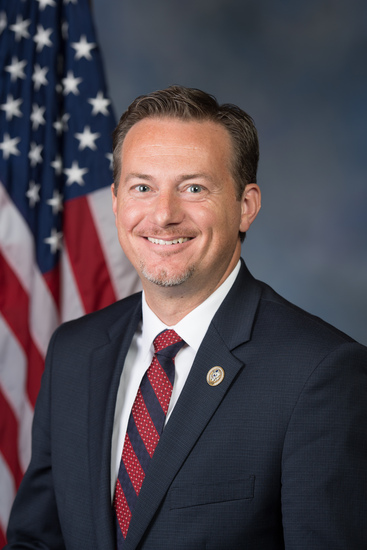
Rep. Michael Cloud
Sponsored bills
Nuclear Family Priority Act This bill imposes limits on various types of family-sponsored immigration visas. The non-U.S. national ( alien under federal law) parents of U.S. citizens shall not qualify for visas for immediate relatives, which are not subject to any direct numerical limits. Currently, the spouses, unmarried children under 21, and parents of citizens are considered immediate relatives. The bill also creates a nonimmigrant visa for such parents of citizens. Such non-U.S. nationals shall not be eligible for employment or any public benefits. The bill also reduces the baseline annual cap for family-sponsored visas from 480,000 to 88,000, and revises the methods for calculating the cap. Currently, the 480,000 cap may be adjusted depending on various factors but shall not be less than 226,000. The bill eliminates preference allocations (visa categories subject to various annual caps) for various family-sponsored visas, including those for the siblings and married children of citizens. The bill provides for a preference allocation for the unmarried children under 21 and spouses of permanent residents, subject to the 88,000 annual cap.
Maddy summaryHR 2552, the RIFLE Act, repeals the federal tax on firearm transfers (Section 5811 of the Internal Revenue Code). This directly affects firearm sellers and purchasers by removing the tax paid when transferring firearms. The bill also updates related tax code references to reflect the repeal and specifies the tax removal applies to transfers after the law's enactment. It clarifies that the repeal does not change how firearms are regulated under the National Firearms Act or involve the Consumer Product Safety Commission.
Maddy summaryHR 2566, the "End Taxpayer Subsidies for Electric Vehicles Act," would repeal the federal tax credit that currently allows consumers to reduce their income tax when purchasing new electric vehicles. This credit, known as the clean vehicle credit under Section 30D of the Internal Revenue Code, has directly affected buyers of qualifying electric vehicles by lowering their purchase costs. The bill removes this credit entirely, meaning future buyers would no longer receive this tax benefit for new electric vehicle purchases. The repeal would apply to vehicles placed in service after the bill's enactment date, with minor technical adjustments to other tax code sections referencing the repealed credit.
Maddy summaryThe Free Speech Fairness Act (HR 2501) would amend tax law to allow 501(c)(3) organizations, such as charities and educational nonprofits, to make political campaign statements as part of their regular activities without risking their tax-exempt status. The bill specifies that these statements must be made in the ordinary course of the organization's exempt purpose and result in only minimal additional costs. This change clarifies that routine political commentary by these groups does not violate their tax-exempt status under current rules. The provision would apply to tax years beginning after the bill's enactment.
Maddy summaryThe Freedom from Unfair Gun Taxes Act of 2025 would prohibit states and local governments from imposing taxes on the sale of firearms, ammunition, or firearm parts during interstate or foreign commerce. This bill directly affects state tax policies and manufacturers or dealers selling these items across state lines. It explicitly states that the bill does not change the existing federal tax on firearms and ammunition that funds wildlife conservation programs. The key provision bans state-level taxes for these sales in interstate transactions while preserving current federal funding mechanisms.
Maddy summaryHR 2443, the NPR and PBS Act, would ban all federal funding for National Public Radio (NPR) and the Public Broadcasting Service (PBS), including funds used indirectly by public broadcast stations. This bill directly affects NPR, PBS, and any future organizations replacing them, as it prohibits government money from supporting them through any channel - like station dues or programming purchases. The key provision blocks all federal funds, both direct and indirect, from flowing to these entities after the bill's enactment. This would require NPR and PBS to find new funding sources, as they currently rely on federal support. The bill does not change how public broadcasting operates but eliminates its primary government funding stream.
Fairness for High-Skilled Americans Act of 2025 This bill eliminates the Optional Practical Training Program or any successor program, unless Congress expressly authorizes such a program. (The program provides an F-1 student visa holder temporary employment authorization before or after completion of the student's studies, or both.)
Maddy summaryHR 2249, the "Preserving Presidential Management Authority Act," gives a newly elected president the authority to terminate specific provisions of existing federal employee union contracts upon taking office. It allows the president (via agency heads) to end parts of these contracts that conflict with presidential orders, executive actions, or agency rules, making such conflicting contract terms unenforceable. The bill requires agencies to notify unions in writing when such terminations or conflicts are applied. This applies only to new presidents, not sitting ones, and directly affects federal agencies and their unionized employees by altering the enforceability of their existing collective bargaining agreements.
Maddy summaryThis bill modifies Medicare's physician self-referral rules to improve access for rural communities. It creates a new exemption for "covered rural hospitals" (defined as facilities in rural areas more than 35 miles from another hospital or critical access hospital) from certain restrictions on physicians owning hospitals. The bill also removes a prohibition on expanding existing physician-owned hospitals, allowing such expansions after the law's enactment. These changes directly affect rural hospitals seeking Medicare participation and physicians who own or operate hospitals in underserved areas.