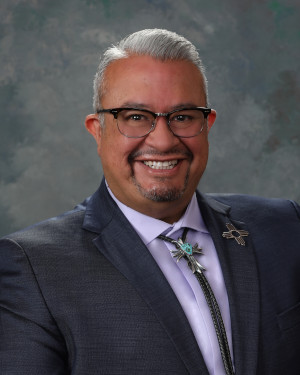
Maddy summarySB 301 creates a new "Court Emergency Property Reserve Fund" within New Mexico's state treasury, administered by the Administrative Office of the Courts. The fund, initially funded with $450,000 from the general budget, provides money for emergency repairs, replacement, or reconstruction of court-owned property when regular insurance, warranties, or capital funds don't cover the costs. Unspent balances in the fund do not return to the general budget each year. This directly affects state courts by ensuring they have dedicated resources for urgent property issues without waiting for new appropriations.
Sponsored bills
Maddy summarySB 177, the U Visa Certification Act, creates a state process for New Mexico agencies to certify victims of qualifying crimes for federal U visas. It directly affects crime victims who have assisted law enforcement with investigations, including those experiencing domestic violence, trafficking, or assault. The bill requires certifying agencies (like police departments or district attorneys) to process certification requests within 30 days (14 days for urgent cases), provide written denial reasons with appeal options, and establish internal review steps before victims can seek state department of justice review. This replaces the current federal-only certification process with a streamlined state system to help victims access immigration relief.
Maddy summaryHB 330 creates a trust fund to provide infrastructure funding for New Mexico's land grant-merced communities and acequias (traditional irrigation systems). The bill establishes two project funds: one for land grant-merced communities to support water systems, roads, health facilities, and economic development projects, and another for acequias to fund irrigation repairs, flood protection, and water efficiency improvements. Annual distributions from the trust fund will finance these projects through grants and loans, with specific eligibility rules set by a land grant council and the water commission. The bill is currently pending in the New Mexico Senate after passing the House but was postponed indefinitely on June 3, 2025.
Maddy summarySB 397 creates the New Mexico Next Generation Act to provide funding for education or home down payments to children born in New Mexico after July 1, 2025, who meet specific residency requirements (e.g., parent lived in NM continuously for five years before birth). It establishes a "Next Generation Trust Fund" to grow investments and a "Baby Bonds Fund" to pay for eligible educational expenses or housing costs when beneficiaries (aged 18-40) complete a financial literacy course. The program explicitly states benefits are not guaranteed and funds won’t count as assets for need-based aid. Administration requires new rules for eligibility, expenditures, and data sharing between state departments.
Maddy summaryHB 138, the Hospital Patient Safety Act, requires all New Mexico hospitals to establish two committees: one focused on nursing staffing (with at least 51% direct care nurses) and another for professional/technical staff. These committees must develop written staffing plans prioritizing patient safety and review them annually using specific data, including missed breaks, overtime hours, and patient outcomes. The bill directly affects hospitals licensed under New Mexico's Public Health Act, mandating concrete changes to how staffing levels are planned and monitored. Key provisions include requiring committees to meet quarterly, maintain transparent minutes, and base staffing decisions on hospital-specific data rather than fixed ratios. The legislation aims to address staffing challenges through collaborative, data-driven planning without prescribing specific nurse-to-patient ratios.
Maddy summaryHB 259 increases fines and fees for oil and gas companies violating New Mexico's regulations. It raises daily penalty limits from $2,500 to $10,000 for standard violations (up to $25,000 daily if health/safety risks exist) and sets a new maximum total penalty of $3.65 million for division/commission actions. The bill also hikes application fees (e.g., drilling permits from $500 to $1,500) and requires annual inflation adjustments starting in 2027. These changes directly affect oil and gas operators, permit applicants, and companies subject to the Oil and Gas Act.
Maddy summaryThis Senate Memorial (SM 24) formally recognizes the historical and cultural significance of El Santuario de Chimayo and the Chimayo Pilgrimage to the people of New Mexico. It acknowledges the site's origins with Tewa and Pueblo communities, its 1816 chapel construction, the pilgrimage's growth since WWII, and its current role as a major interfaith site attracting over 300,000 annual visitors. The memorial does not create new laws or policies but serves as a symbolic state acknowledgment of this longstanding cultural and religious tradition. It directs the Senate to transmit a copy to the Archdiocese of Santa Fe.
Maddy summarySB 123 clarifies law enforcement responsibilities for regional transit districts in New Mexico. It allows districts to employ their own law enforcement officers with authority over district-owned property, tracks, vehicles, and facilities, requiring officers to wear distinctive badges or uniforms for valid arrests. The bill mandates that these officers obtain state certification within one year of hire and permits districts to contract with external law enforcement agencies. This directly affects transit districts and their officers by defining their legal authority and operational requirements. The bill was postponed indefinitely on June 3, 2025, after committee approval.
Maddy summaryThis Senate Memorial (SM 4) proposes declaring February 18, 2025, as "ALS Awareness Day" in the New Mexico Senate. It symbolically recognizes amyotrophic lateral sclerosis (ALS), a fatal neurodegenerative disease, and acknowledges the impact on patients, families, and organizations like ALS New Mexico that support affected individuals. The bill does not create new policies or funding but aims to raise public awareness and honor local efforts, including the work of ALS New Mexico and the Grange family. As a non-binding resolution, it directly affects awareness efforts for New Mexicans living with ALS and their communities.
Maddy summarySB 374 creates the Land Grant-Merced and Acequia Infrastructure Act to provide funding for critical infrastructure projects in New Mexico. It establishes a trust fund that distributes annual money to two dedicated project funds: one for land grant-merced communities (designated political subdivisions under state law) and another for acequias (community irrigation systems organized as political subdivisions). The funds support specific infrastructure like water/wastewater systems, roads, health facilities, irrigation repairs, flood protection, and engineering studies. The bill directs the council (for land grants) and commission (for acequias) to approve project applications and terms, with funding coming from trust fund distributions. The bill passed committee but was postponed indefinitely on June 3, 2025.