Maddy summaryHB 162 would repeal New Mexico's current seven-day waiting period for firearm purchases, directly affecting firearm sellers and buyers in the state. The bill removes Section 30-7-7.3 NMSA 1978, which required a mandatory seven-day delay between a buyer's application and firearm transfer. This change would allow immediate firearm sales without the waiting period, altering the standard purchasing process. The bill was introduced in the 2025 legislative session but was postponed indefinitely on June 3, 2025.
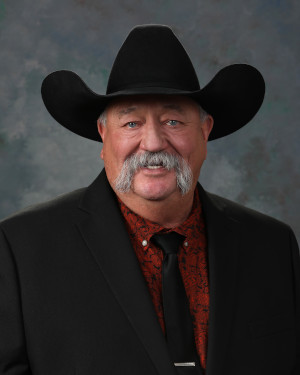
Rep. Jack Chatfield
Sponsored bills
Maddy summaryHB 277 modifies how much local funding school districts must contribute for state-funded building projects. It specifically reduces the required local share for small, high-poverty districts with limited ability to raise funds through property taxes. To qualify, districts must have residential tax rates of $8 or less per $1,000 valuation, fewer than 800 students, and over 70% of students eligible for free/reduced lunch. The bill adjusts the existing funding formula to provide greater state support to these districts, making capital projects more accessible. This change directly affects struggling school districts that cannot meet standard local contribution requirements.
Maddy summaryHB 127 would allocate $1 million from New Mexico’s general fund to the Department of Public Safety for purchasing license plate readers during fiscal year 2026. This funding directly affects the Department of Public Safety, enabling it to acquire technology that automatically reads license plates, typically used for traffic enforcement or law enforcement purposes. The bill specifies that any unspent funds at year-end would revert to the general fund. The measure was postponed indefinitely on June 3, 2025, and is currently inactive.
Maddy summaryThis bill creates a regulatory framework for storing carbon dioxide underground in geologic formations (like rock layers or aquifers) to prevent it from entering the atmosphere. It requires companies (called "operators") seeking to store CO2 to form "sequestration units" covering the necessary land and subsurface pore space, with specific processes for acquiring rights from landowners and submitting detailed applications to the Oil Conservation Division. The law applies to new storage projects after its effective date, excludes projects using CO2 for oil recovery, and establishes the division's authority to enforce rules and approve projects based on geologic evidence and landowner notifications.
Maddy summaryHB 150 appropriates $3 million from the general fund to the New Mexico Department of Agriculture through New Mexico State University's Board of Regents. The funds provide grants to state meat processors to help them adapt to new technologies, address market changes, reduce regulatory burdens, and improve efficiency in meat production. These grants are available for fiscal years 2026 through 2029, with any unspent funds reverting to the general fund by the end of 2029. The bill directly affects meat processors in New Mexico facing economic and operational challenges.
Maddy summaryThis memorial declares March 5, 2025, as "Soil and Water Conservation District Day" in the New Mexico House of Representatives to recognize the work of New Mexico's 47 soil and water conservation districts. It highlights their role in voluntary programs supporting forest thinning, wildfire recovery, water management, and habitat restoration, primarily benefiting landowners and local communities. As a ceremonial resolution, it does not create new laws or funding but formally acknowledges these districts' contributions to natural resource conservation.
Maddy summarySB 101 increases maximum fees for various livestock-related services under New Mexico's Livestock Code, directly affecting ranchers, livestock owners, and businesses like auction markets. Key provisions raise maximum charges, such as from $0.50 to $2.50 per head for livestock inspections (Section G) and from $1.00 to $1.00 per head for sheep/goat import/export fees (Section A). The bill sets new upper limits for services including brand recordings, hide inspections, and seasonal grazing permits, effective July 1, 2025. It does not change current fee structures but expands allowable charges for state-administered livestock services.
Maddy summaryNew Mexico's HB 458, the "Carbon Dioxide Storage Stewardship Act," establishes a state oversight system for long-term management of underground carbon storage sites. It creates a fund financed by a $0.10-per-metric-ton fee paid by operators of carbon storage facilities, using the money for post-closure monitoring, leak repairs, and site maintenance. The bill requires operators to prove long-term security and safety before transferring stewardship of a site to the state. This directly affects carbon storage operators and state agencies like the Oil Conservation Division, ensuring ongoing responsibility for sites after injection ends.