

Maddy summaryHB 165 clarifies that property lessees under industrial revenue bond leases must pay special assessments for eligible energy, water, or resilience improvements on commercial, industrial, or large residential properties. The bill amends New Mexico law to explicitly include lessees (not just owners) as responsible for these payments under the Improvement Special Assessment Act. Key provisions require counties to record liens securing these assessments against the property, with the payment obligation tied to the lease agreement. This directly affects lessees of properties with five or more dwelling units or industrial facilities financed through such leases. The bill does not change the types of qualifying improvements or create new financing mechanisms.
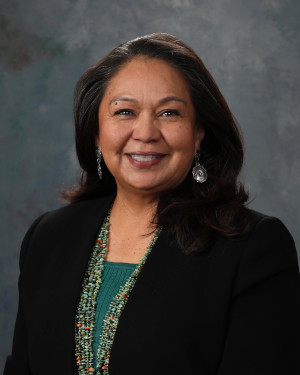
Rep. Wonda Johnson
Sponsored bills
Maddy summaryHB 43 amends New Mexico's Public Employees Retirement Act to clarify disability and survivor pension rules, including removing inconsistencies in survivor pension calculations. It creates a disability review committee within the retirement board to handle disability retirement claims. The bill also allows state fire members and other eligible public safety workers (like police officers) to earn retirement service credit during approved workers' compensation leave if their employer continues paying both employee and employer pension contributions. Technical changes are made to service credit purchase and reinstatement procedures for members.
Maddy summaryThis House Memorial (HM 15) is a symbolic resolution designating February 5, 2026, as "Gallup/McKinley County Day" in the New Mexico House of Representatives. It honors the cultural, historical, and economic significance of Gallup and McKinley County, including its Native American communities, the Intertribal Indian Ceremonial, and its status as New Mexico's "adventure capital." The resolution has no legal effect beyond recognizing these attributes and will be sent to Gallup's mayor and McKinley County commissioners. As a ceremonial resolution, it does not create new policies or obligations.
Maddy summaryHB 200 adds two new funding categories to New Mexico's school finance system for teachers certified in bilingual education and teaching English to speakers of other languages (TESOL). School districts earn one program unit per bilingual-certified teacher and half a unit per TESOL-certified teacher, calculated using the state's standard funding rate. To qualify, schools must verify teacher credentials and provide salary increases equal to the unit value. This policy directly affects school districts, charter schools, and educators with these specific teaching endorsements by linking additional funding to certified staff.
Maddy summaryHB 160 requires drivers approaching railroad crossings to "stop, look, and listen" for all rail equipment - including maintenance vehicles and switching cars - not just trains. It amends New Mexico traffic laws to mandate stopping 15-50 feet from the tracks when approaching a crossing if any rail equipment is visible, audible, or blocking the path. This applies to all drivers (Section 66-7-341) and specifically reinforces safety steps for commercial vehicles carrying passengers, hazardous materials, or school buses (Section 66-7-343). The bill expands existing rules to address non-train rail equipment, with exceptions for crossings with active traffic control or official exemptions. The law aims to reduce crossing collisions by requiring proactive observation of all rail traffic.
Maddy summaryHB 217, the Counseling Compact, would allow licensed professional counselors in New Mexico to practice across state lines without needing separate licenses in each state. It establishes mutual recognition of licenses among participating states, directly benefiting counselors seeking to work in multiple states and their clients, including military spouses relocating with active duty service members. Key provisions include requiring counselors to follow the laws of the state where the client is located during care, supporting telehealth delivery of services, and enabling states to share disciplinary and licensing information. The bill aims to improve access to counseling services while preserving each state's authority to regulate practice and protect public safety.
Maddy summaryHB 179 extends the sunset date for a tax deduction allowing small New Mexico businesses to exclude qualifying sales from gross receipts tax. The deduction applies to retail sales under $500 of specific items (like clothing, books, home goods, and toys) made on the first Saturday after Thanksgiving. It directly affects small businesses with 10 or fewer employees operating in New Mexico, enabling them to reduce taxable income for these sales. The bill amends the tax code to extend the deduction’s expiration from 2025 to 2030, maintaining the current eligibility rules and reporting requirements.
Maddy summaryHJM 2 is a procedural request asking the New Mexico Legislative Council to create a task force to study combining the state's standing committees (active during sessions) and interim committees (active between sessions) into unified year-round committees. The task force would examine how to merge these committees, including staffing, funding, implementation timelines (with a 2027 target), and reducing overlap. It would include legislative members and public experts, and must submit a report by November 2025. This request directly affects how New Mexico's legislature organizes its committee structure, not specific policy outcomes.
Maddy summaryHB 569 allocates $10 million from New Mexico's general fund to plan, design, and construct a specific section of the Navajo-Gallup Water Supply Project (Beacon-Bisti-N9, Cutter Lateral 371/Interstate 40). The funds are designated for fiscal years 2026-2028 to build a regional water line serving 12 Navajo chapters, including Coyote Canyon, Crownpoint, and White Rock. The bill directly affects these communities by providing infrastructure for a critical water supply. Unspent funds by the end of 2028 would revert to the general fund.
Maddy summaryHB 27, the Librarian Protection Act, requires New Mexico public libraries to adopt policies preventing the banning of library materials based on content, author's race, gender identity, sexual orientation, or political/religious views. Libraries must follow either the American Library Association's 2019 Library Bill of Rights or a state-approved policy explicitly prohibiting such bans to receive state funding. The law also prohibits local governments from reducing a library's funding for complying with these policies. It takes effect on July 1, 2025, aiming to protect diverse library collections and access for all patrons.