

Maddy summaryHB 504 amends New Mexico tax law to exclude gross receipts from prime contractors operating specific facilities from certain manufacturing-related tax deductions. It directly affects national laboratories designated by Congress and state-owned research facilities in New Mexico, preventing them from claiming deductions normally available to manufacturers. The bill adds a new exception to existing tax deduction rules (Sections 7-9-46 and 7-9-46.1), specifying that receipts from these facilities cannot be deducted as they would be for other manufacturers. This change aims to align tax treatment for federal and state research entities with standard manufacturing deduction rules. The bill was referred to committees but was postponed indefinitely in June 2025.
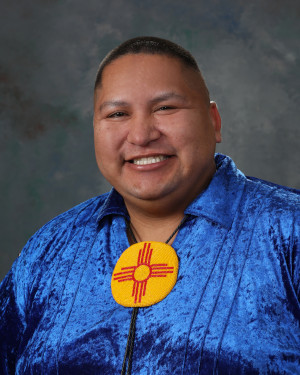
Rep. Joseph Hernandez
Sponsored bills
Maddy summaryHB 194 would have prohibited public, private, and charter schools in New Mexico from banning students from federally recognized tribes, pueblos, or nations from wearing culturally significant items like regalia, jewelry, moccasins, beaded caps, or feathers at graduation or promotion ceremonies. The bill directly affects Indigenous students by protecting their right to express cultural identity during school events. Key provisions define "objects of cultural significance" to include specific traditional items, ensuring schools cannot restrict their display. The bill was replaced by a committee substitute and later postponed indefinitely, so it did not become law.
Maddy summaryHB 128 establishes a $60 million Local Solar Access Fund within New Mexico's Finance Authority to provide grants for solar energy systems. The fund supports eligible entities like counties, municipalities, school districts, and tribal nations in planning, installing, and upgrading solar systems for public buildings and infrastructure. Grants prioritize projects in rural areas, low-income communities, and those serving community services or emergency needs, with rules requiring transparency in allocation. The fund’s money does not revert to the general fund annually, ensuring ongoing support for solar initiatives.
Maddy summaryThis House Memorial (HM 15) urges the U.S. Congress to support expanded federal compensation for people exposed to radiation through nuclear weapons testing or uranium mining. It specifically calls for backing Senate Bill 243, which aims to extend the deadline for claims and broaden eligibility under the existing Federal Radiation Exposure Compensation Act (RECA). The memorial highlights that current RECA rules exclude many affected individuals, including those working in uranium mining after 1972 or living downwind outside designated areas like Arizona and Utah. It directly concerns communities in New Mexico, the Navajo Nation, and other Western states impacted by historical nuclear activities.
Maddy summaryThis memorial requests the New Mexico Legislative Council to form an interim committee to study how to implement a 2022 voter-approved constitutional exception allowing state funds for essential utility services (like internet, electricity, water, and wastewater). The committee will examine structural questions - such as whether to create a single entity or separate entities for different services, funding criteria, and oversight mechanisms - to develop concrete proposals for the 2026 legislative session. It directly affects communities lacking access to essential utilities due to infrastructure costs, but does not create new law or funding itself. The bill is procedural, focusing solely on planning for future legislation.
Maddy summaryHouse Memorial 17 designates February 7, 2025, as "American Indian Day" in the New Mexico House of Representatives. This ceremonial memorial honors the contributions of New Mexico's 23 Native American nations, tribes, and pueblos to the state's cultural, economic, and historical heritage. It specifically recognizes milestones like Miguel Trujillo's 1948 voting rights victory and the Navajo code talkers' WWII service, while acknowledging current Native American legislators. As a symbolic resolution, it does not create new laws or policies but serves to commemorate Native American history and ongoing community contributions.