Maddy summaryHB 57 allows lab analysts and toxicologists who performed or analyzed chemical tests in traffic cases (like DUIs) to testify via interactive video instead of appearing in person. It requires that video testimony provide clear audio/video for all participants and full opportunity for cross-examination. The bill also specifies that defendants are deemed to consent to this video appearance when such witnesses are subpoenaed. This primarily affects defendants in traffic offenses involving chemical testing, streamlining testimony for experts while maintaining courtroom procedures. The bill does not change chemical testing standards or penalties.
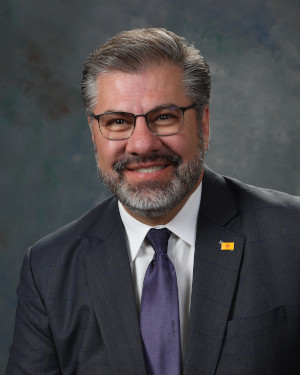
Rep. Luis Terrazas
Sponsored bills
Maddy summaryHB 59 increases the prison sentence for a second-degree felony resulting in a human death from 18 to 25 years. It directly affects individuals convicted of this specific offense under New Mexico law. The bill amends Section 31-18-15 NMSA 1978 to adjust the sentencing table, raising the baseline imprisonment term for this category while maintaining existing fines and parole provisions. This change applies only to second-degree felonies causing death, not other felony types or sexual offenses. The bill does not create new crimes or alter penalties for other offenses.
Maddy summarySB 34 requires New Mexico's Public Education Department to publish annual data on standards-based assessment results by September 1 each year. The report must include proficiency rates by subject, grade, and student demographics (such as race, ethnicity, disability status, and poverty level). This data must be posted on the department's website in an accessible, user-friendly format for parents and the public. The bill aims to increase transparency about school performance across different student groups.
Maddy summarySB 54 reduces the frequency of mandatory trainings for New Mexico school personnel from annual requirements to one-time training upon hiring. It specifically modifies anti-racism training (Section 22-10A-19.3), changing it from "each year" to "within the first year of employment," and similarly adjusts requirements for child abuse reporting, diabetes care, and bullying prevention trainings to initial employment only. The bill directly affects all school employees, volunteers, contractors, and school nurses who provide student care. Key mechanisms include removing annual renewal mandates while maintaining initial training content on topics like trauma-informed practices, diabetes emergency response, and anti-racism principles. This change reduces ongoing administrative burden for schools but maintains foundational training standards for staff.
Maddy summaryHB 217 appropriates $3 million from the state general fund to Western New Mexico University's Board of Regents for digitizing university files during fiscal year 2027. The funds must be spent by the end of 2027, with any unexpended balance reverting to the state treasury. This bill directly affects Western New Mexico University's administrative operations by providing dedicated funding for a specific digital infrastructure project. The legislation is purely procedural, focusing on financial allocation rather than policy changes.
Maddy summaryHB 216 updates New Mexico's Off-Highway Motor Vehicle Act to modernize definitions, registration fees, and safety rules for ATVs, snowmobiles, and recreational off-highway vehicles. It clarifies vehicle definitions (e.g., size, weight, seating requirements) and increases registration fees: a $17 base fee (with $5 covering processing costs) plus a variable user fee up to $40 per vehicle, all distributed to specific state funds. The bill also strengthens operational safety rules, prohibiting reckless operation, operation under the influence, or off-road use near livestock structures or agricultural areas without authorization. These changes directly affect OHV users, operators, and local agencies managing registration and enforcement.
Maddy summaryHB 218 strengthens New Mexico's Attendance for Success Act by making it a crime for parents to allow continued school absences after a student is reported to juvenile probation services for excessive absenteeism. It directly affects parents of students identified as excessively absent who fail to address the issue following school interventions. Key provisions require schools to report cases to juvenile probation, which then investigates potential neglect; if parents continue allowing absences after reporting, they face penalties including fines ($50-$100 for first offense, up to $500 or 6 months jail for repeat offenses). The bill focuses on enforcement, not new support services, shifting responsibility to parents for maintaining school attendance after formal reporting.
Maddy summaryHB 219 modifies New Mexico's Attendance for Success Act to require schools and juvenile probation services to collaborate on addressing student absenteeism. It defines "chronic absence" as missing 10% or more school days (whether excused or not), and mandates juvenile probation to review attendance records, initiate interventions, and refer cases to court for students who remain excessively absent after school-level efforts. Schools must document outreach to families, differentiate between absence types, and prohibit out-of-school suspensions for absenteeism. The bill also requires children's court attorneys to start legal proceedings under the Family In Need of Court-Ordered Services Act for chronically absent students.
Maddy summaryHB 215 allows local and county governments in New Mexico to authorize recreational off-highway vehicles (like ATVs) to operate on paved streets and highways within their boundaries, subject to specific safety requirements. The bill requires vehicles to have headlights, taillights, brakes, mirrors, and mufflers; operators must hold valid driver’s licenses, off-highway vehicle permits, and insurance; and those under 18 must wear safety helmets. Local authorities can also set separate speed limits and operating restrictions for these vehicles on public roads. The bill maintains prohibitions against operating such vehicles on freeways, state game lands, and state parks without specific permission. It does not change existing rules for off-highway vehicle use on non-paved public lands.
Maddy summaryHB 92 would expand New Mexico's tax exemption for Social Security income, directly benefiting seniors whose primary income comes from Social Security. The bill phases in higher tax exemptions over time: starting at 20% for 2026-2027, increasing to 40% (2028-2029), 60% (2030-2031), 80% (2032-2033), and reaching 100% by 2034. It sets income thresholds: $75,000 for married filing separately, $150,000 for joint filers, and $100,000 for single filers. The bill is currently pending before the House Commerce & Economic Development and Taxation & Revenue Committees.