Issue · Criminal Justice

Criminal Justice

Every criminal justice bill, vote, and legislator stance in New Mexico, automatically classified by Maddy, our AI policy reader.

Total bills
91
2026 Regular Session
Top supporter
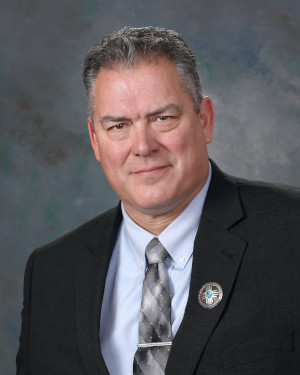
Eleanor Chávez
100% support rate
Top opponent
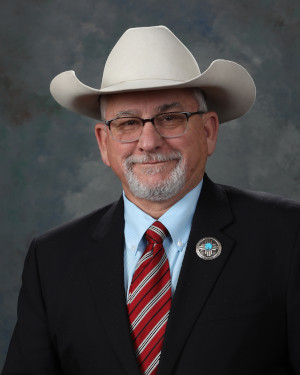
Brian Baca
0% support rate
Ranked legislators
10
5 support · 5 oppose
Key legislators

Who's moving criminal justice in New Mexico

Legislators moving criminal justice in New Mexico
Legislator Party Stance Support rate Votes
Eleanor Chávez
Eleanor Chávez House · District 26
D
Strong +
100% 16
Chris Chandler
Chris Chandler House · District 43
D
Strong +
100% 14
Linda Serrato
Linda Serrato House · District 45
D
Strong +
100% 15
Marianna Anaya
Marianna Anaya House · District 18
D
Strong +
100% 16
Pat Roybal Caballero
Pat Roybal Caballero House · District 13
D
Strong +
100% 13
Brian Baca
Brian Baca House · District 8
R
Strong −
0% 15
Randy Pettigrew
Randy Pettigrew House · District 61
R
Strong −
0% 15
Jimmy Mason
Jimmy Mason House · District 66
R
Strong −
0% 14
Angelita Mejia
Angelita Mejia House · District 58
R
Strong −
0% 16
Stefani Lord
Stefani Lord House · District 22
R
Strong −
0% 14
Showing 21–30 of 91 bills

All criminal justice bills

in committee · New Mexico · House Mar 24, 2026

HB 312: CHEMICAL CASTRATION FOR SEX OFFENDERS

HB 312 requires certain sex offenders in New Mexico to undergo chemical castration treatment as a condition of parole. It applies to individuals convicted of specific serious offenses, including aggravated criminal sexual penetration, criminal sexual contact of a minor, or sexual exploitation of children. The bill mandates that offenders receive detailed information about the treatment and its side effects before starting, begin treatment at least one month prior to release, and cover all associated costs (though parole cannot be denied solely for inability to pay). The treatment continues until the parole board determines it is no longer necessary, with electronic monitoring required throughout parole. This policy directly affects parolees convicted of the listed offenses, focusing on mandatory medical treatment as part of supervision.
Sub-Topics Probation & Parole
in committee · New Mexico · House Mar 24, 2026

HM 39: SEXUAL ASSAULT EXAMINATION KITS TASK FORCE

This House Memorial (HM 39) requests that New Mexico's Secretary of Public Safety and the New Mexico Coalition of Sexual Assault Programs convene a task force to study the state's sexual assault examination kit processing system. The task force, including representatives from law enforcement, healthcare, and victim services, must report by July 2026 on backlog progress, service adequacy for survivors, and potential solutions. It directly affects state agencies managing forensic evidence and sexual assault programs, aiming to address delays in processing kits. The memorial does not create new law but mandates a review to improve handling of these critical forensic tools.
in committee · New Mexico · House Mar 24, 2026

HB 339: JUVENILE JUSTICE CHANGES

HB 339 amends New Mexico's juvenile justice law to expand the definition of "serious youthful offender" to include children aged 15-18 charged with criminal sexual penetration in the first degree. This change requires courts to commit such juveniles to the Children, Youth and Families Department until they turn 26, rather than transferring them to adult court. The bill also mandates similar long-term commitments for certain other juvenile offenders, including those adjudicated for specific violent or sexual offenses like murder or aggravated battery. These provisions standardize custody terms for serious juvenile cases within New Mexico's juvenile justice system.
Sub-Topics Courts Juvenile Justice Tags Children
in committee · New Mexico · House Mar 24, 2026

HB 328: STATE FUNDS FOR CONCEALED ID LAW ENFORCEMENT

HB 328 prohibits New Mexico state funds from being used to support joint law enforcement operations between local agencies and federal officers who conceal their identities during enforcement. It directly affects state and local law enforcement agencies receiving public safety funding, banning such partnerships while allowing exceptions for sanctioned undercover operations, SWAT teams, and explosive disposal. Violators face triple damages, fines of $5,000-$10,000 per violation, and legal costs, with a "qui tam" provision enabling private citizens to sue on behalf of the state and share in recovered funds. The bill aims to prevent state money from subsidizing covert federal operations without requiring proof of fraud.
in committee · New Mexico · Senate Mar 24, 2026

SB 239: CONTROLLED SUBSTANCE CONTINUING SENTENCING

SB 239 modifies probation rules for individuals convicted of possessing controlled substances. If someone on probation for a drug possession offense violates probation terms, courts can now impose the original sentence without granting credit for time served on probation. This applies to all possession offenses under current law, including synthetic cannabinoids and other controlled substances listed in Schedules I-IV. The bill directly affects people with suspended or deferred sentences who breach probation conditions, ensuring they face the full penalty for the original offense.
died · New Mexico · House Mar 24, 2026

HB 282: SCHOOL & JUVENILE PROBATION COOPERATION

HB 282 requires schools and juvenile probation services to collaborate on addressing student absenteeism under New Mexico's Attendance for Success Act. It mandates probation officers to review school attendance records for students with legal issues, initiate support for chronically absent students (missing 10%+ school days), and report persistent absences to children's courts. The bill also allows courts to suspend driving privileges for excessively absent students (20%+ absences) at probation's request and makes it a crime for parents to allow continued absences after probation is notified. These provisions directly affect students, parents, schools, and juvenile probation services by creating new pathways for intervention and enforcement.
in committee · New Mexico · House Mar 24, 2026

HB 147: POSTING OF NOTICES OF HUMAN TRAFFICKING

HB 147 requires hotels, motels, and other lodging facilities with ten or more rooms to display a visible, multilingual notice about human trafficking. The notice must include definitions, prohibited conduct under New Mexico law, national and state trafficking hotline numbers, and be placed in prominent locations using English, Spanish, and other languages common to the workforce or guests. The bill also mandates annual human trafficking awareness training for all employees, covering recognition of trafficking signs, safe reporting procedures, and protections against retaliation for good-faith reports. Non-compliant facilities face civil penalties of up to $500 per violation, enforceable by the attorney general or local prosecutors, with the law taking effect on July 1, 2026.
Sub-Topics Human Trafficking
in committee · New Mexico · House Mar 24, 2026

HB 76: ALTERNATIVE PLACEMENT OF YOUTH IN CUSTODY

HB 76 appropriates $10 million from the general fund to the New Mexico Health Care Authority for fiscal years 2027-2029 to fund alternative placements for youth in state custody. The bill directs funding toward developing services like residential treatment centers, crisis response teams, specialized foster care, and outpatient programs, aiming to replace group living (congregate care) with more tailored support. It directly affects youth in state custody - particularly older youth and those with higher needs - and the service providers who will deliver these alternatives. The funding expires in 2029, with unused balances reverting to the general fund.
in committee · New Mexico · Senate Mar 24, 2026

SB 95: PROHIBIT ANTISEMITIC DISCRIMINATION

SB 95 prohibits antisemitic discrimination across New Mexico by amending the Human Rights Act. It defines "antisemitic" as hatred toward Jewish people (including verbal or physical acts against them or those perceived as Jewish, their property, or Jewish community spaces) and explicitly includes this form of bias under existing anti-discrimination protections. The bill applies to all entities covered by the Human Rights Act, including employers, public accommodations, government bodies, and their employees or contractors. It ensures individuals harmed by antisemitic discrimination can file claims through the established Human Rights Act process, without creating new enforcement mechanisms.
Sub-Topics Civil Rights
in committee · New Mexico · House Mar 24, 2026

HB 69: CHILDHOOD SEXUAL ABUSE STATUTE OF LIMITATIONS

HB 69 extends the time survivors have to file civil lawsuits for childhood sexual abuse in New Mexico. It sets the deadline as the later of the survivor's 58th birthday or three years after first disclosing the abuse to a medical/mental health provider. The bill makes this the sole time limit for such cases, overriding other statutes of limitations. It also allows lawsuits barred by July 1, 2026, to be revived and filed by June 30, 2029. This directly affects survivors seeking civil remedies for past abuse.
Showing 21 to 30 of 91 bills
Previous 1 2 3 4 10 Next