Issue · Healthcare

Healthcare (Healthcare Workforce)

Every healthcare bill, vote, and legislator stance in New Jersey, automatically classified by Maddy, our AI policy reader.

Total bills
102
2026-2027 Regular Session
Top supporter
Kenyatta Stewart
100% support rate
Top opponent
Antwan McClellan
0% support rate
Ranked legislators
9
5 support · 4 oppose
Key legislators

Who's moving healthcare workforce in New Jersey

Legislators moving healthcare workforce in New Jersey
Legislator Party Stance Support rate Decisive votes
Kenyatta Stewart
Kenyatta Stewart House · District 35
D
Strong +
100% 4
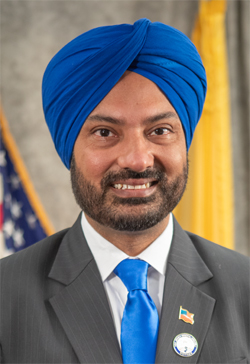
Balvir Singh
Balvir Singh House · District 7
D
Strong +
100% 3
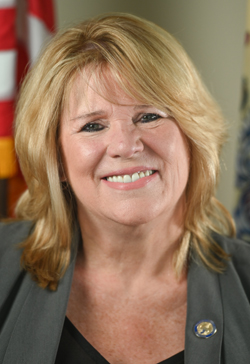
Carol Murphy
Carol Murphy House · District 7
D
Strong +
100% 3
Chris Tully
Chris Tully House · District 38
D
Strong +
100% 3
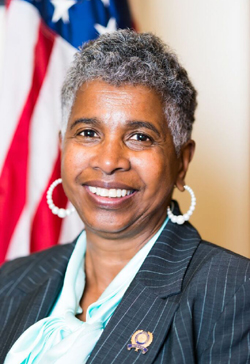
Cleopatra Tucker
Cleopatra Tucker House · District 28
D
Strong +
100% 3
Antwan McClellan
Antwan McClellan House · District 1
R
Strong −
0% 3
Bob Auth
Bob Auth House · District 39
R
Strong −
0% 3
John Azzariti
John Azzariti House · District 39
R
Strong −
0% 3
Jon Bramnick
Jon Bramnick Senate · District 21
R
Strong −
0% 3
Showing 31–40 of 102 bills

All healthcare bills

in committee · New Jersey · General Assembly Feb 19, 2026

A 4328: Requires midwives and physicians to provide pregnant women information on birthing options prior to delivery.

This bill requires certified nurse midwives and physicians in New Jersey to provide pregnant patients with written, evidence-based information about all available birthing options during the initial prenatal visit and before labor begins. The information must cover hospital births, water births, C-sections (scheduled and emergency), associated health risks for mother and infant, effects of medications like epidurals and Pitocin, and insurance coverage options. It must be provided in English and at least seven common non-English languages spoken by patients with limited English proficiency, based on census data. The New Jersey Department of Health will develop this standardized information in consultation with medical professionals and ensure it is accessible in the patient's preferred language.
in committee · New Jersey · General Assembly Jan 13, 2026

A 3029: Authorizes temporary licensure of graduated nursing students.

This bill creates a temporary license for nursing graduates in New Jersey who have completed their education but haven't yet passed their state licensure exam. It allows the Board of Nursing to issue these licenses for one year (with one possible extension for illness or hardship), enabling graduates to practice under a licensed nurse's direct supervision while they prepare for their full license. The temporary license expires if the graduate fails the exam or fails to apply for full licensure 90 days before expiration. Graduates pay fees comparable to regular nursing licenses, and the license cannot be used for independent practice.
in committee · New Jersey · General Assembly Jan 13, 2026

A 799: Prohibits advertising artificial intelligence system as licensed mental health professional.

This bill (A 799) prohibits developers or deployers of artificial intelligence systems in New Jersey from advertising or representing to the public that their AI can act as a licensed mental health professional. It directly affects AI companies and developers marketing their systems in the state. The law defines "artificial intelligence" broadly and "licensed mental health professional" to include all state-licensed mental health practitioners. Violations would be treated as consumer fraud under state law, subjecting offenders to fines up to $20,000 per offense and potential penalties like cease-and-desist orders.
in committee · New Jersey · General Assembly Jan 13, 2026

A 3116: Establishes nurse aide workforce development program.

This bill establishes a New Jersey nurse aide workforce development program to support individuals seeking certification. It requires the Department of Health to provide clear information on certification benefits, requirements, and cost-free competency evaluations for nurse aides employed by or offered jobs at long-term care facilities. The program also details employer reimbursement rules: facilities must cover training costs for new hires within 12 months, and employers cannot charge for training if an aide leaves voluntarily or involuntarily. A separate one-year pilot reimburses up to 25% of training costs for completed courses. All resources will be posted on a dedicated Department of Health website.
in committee · New Jersey · General Assembly Jun 23, 2026

A 2207: The "Certified Medication Aide in Nursing Homes Staffing Support Act;" authorizes certified medication aides to administer medications to nursing home residents.

This bill authorizes certified medication aides to administer medications to residents in New Jersey nursing homes, expanding their current scope of practice. It directly affects nursing homes struggling with staffing shortages and certified medication aides who would now be permitted to perform this role in nursing home settings (currently allowed in 38 states and other care facilities like assisted living residences). The key mechanism is amending existing law to explicitly include nursing homes under the certification framework for medication aides, addressing legislative findings that staffing challenges are severe in nursing homes post-pandemic. This change aims to alleviate staffing pressures by allowing medication aides to support resident care needs within existing certification standards.
in committee · New Jersey · General Assembly Jan 13, 2026

A 2474: Prohibits use of "Nurse" title by unlicensed person.

This bill clarifies that only licensed nurses may use the title "Nurse" or related abbreviations like "R.N." or "L.P.N." in New Jersey. It prohibits unlicensed individuals or organizations from representing themselves as nurses or using these titles, including in professional communications or credentials. The law applies to all unlicensed people seeking to misrepresent their qualifications, reinforcing existing licensing requirements under New Jersey's nursing statutes. Violations carry penalties of $200 per offense, increasing to $500 for repeat violations. (Note: This bill amends prior laws rather than creating new licensing standards.)
died · New Jersey · General Assembly Jan 13, 2026

A 2129: Clarifies procedures in certain contested child custody cases.

This bill clarifies New Jersey's child custody procedures by requiring courts to prioritize a child's expressed preferences (when age-appropriate) and consider recommendations from the child's licensed mental health professional when making custody decisions. It also imposes strict conditions before courts can order "reunification therapy" (family therapy to reconnect estranged parents and children), requiring scientific evidence of its safety and effectiveness, plus the child's willingness to participate. The bill affects courts, parents, and children in contested custody cases by mandating specific record-keeping for custody arrangements not agreed upon by parents and adding weight to the child's voice. It does not change existing custody factors but refines how courts must weigh certain considerations.
in committee · New Jersey · General Assembly May 11, 2026

A 4160: Establishes Chief Executive Nurse position in DOH.

This bill (A4160) creates a new Chief Executive Nurse position within New Jersey's Department of Health (DOH). The role requires a master's degree in nursing or higher plus significant nursing experience, and the appointee must work full-time for the DOH Commissioner. The Chief Executive Nurse will assist the Commissioner on nursing matters, collect data on nursing practices, consult with nurses and healthcare facilities about regulations affecting patient care, and evaluate nursing trends. The position takes effect immediately upon enactment.
in committee · New Jersey · General Assembly Jan 13, 2026

A 379: Requires establishment of minimum staff-to-resident ratios in veterans' memorial homes.

This bill requires New Jersey's State veterans' memorial homes to maintain minimum direct care staff-to-resident ratios based on resident needs and facility size. The Division of Veterans’ Healthcare Services must establish these ratios, review them quarterly, and ensure each home meets the set standard. "Direct care staff" includes registered nurses, licensed practical nurses, and certified nurse aides working within their scope. The bill does not override existing health department or federal staffing rules for non-direct care staff and allows homes to exceed minimum staffing levels at any time.
in committee · New Jersey · Senate Feb 24, 2026

S 3666: Extends eligibility for Primary Care Practitioner Loan Redemption Program to physical therapists.

This bill, S 3666, expands New Jersey's Primary Care Practitioner Loan Redemption Program to include physical therapists as eligible participants. Currently, the program helps healthcare professionals like doctors, dentists, and nurse practitioners reduce student loan debt by working in underserved areas, but physical therapists were previously excluded. The bill amends eligibility requirements to explicitly add "physical therapist" to the list of qualifying professionals under the program. This change allows physical therapists working in designated underserved areas to access the same loan redemption benefits - up to $120,000 in repayment - without altering existing program rules like the service location requirements or funding limits.
Showing 31 to 40 of 102 bills
Previous 1 … 3 4 5 … 11 Next