Issue · Healthcare

Healthcare (Mental Health)

Every healthcare bill, vote, and legislator stance in New Jersey, automatically classified by Maddy, our AI policy reader.

Total bills
311
2026-2027 Regular Session
Top supporter
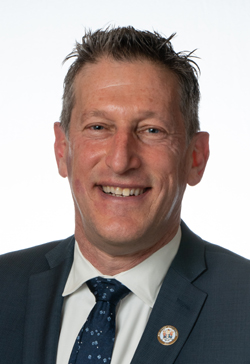
Andrew Zwicker
100% support rate
Top opponent
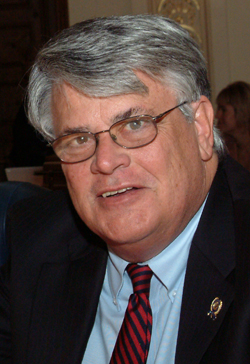
Declan O'Scanlon
0% support rate
Ranked legislators
10
5 support · 5 oppose
Key legislators

Who's moving mental health in New Jersey

Legislators moving mental health in New Jersey
Legislator Party Stance Support rate Decisive votes
Andrew Zwicker
Andrew Zwicker Senate · District 16
D
Strong +
100% 7
Gordon Johnson
Gordon Johnson Senate · District 37
D
Strong +
100% 7
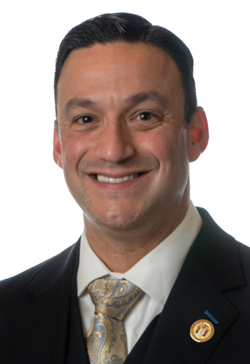
John Burzichelli
John Burzichelli Senate · District 3
D
Strong +
100% 7
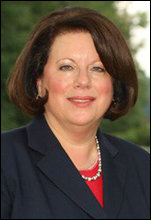
Linda Greenstein
Linda Greenstein Senate · District 14
D
Strong +
100% 7
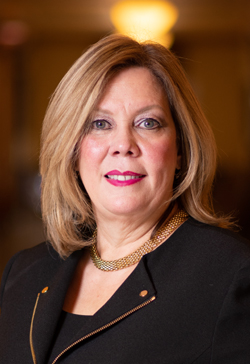
Nilsa Cruz-Perez
Nilsa Cruz-Perez Senate · District 5
D
Strong +
100% 7
Declan O'Scanlon
Declan O'Scanlon Senate · District 13
R
Strong −
0% 7
Mike Testa
Mike Testa Senate · District 1
R
Strong −
0% 7
Jim Holzapfel
Jim Holzapfel Senate · District 10
R
Strong −
0% 4
Joe Pennacchio
Joe Pennacchio Senate · District 26
R
Strong −
0% 4
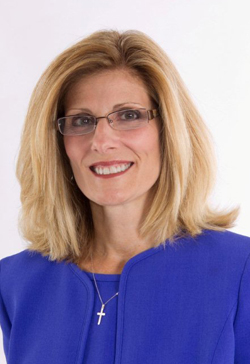
Kristin Corrado
Kristin Corrado Senate · District 40
R
Strong −
0% 4
Showing 301–310 of 311 bills

All healthcare bills

in committee · New Jersey · Senate Jan 13, 2026

S 2635: Establishes certain protections for health care professionals who receive behavioral health care and apply for State licensure.

This bill prohibits New Jersey licensing boards from asking healthcare professionals about their past behavioral health care during license applications or renewals, except when assessing current conditions that impair safe practice. It requires boards to limit questions to whether an applicant currently has a condition affecting their ability to work safely, and guarantees that seeking treatment for non-impaired conditions won’t lead to license denial or mandatory treatment requirements. All disclosures about behavioral health care remain confidential, and boards must provide training on handling such information without stigma. The law directly affects licensed health care professionals (including doctors, nurses, dentists, and therapists) applying for or renewing state licenses.
in committee · New Jersey · Senate Jan 13, 2026

S 1646: Requires State to take steps to create additional graduate medical education program slots focused on behavioral health care.

This bill requires New Jersey's Commissioner of Human Services to apply for federal Medicaid waivers to fund additional medical training slots focused on behavioral health care. If approved, it directs the Commissioner and the Secretary of Higher Education to create a process for medical education programs (both new and existing) to request and use Medicaid funds for these specific training positions. The bill directly affects graduate medical education programs seeking to expand behavioral health training capacity. It creates a concrete mechanism to leverage federal Medicaid funding for this purpose, without changing existing Medicaid rules. The bill takes effect immediately upon passage.
Sub-Topics Medicaid Mental Health
in committee · New Jersey · Senate Jan 13, 2026

S 661: Increases FY2024 appropriation from General Fund to DCF for the Center for Great Expectations by $1.5 million from $500,000 to $2.0 million.

This bill increases state funding by $1.5 million for the Center for Great Expectations in Somerset, raising its FY2024 appropriation from $500,000 to $2.0 million. The Center provides safe housing and support services to over 1,000 individuals annually, including homeless or economically marginalized people, pregnant or parenting individuals, and those with mental health or substance use challenges. The additional funds will directly support three key programs: the state's only residential program for adolescents with mental health disorders, an adult residential program for pregnant women, and outpatient mental health/substance abuse services. The bill amends the state's annual budget to adjust the funding line for this specific program.
in committee · New Jersey · Senate Jan 13, 2026

S 2410: Establishes Mental Health Awareness Pilot Program in DOE.

This bill establishes a two-year pilot program within New Jersey's Department of Education to improve mental health support for middle and high school students. It requires the Commissioner of Education to select six school districts (representing all regions and urban/suburban/rural settings) based on applications detailing student demographics, current mental health services, and staff availability. Participating districts must develop innovative approaches to increase mental health awareness and teach stress-management skills. After two years, the Commissioner must report to the Governor and Legislature on the program's implementation and whether it should continue or expand.
in committee · New Jersey · Senate Feb 19, 2026

S 1227: Establishes Law Enforcement Critical Mental Health Assistance Grant Program; appropriates $3 million.

This bill establishes the Law Enforcement Critical Mental Health Assistance Grant Program within New Jersey's Department of Human Services, appropriating $3 million to fund confidential mental health services. It directly affects law enforcement officers and their family members (defined as spouses, domestic partners, children, or parents living in the same household) experiencing mental health crises or suicidal distress. The program awards grants to licensed mental health providers who meet geographic criteria to ensure services are accessible within a one-hour travel distance. The Commissioner of Human Services will manage applications, select providers, and publish a list of approved services online, aiming to reduce stigma and improve access to care.
in committee · New Jersey · Senate Jan 13, 2026

S 165: Requires DHS to establish two-year Regional Community Behavioral Health Pilot Program.

S 165 establishes a two-year Regional Community Behavioral Health Pilot Program to improve care coordination for individuals with severe mental health or substance use disorders. The bill requires New Jersey’s Department of Human Services to partner with managed care organizations to identify eligible patients through Medicaid data and connect them with community behavioral health providers. Key mechanisms include standardized needs assessments, "rapid referrals" to appropriate care within 48 hours, "warm hand-offs" between providers, and "supportive contacts" (like texts or calls) to help patients stay engaged in treatment. The program aims to create region-specific coordinated care systems across northern, central, and southern New Jersey, with participating providers using these tools to reduce gaps in behavioral health services.
Sub-Topics Medicaid Mental Health
in committee · New Jersey · Senate Jan 13, 2026

S 3165: Requires NJ FamilyCare to reimburse inpatient providers for long-acting injectable antipsychotic drugs at outpatient reimbursement rate.

This bill requires New Jersey's Medicaid program (NJ FamilyCare) to pay inpatient hospitals the same reimbursement rate for long-acting injectable antipsychotic drugs as is paid for the same drugs in outpatient settings. It mandates that this reimbursement be separate from standard hospital payment systems (like DRGs) and based on the actual drug cost, not a fixed hospital payment. The policy directly affects inpatient providers (such as hospitals) treating patients with serious mental illnesses like schizophrenia or bipolar disorder. The change aims to better align reimbursement with the true cost of these drugs, which can improve patient access and outcomes by reducing hospital readmissions.
in committee · New Jersey · Senate Jan 13, 2026

S 586: Establishes tuition reimbursement program for certain advanced practice nurses who provide mental health care services in underserved areas in New Jersey.

This bill establishes a tuition reimbursement program for New Jersey residents who are certified advanced practice nurses specializing in mental health care. It directly affects eligible nurses who agree to work full-time in designated State underserved areas (identified by the Commissioner of Health based on health access and economic needs) for 1-4 years in return for reimbursement. Participants receive 25% of their lowest-year tuition cost per year of service, capped at 100% total reimbursement over four years, provided they meet residency, certification, and mental health training requirements. The program aims to address mental health care shortages in underserved communities by reducing financial barriers for nurses entering these roles.
Sub-Topics Mental Health
in committee · New Jersey · Senate Jan 13, 2026

S 2915: Lowers age at which minors can consent to behavioral health care treatment from age 16 to age 14.

This bill lowers the age at which minors can independently consent to outpatient mental health treatment from 16 to 14 years old. It directly affects minors aged 14 and older seeking temporary outpatient care for mental illness or emotional disorders, excluding medication. The law allows these minors to consent to treatment under licensed professionals (like psychologists or counselors) without parental permission, with confidentiality protections preventing disclosure of treatment without consent. This change applies only to outpatient services, not inpatient care or medication administration.
in committee · New Jersey · Senate Jan 13, 2026

SR 50: Urges Congress to pass federal "Black Maternal Health Momnibus Act."

This New Jersey Senate resolution (SR 50) urges Congress to pass the federal "Black Maternal Health Momnibus Act," a legislative package of 13 bills. The resolution highlights that Black women in the U.S. are three times more likely to die from pregnancy-related causes than white women, with maternal mortality rates remaining highest among Black mothers. The Momnibus Act would allocate over $1 billion to address racial disparities by funding support for basic needs (like housing and transportation), expanding mental health and substance use services, improving data collection, and increasing access to care through telehealth. The resolution does not create new law but calls for federal action to reduce preventable maternal deaths.
Showing 301 to 310 of 311 bills