Issue · Healthcare

Healthcare (Mental Health)

Every healthcare bill, vote, and legislator stance in New Jersey, automatically classified by Maddy, our AI policy reader.

Total bills
313
2026-2027 Regular Session
Top supporter
Andrew Zwicker
100% support rate
Top opponent
Declan O'Scanlon
0% support rate
Ranked legislators
10
5 support · 5 oppose
Key legislators

Who's moving mental health in New Jersey

Legislators moving mental health in New Jersey
Legislator Party Stance Support rate Decisive votes
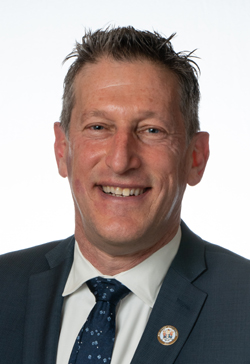
Andrew Zwicker
Andrew Zwicker Senate · District 16
D
Strong +
100% 7
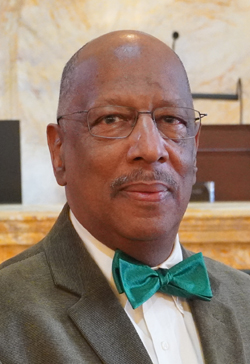
Gordon Johnson
Gordon Johnson Senate · District 37
D
Strong +
100% 7
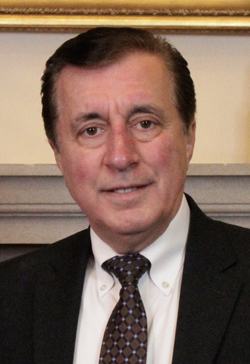
John Burzichelli
John Burzichelli Senate · District 3
D
Strong +
100% 7
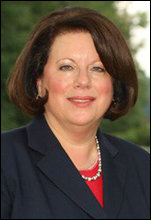
Linda Greenstein
Linda Greenstein Senate · District 14
D
Strong +
100% 7
Nilsa Cruz-Perez
Nilsa Cruz-Perez Senate · District 5
D
Strong +
100% 7
Declan O'Scanlon
Declan O'Scanlon Senate · District 13
R
Strong −
0% 7
Mike Testa
Mike Testa Senate · District 1
R
Strong −
0% 7
Jim Holzapfel
Jim Holzapfel Senate · District 10
R
Strong −
0% 4
Joe Pennacchio
Joe Pennacchio Senate · District 26
R
Strong −
0% 4
Kristin Corrado
Kristin Corrado Senate · District 40
R
Strong −
0% 4
Showing 201–210 of 313 bills

All healthcare bills

in committee · New Jersey · General Assembly Jan 13, 2026

A 196: Requires children's psychiatric facilities to have designated staff members visually supervise patients 24 hours a day, seven days a week.

This bill (A 196) requires children’s psychiatric facilities in New Jersey to provide continuous visual supervision of all patients 24 hours a day, seven days a week, through designated trained staff. Facilities must use live video monitoring (with wireless streaming capability) when staff actively watch children via monitors, except during bathroom or shower use. It directly affects acute child psychiatric care facilities - defined as hospitals contracted for crisis services or private health care facilities - and expands staff accountability by including facility directors in supervision responsibilities. The bill amends existing law to clarify who is responsible for patient supervision and prohibits unsupervised time for children, except in limited bathroom/shower scenarios.
Sub-Topics Mental Health
in committee · New Jersey · General Assembly Jan 13, 2026

A 464: "HOPE Initiative Act"; requires establishment of public awareness campaign to educate citizens about dangers and causes of, and appropriate responses to, heroin and opioid addiction.

The "HOPE Initiative Act" (A464) requires New Jersey to establish a statewide public awareness campaign to combat the heroin and opioid epidemic. It mandates the Division of Mental Health and Addiction Services to develop a multicultural campaign ("HOPE Initiative") using all media channels to educate diverse audiences - including at-risk individuals, families, medical professionals, first responders, and employers - on addiction pathways, warning signs, treatment options, naloxone use, and prevention strategies. Key provisions include debunking myths about addiction, highlighting treatment benefits, promoting naloxone access, and addressing prescription opioid misuse. The campaign must use culturally appropriate messaging in multiple languages and leverage public-private partnerships for wider reach. This is a procedural bill focused on education, not regulatory changes.
in committee · New Jersey · General Assembly Jan 13, 2026

A 2062: Prohibits disclosure of personal information pertaining to certain health care workers who are victims of assault; establishes civil penalty for each violation.

This bill prohibits disclosing the name and address of health care workers who are assaulted by patients or residents at health care facilities. It directly affects licensed health care workers, direct care staff at psychiatric hospitals, developmental centers, or veterans' homes, when the assault occurs during their duties. The law requires that these details be redacted from court documents, complaints, or reports, and makes unauthorized public disclosure a civil violation punishable by a $100 penalty per document. It aims to protect workers from further retaliation while maintaining public access to other case details.
Sub-Topics Mental Health
in committee · New Jersey · General Assembly Jan 13, 2026

A 3826: Establishes initiatives related to behavioral health care, including increasing reimbursement rates, providing cost-of-living adjustments, establishing grant programs for facility upkeep and provider training, and relaxing clinical supervision requirements.

This bill (A 3826) proposes key changes to New Jersey's behavioral health care system. It requires Medicaid to pay residential behavioral health providers at rates matching Medicare (100% of Medicare rates starting July 2024), mandates annual cost-of-living adjustments based on the Consumer Price Index, and creates two new grant programs: one for facility maintenance and another to fund training and internships for behavioral health professionals. These provisions directly affect residential behavioral health providers, Medicaid beneficiaries, and the behavioral health workforce by increasing provider payments and supporting facility upkeep and staff development. The bill aims to improve access to and quality of care within the state's Medicaid program.
in committee · New Jersey · Senate Feb 19, 2026

SCR 100: Urges U.S. Secretary for Housing and Urban Development to prioritize transitional housing for homeless individuals and families, including survivors of domestic violence.

This non-binding resolution urges the U.S. Department of Housing and Urban Development (HUD) Secretary to prioritize transitional housing programs. It specifically targets homeless individuals and families, with special emphasis on survivors of domestic violence who face barriers to permanent housing. Transitional housing provides up to 24 months of safe shelter alongside support services like financial counseling, job training, and mental health resources. The resolution highlights that current emergency shelters often limit stays to 90 days and that over half of domestic violence victims needing housing assistance do not receive it.
in committee · New Jersey · General Assembly Jan 13, 2026

A 2289: Establishes certain protections for health care professionals who receive behavioral health care and apply for State licensure.

This bill prohibits New Jersey licensing boards from asking healthcare professionals (like doctors, nurses, and therapists) about their past mental health treatment during license applications or renewals. It allows boards to ask only about current conditions that impair safe practice, with strict confidentiality and guarantees that treated conditions won't lead to license denial. The law requires boards to limit questions to safety-related impairments and ensures responses about past care remain confidential if no impairment exists. This directly affects all healthcare workers seeking or renewing state licenses in New Jersey, aiming to reduce stigma and encourage seeking mental health support.
in committee · New Jersey · General Assembly Jan 13, 2026

A 1475: Requires DHS to set reimbursement rates for owners or operators of group homes providing individual support services to certain persons with developmental disabilities.

This bill requires New Jersey's Department of Human Services (DHS) to reimburse group home operators at full rate for services provided to residents with developmental disabilities during a 60-day medical, psychiatric, or rehabilitative transfer to another facility. If the resident isn't returned within 60 days, DHS must pay 50% of the reimbursement rate for an additional 120 days. After six months without return, group home operators may begin discharge procedures per existing regulations. The bill directly affects group home providers and residents with developmental disabilities receiving in-home support services.
Sub-Topics Mental Health
in committee · New Jersey · General Assembly Jan 13, 2026

A 1421: Establishes Alternative Responses to Reduce Instances of Violence and Escalation (ARRIVE) Together Program.

This bill establishes the ARRIVE Together Program to provide mental health crisis response alternatives to law enforcement. It requires law enforcement agencies (including state police, county police, and municipal departments) to partner with licensed mental health providers who can respond to calls involving mental health or substance use crises instead of police-only interventions. The program mandates confidentiality for all personal health information collected during responses and protects mental health providers from civil liability for good-faith actions taken during crisis interventions. The law applies directly to law enforcement agencies, mental health service providers, and individuals experiencing mental health or substance use crises during emergency calls.
died · New Jersey · General Assembly Jan 13, 2026

A 1512: Allows follow up calls from operators of NJ Suicide Hopeline to minors at risk of committing suicide.

This bill (A 1512) allows trained operators of New Jersey’s Suicide Hopeline to make follow-up calls to minors aged 16 or older who contact the hotline and are identified as high-risk for suicide, without requiring parental consent. It directly affects minors in crisis by enabling immediate, confidential support from the Hopeline after an initial call. The key mechanism amends existing law to explicitly permit these brief, supportive follow-up calls - specifically for suicide prevention - while clarifying they do not constitute formal mental health treatment. The bill was withdrawn after being approved as part of P.L.2025, c.238, meaning the policy change is now in effect.
Sub-Topics Mental Health
died · New Jersey · General Assembly Jan 13, 2026

A 946: "Right to Mental Health for Individuals who are Deaf or Hard of Hearing Act"; establishes certain requirements concerning provision of mental health services to individuals who are deaf or hard of hearing.

This New Jersey bill (A 946), now law as P.L.2025, c.177, requires mental health services to be provided in the communication method preferred by each deaf or hard of hearing individual - such as sign language or oral communication - based on their assessment. It mandates that mental health professionals be fluent in that method, trained in cultural needs, and able to collaborate with interpreters. The law also requires a state resource guide listing specialized mental health services and ensures individuals can help shape their own care plans. It directly affects all deaf or hard of hearing residents seeking mental health support in New Jersey, addressing long-standing barriers in access and care quality.
Sub-Topics Mental Health
Showing 201 to 210 of 313 bills
Previous 1 … 20 21 22 … 32 Next