Issue · Healthcare

Healthcare (Medicaid)

Every healthcare bill, vote, and legislator stance in New Jersey, automatically classified by Maddy, our AI policy reader.

Total bills
226
2026-2027 Regular Session
Top supporter
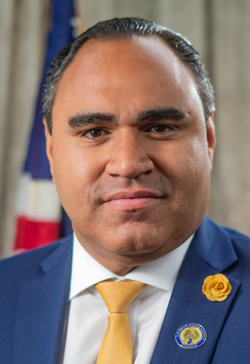
Brian Rumpf
67% support rate
Top opponent
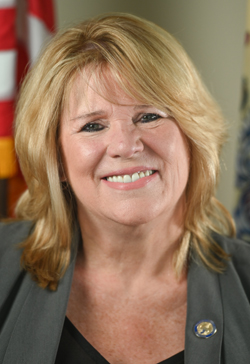
Carol Murphy
33% support rate
Ranked legislators
4
1 support · 3 oppose
Key legislators

Who's moving medicaid in New Jersey

Legislators moving medicaid in New Jersey
Legislator Party Stance Support rate Decisive votes
Brian Rumpf
Brian Rumpf House · District 9
R
Support
67% 3
Carol Murphy
Carol Murphy House · District 7
D
Oppose
33% 3
Gabe Rodriguez
Gabe Rodriguez House · District 33
D
Oppose
33% 3
Renee Burgess
Renee Burgess Senate · District 28
D
Oppose
33% 3
Showing 161–170 of 226 bills

All healthcare bills

in committee · New Jersey · General Assembly Jan 13, 2026

A 2266: Requires Medicaid reimbursement of mental health rehabilitation services provided via clubhouse program.

This bill, A 2266, requires New Jersey Medicaid to reimburse providers for mental health rehabilitation services delivered through clubhouse programs. Clubhouse programs are community-based peer-support services that help individuals with mental health conditions rebuild their lives through structured activities, employment support, and social connection. The bill amends existing Medicaid law to explicitly include these services under covered rehabilitative care, ensuring they qualify for state reimbursement. This change directly affects Medicaid beneficiaries using clubhouse programs and their providers by making these services financially accessible without out-of-pocket costs.
Sub-Topics Medicaid Mental Health
in committee · New Jersey · General Assembly Jan 13, 2026

A 3592: Requires NJ FamilyCare payment for multiple medical encounters per day for enrollee at federally qualified health center.

This bill (A 3592) would allow NJ FamilyCare to reimburse for multiple specialty medical visits at a Federally Qualified Health Center (FQHC) on the same day for enrollees, under specific conditions. It requires the referring provider to document medical necessity for each visit and mandates that each visit be with a different specialty provider. The change would directly affect NJ FamilyCare enrollees needing multiple same-day specialty appointments and the FQHCs serving them. The bill explicitly states it cannot override federal Medicaid rules, and currently, NJ FamilyCare typically limits coverage to one FQHC visit per day unless special circumstances apply.
Sub-Topics Medicaid Primary Care
in committee · New Jersey · General Assembly Jan 13, 2026

A 3569: Establishes pilot program for 24-hour urgent care for behavioral health.

This bill would create a two-year pilot program in New Jersey to integrate 24-hour behavioral health services into hospital urgent care facilities. It requires managed care organizations to contract with six hospitals (two per region) to provide integrated care, including staffing with behavioral health clinicians, telehealth partnerships, and smooth care transitions like "warm hand-offs" for patients experiencing mental health crises. The program would be funded through Medicaid using a payment system tied to outcomes, aiming to reduce unnecessary emergency department visits and inpatient admissions for behavioral health issues. The pilot directly affects hospitals participating in the program, Medicaid beneficiaries seeking urgent behavioral health care, and the providers delivering these integrated services.
in committee · New Jersey · General Assembly Feb 19, 2026

A 4265: Requires Medicaid reimbursement rates for certain primary and mental health care services match reimbursement rates under Medicare.

This bill (A4265) requires New Jersey's Medicaid program to set reimbursement rates for certain primary care and mental health services at no less than 100% of the corresponding Medicare rates, effective July 1, 2023, and annually thereafter. It directly affects Medicaid providers - including family physicians, nurse practitioners, midwives, and mental health specialists like clinical social workers and psychiatrists - who serve Medicaid patients. The law mandates that Medicaid rates for these services cannot be lower than Medicare rates, but does not require rate decreases from prior years. It also requires the state to submit a report within one year on implementation impacts, including changes in access and quality of care for Medicaid beneficiaries.
in committee · New Jersey · General Assembly Jun 23, 2026

A 1821: Prohibits health insurance carriers from denying coverage of nonopioid prescription drugs in favor of opioid prescription drugs.

This bill prohibits health insurance carriers from denying coverage for nonopioid pain medications in favor of opioids or requiring patients to try opioids first. It requires insurers to treat FDA-approved nonopioid drugs equally to opioids in formularies, meaning coverage restrictions, prior authorization, and cost-sharing tiers must be no more restrictive for nonopioid drugs. The law applies to state health benefit plans, school employee health programs, and Medicaid for acute pain treatment. It takes effect January 1, 2026, directly affecting insurers and patients covered by these plans.
in committee · New Jersey · General Assembly Jan 13, 2026

A 990: Codifies Medicaid coverage for eligible pregnant women for 365-day period beginning on last day of pregnancy.

This bill extends Medicaid coverage for eligible pregnant women in New Jersey from the end of pregnancy through a full 365-day period. It directly affects pregnant women who qualify for Medicaid under existing eligibility rules, ensuring continuous health coverage for one year after childbirth. The key change codifies a 365-day postpartum coverage period in the state's Medicaid eligibility definitions, replacing any previous shorter duration. This adjustment aligns New Jersey's policy with federal Medicaid requirements for pregnant women's postpartum care.
in committee · New Jersey · General Assembly Jan 13, 2026

A 3155: Excludes certain Medicaid income from gross income tax.

This New Jersey bill (A 3155) would exempt a portion of income earned by medical practices from state income tax when serving Medicaid patients. Specifically, it excludes the share of a practice's net income derived from Medicaid services, calculated as the proportion of Medicaid receipts relative to total practice revenue. The policy aims to incentivize physicians and clinics to treat more Medicaid patients by reducing their tax burden on that income. It applies to practices organized as LLCs or partnerships and would take effect for taxable years after enactment.
Sub-Topics Income Tax Medicaid
in committee · New Jersey · General Assembly Jan 13, 2026

A 2249: Establishes NJ FamilyCare Stabilization Fund.

This bill creates the NJ FamilyCare Stabilization Fund, a special fund in the State Treasury to protect New Jersey's Medicaid program (NJ FamilyCare) for low-income residents. It requires annual transfers of 5% of the state's unreserved General Fund balance (e.g., $335 million for FY2026) into the fund. The fund can only be used to maintain existing NJ FamilyCare services if federal reimbursements drop by 15% or more year-over-year, with disbursements capped at 60% of the fund balance as of July 1 each year. The bill also mandates annual reports from the State Treasurer and Department of Human Services to the Legislature detailing fund status and usage.
Sub-Topics State Budget Medicaid
in committee · New Jersey · Senate Feb 2, 2026

S 3220: Establishes "Opioid Prevention and Rehabilitation Program Fund" and tax on opioid drugs.

This bill creates a new "Opioid Prevention and Rehabilitation Program Fund" to support treatment services for people with substance use disorders. It imposes a 1-cent tax per milligram of active opioid ingredient on pharmaceutical distributors at the first wholesale sale in New Jersey. The collected tax funds will be used annually by the Department of Human Services to provide treatment for uninsured, underinsured, or Medicaid-enrolled individuals. The tax applies to opioid drugs distributed by licensed wholesale distributors, with definitions aligning with existing pharmaceutical distribution laws.
in committee · New Jersey · Senate Jan 13, 2026

S 2573: Increases hourly limit of reimbursable personal care assistant services under NJ WorkAbility Program.

This bill increases the maximum weekly limit for reimbursable personal care assistant (PCA) services under New Jersey's WorkAbility Program from 40 to 112 hours per calendar week. It directly affects employed, permanently-disabled individuals who qualify for the program - specifically those working while meeting income thresholds (under 250% of federal poverty level for earned income) and paying a $25 monthly premium. The key mechanism removes the current 40-hour cap on PCA services, requiring the Commissioner of Human Services to seek federal Medicaid waivers and update regulations to implement the change. This adjustment allows greater flexibility for participants to access necessary personal care support while working.
Sub-Topics Insurance Medicaid
Showing 161 to 170 of 226 bills
Previous 1 … 16 17 18 … 23 Next