Issue · Criminal Justice

Criminal Justice

Every criminal justice bill, vote, and legislator stance in New Jersey, automatically classified by Maddy, our AI policy reader.

Total bills
1,156
2026-2027 Regular Session
Top supporter
Paul Sarlo
100% support rate
Top opponent
Mike Testa
0% support rate
Ranked legislators
10
5 support · 5 oppose
Key legislators

Who's moving criminal justice in New Jersey

Legislators moving criminal justice in New Jersey
Legislator Party Stance Support rate Decisive votes
Paul Sarlo
Paul Sarlo Senate · District 36
D
Strong +
100% 14
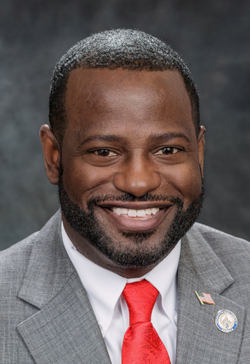
Renee Burgess
Renee Burgess Senate · District 28
D
Strong +
100% 14
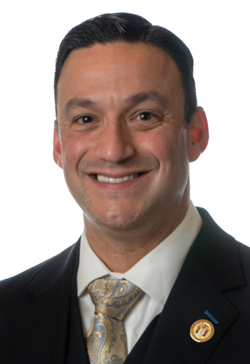
Joe Danielsen
Joe Danielsen House · District 17
D
Strong +
100% 13
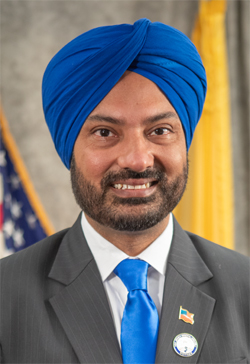
Balvir Singh
Balvir Singh House · District 7
D
Strong +
100% 12
Bob Smith
Bob Smith Senate · District 17
D
Strong +
100% 12
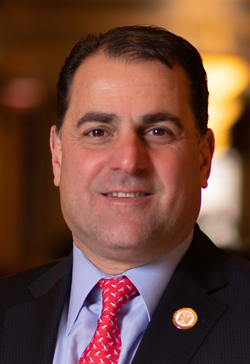
Mike Testa
Mike Testa Senate · District 1
R
Strong −
0% 14
Antwan McClellan
Antwan McClellan House · District 1
R
Strong −
0% 11
Paul Kanitra
Paul Kanitra House · District 10
R
Strong −
0% 11
Carmen Amato
Carmen Amato Senate · District 9
R
Strong −
0% 10
Dawn Fantasia
Dawn Fantasia House · District 24
R
Strong −
0% 10
Showing 741–750 of 1,156 bills

All criminal justice bills

in committee · New Jersey · General Assembly Jan 13, 2026

A 1957: Requires DLPS to establish and make available to law enforcement agencies training materials concerning interactions with hearing impaired; requires annual training for law enforcement and contracting with qualified interpreters.

This bill requires New Jersey's Department of Law and Public Safety to create and share training materials about interacting with hearing-impaired individuals for all law enforcement agencies. It mandates annual officer training using these materials and requires agencies to contract with qualified interpreters who can respond within two hours of a request. The law directly affects all state, county, municipal, and campus police departments in New Jersey, ensuring they provide accessible communication during interactions. It defines "hearing impaired person" as someone unable to understand oral communication due to hearing loss and specifies "qualified interpreter" as a nationally certified professional.
in committee · New Jersey · General Assembly Jan 13, 2026

A 1690: Requires civil service examination for police and correctional police officers to include questions to identify implicit racial bias.

This bill requires New Jersey's Civil Service Commission to add questions about implicit racial bias to the entry-level civil service exam for all law enforcement officer applicants, including municipal police, correctional officers, and sheriff's deputies. It directly affects candidates applying for these positions by mandating that the exam assesses unconscious biases related to race and other characteristics. The key mechanism is the Commission's obligation to include these questions, developed with testing professionals, before the exam is administered. The law aims to address implicit bias in hiring practices through this specific examination requirement.
in committee · New Jersey · General Assembly Jan 13, 2026

A 1393: Makes FY2024 supplemental appropriation of $750,000 providing for additional attorneys dedicated to juvenile matters.

This bill allocates $750,000 in supplemental funding to the Office of the Public Defender’s Trial Services to Indigents program for fiscal year 2024. The funds will hire eight additional attorneys specifically dedicated to juvenile cases, focusing on post-dispositional work and reducing caseloads in Essex and Atlantic counties - regions with the highest juvenile defense demand. The bill directly affects juvenile defendants in these counties, where custody numbers have risen from 277 in 2022 to 339 as of April 2024, and custodial sentence lengths have increased significantly. The funding addresses a projected 25-30% caseload increase for juvenile defense, stemming from expanded legal mandates under P.L.2021, c.383.
in committee · New Jersey · General Assembly Jan 13, 2026

A 614: Establishes "Task Force for Community Based Juvenile Rehabilitation."

Bill A 614 establishes a 17-member "Task Force for Community Based Juvenile Rehabilitation" to study and recommend changes to juvenile court age limits (minimum and maximum ages for prosecution) based on developmental science and other states' practices. The task force must also examine racial disparities in juvenile prosecution and sentencing, and propose solutions to address them. Composed of representatives from law enforcement, courts, social justice organizations, youth justice experts, and community stakeholders, the task force will hold three public hearings across New Jersey and submit a report to the Governor and Legislature within one year. This bill creates a review process for potential policy changes but does not alter current juvenile justice laws.
in committee · New Jersey · General Assembly Jan 13, 2026

A 206: Expands function of Commission on Human Trafficking to include promoting coordinated response by law enforcement to human trafficking.

This bill expands the Commission on Human Trafficking's duties to specifically promote coordinated responses among state and local law enforcement agencies - including the Attorney General's office, county prosecutors, and local police - to improve human trafficking investigations and prosecutions. It directly affects law enforcement agencies by requiring the Commission to develop mechanisms for better collaboration between these entities. The key provision adds a new requirement under Section f(3)(b) of the Commission's mandate, directing it to facilitate coordination "to facilitate human trafficking investigations and prosecutions." The bill does not create new penalties or funding but focuses on improving existing interagency communication and resource-sharing for law enforcement.
in committee · New Jersey · General Assembly Jan 13, 2026

A 956: The "Uniform Criminal Records Accuracy Act."

This New Jersey bill (A 956) requires state agencies involved in criminal justice to maintain accurate criminal records and track how those records are shared. It mandates that agencies create public logs for every record request, including who requested it, when, and why, and correct any inaccuracies within 14 days. The law directly affects individuals whose records are maintained (the "subjects") and agencies like courts, police departments, and correctional facilities that handle criminal history data. Key provisions include requiring agencies to submit biometric data within 5 days and notify other agencies of corrections within a year. The bill focuses on transparency and accuracy in record-keeping, not on changing criminal penalties or new legal standards.
Sub-Topics Policing
in committee · New Jersey · General Assembly Jan 13, 2026

AJR 58: Establishes task force on missing women and girls who are Black, Indigenous, or people of color.

AJR 58 establishes a 15-member task force to address cases of missing and murdered Black, Indigenous, and people of color (BIPOC) women and girls in New Jersey. The task force, appointed by state leaders and agency heads, will develop culturally competent training for first responders, create prevention materials for affected communities, improve statewide data collection on missing BIPOC women/girls, identify high-risk locations, and launch a public awareness campaign. It must submit findings and recommendations to the Governor and Legislature within 18 months of forming. The task force directly affects BIPOC women and girls who are missing or victims of violence, aiming to address underreporting and systemic gaps in law enforcement responses.
in committee · New Jersey · General Assembly Jan 13, 2026

A 1771: Requires DOC to report certain information concerning halfway houses.

This bill requires New Jersey's Commissioner of Corrections to submit quarterly reports to legislative leaders detailing the operation of residential community release programs (including halfway houses). The reports must include specific data on reimbursement rates, inmate demographics by offense type (violent vs. non-violent), escape/abscondment rates, safety incidents, and measures to prevent violence. It also mandates an annual analysis of each program's effectiveness, with a focus on recidivism rates, and recommendations for improvement. The bill directly affects correctional programs and the state legislature, which will use the data to monitor program performance.
Sub-Topics Corrections
in committee · New Jersey · General Assembly Jan 13, 2026

A 1060: Eliminates presumption of pretrial release for sex offenses committed against minor.

This bill eliminates the automatic presumption that defendants charged with sex offenses against minors can be released before trial. It directly affects individuals accused of sexual crimes involving victims under 18, requiring courts to weigh public safety and victim protection rather than assuming release is appropriate. Key provisions mandate that judges must consider specific risks (like community safety and victim contact) before ordering pretrial release, and if release is granted, it must include strict conditions such as avoiding the victim and complying with supervision. The bill does not change sentencing but alters pretrial detention decisions for these specific offenses. The bill was introduced on January 13, 2026, and referred to the Assembly Judiciary Committee.
Sub-Topics Sentencing
in committee · New Jersey · General Assembly Jan 13, 2026

A 3239: Limits negotiated plea agreements for crime of burglary when firearm involved.

This bill prohibits prosecutors from offering negotiated plea agreements that reduce prison time or fines for burglary convictions when a firearm was involved. It directly affects defendants charged with burglary who used a firearm during the crime, requiring them to face the full second-degree penalty rather than a reduced sentence through plea bargaining. The law amends New Jersey's burglary statute to specify that such plea agreements are ineligible if the defendant was "armed with or displays what appears to be explosives or a deadly weapon" during the offense. The bill defines "firearm" broadly to include handguns, rifles, shotguns, and certain air guns, but does not change the underlying burglary charges or penalties.
Showing 741 to 750 of 1,156 bills
Previous 1 … 74 75 76 … 116 Next