Issue · Criminal Justice

Criminal Justice (Law Enforcement)

Every criminal justice bill, vote, and legislator stance in New Jersey, automatically classified by Maddy, our AI policy reader.

Total bills
271
2026-2027 Regular Session
Top supporter
Paul Sarlo
100% support rate
Top opponent
Mike Testa
0% support rate
Ranked legislators
10
5 support · 5 oppose
Key legislators

Who's moving law enforcement in New Jersey

Legislators moving law enforcement in New Jersey
Legislator Party Stance Support rate Decisive votes
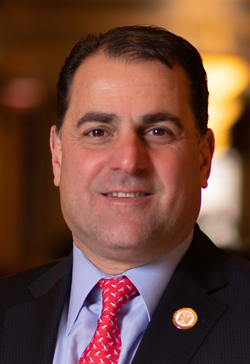
Paul Sarlo
Paul Sarlo Senate · District 36
D
Strong +
100% 10
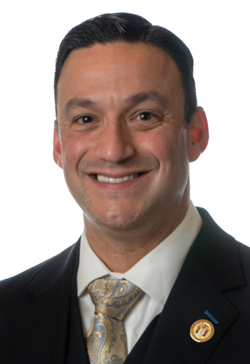
Renee Burgess
Renee Burgess Senate · District 28
D
Strong +
100% 10
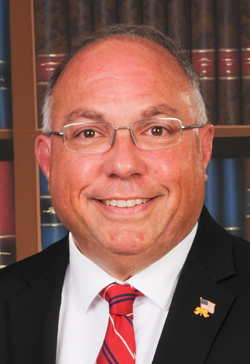
Bob Smith
Bob Smith Senate · District 17
D
Strong +
100% 9
Brian Stack
Brian Stack Senate · District 33
D
Strong +
100% 9
Joe Lagana
Joe Lagana Senate · District 38
D
Strong +
100% 9
Mike Testa
Mike Testa Senate · District 1
R
Strong −
0% 10
Kristin Corrado
Kristin Corrado Senate · District 40
R
Strong −
0% 9
Tony Bucco
Tony Bucco Senate · District 25
R
Strong −
0% 9
Carmen Amato
Carmen Amato Senate · District 9
R
Strong −
0% 7
Declan O'Scanlon
Declan O'Scanlon Senate · District 13
R
Strong −
0% 7
Showing 251–260 of 271 bills

All criminal justice bills

in committee · New Jersey · Senate Jan 13, 2026

S 1064: Establishes mandatory training program for human resources officers of public employers on handling and responding to reports of domestic violence.

S 1064 requires the Civil Service Commission to create a mandatory training program for human resources officers working at public employers (such as state agencies, counties, schools, and municipalities) on handling domestic violence reports from employees. The training covers topics like the impact of domestic violence, protection orders, the New Jersey Security and Financial Empowerment Act, and community support resources, and must be developed with input from social workers and law enforcement. All human resources officers must complete the training within 90 days of starting their role, and the program must be reviewed and updated every two years. The training is free and available to all public employers, regardless of whether they follow standard civil service rules.
in committee · New Jersey · Senate Jan 13, 2026

S 379: Requires Attorney General to establish Human Trafficking Unit in Department of Law and Public Safety.

This bill requires New Jersey's Attorney General to create a dedicated Human Trafficking Unit within the Department of Law and Public Safety. The unit must prosecute trafficking cases, assist counties with investigations, connect victims to support services, and collaborate with state agencies (like Health, Labor, and Homeland Security) and local prosecutors. It also mandates ongoing training for law enforcement on trafficking cases and requires a public awareness campaign to educate about trafficking signs, consequences, and victim support. The unit's coordinator must annually report to the Governor and Legislature on its work and suggest policy improvements.
in committee · New Jersey · Senate Jan 13, 2026

S 475: Requires AG to review Statewide policy regarding investigation of human trafficking.

S 475 requires New Jersey's Attorney General to review and update statewide policies for investigating human trafficking. This affects law enforcement agencies (county/municipal police), county prosecutors, and human trafficking victims by mandating specific policy improvements. Key provisions include evaluating whether audio/video recordings in undercover operations protect investigations and victim treatment, establishing strict rules for sharing such recordings, and ensuring county prosecutors are involved early in investigations to address legal issues. The review must address these points as outlined in the bill, responding to a 2024 state commission report on trafficking in massage therapy businesses. The policy revision must be completed following the Attorney General's review, with no new funding or penalties specified.
passed · New Jersey · Senate Jun 18, 2026

S 1090: Creates crime of political violence and establishes training requirement for law enforcement.*

This New Jersey bill (S 1090) creates a new criminal offense called "political violence" for committing specific crimes - such as assault, kidnapping, or homicide - intentionally to interfere with or retaliate against someone because of their political affiliation (e.g., party membership) or political expression (e.g., attending protests or donating to campaigns). It requires law enforcement to provide training on this offense and establishes an independent "Political Violence Review Board" to collect data on cases, analyze potential disparities in how cases are handled based on factors like race or political affiliation, and publish annual reports to the Governor and Legislature. The bill also mandates separate sentencing for political violence and the underlying crime, and prohibits defenses based on mistaken political affiliation. This directly affects individuals committing such acts, law enforcement agencies, and the judicial system in New Jersey.
in committee · New Jersey · Senate Jan 13, 2026

S 1393: Requires Attorney General to conduct study tracking residential burglaries and issue guidance to law enforcement and public.

This bill requires New Jersey's Attorney General to conduct a comprehensive study of residential burglaries and issue annual reports to the Governor and Legislature. The study must track detailed statistics since 2018 - including burglary times, weapon use, injuries, property values, and prosecution rates - by county. It also mandates a summary of current law enforcement efforts and recommendations to reduce burglaries, including potential legislative changes. The initial report is due within six months of the bill's enactment, with annual updates thereafter.
Sub-Topics Law Enforcement
in committee · New Jersey · Senate Jan 13, 2026

S 995: Establishes threats of violence against prosecutors, law enforcement officers and family members as a second degree crime, subject to No Early Release Act sentencing.

This bill (S 995) upgrades threats targeting prosecutors, law enforcement officers, or their family members to a second-degree crime under New Jersey law. It directly affects anyone who threatens to kill or cause physical harm to these individuals with the intent to cause immediate fear of harm, including threats against spouses, parents, children, or cohabiting relatives. Key provisions require offenders convicted of this crime to serve at least 85% of their sentence before becoming eligible for parole (per the "No Early Release Act"), with penalties including 5-10 years in prison or fines up to $150,000. The bill modifies existing statutes (N.J.S.2C:12-3 and P.L.1997, c.117) to implement these sentencing requirements.
in committee · New Jersey · Senate Jan 13, 2026

S 213: Establishes crime of law enforcement officer choking another person; designated as George Floyd's Law.

S 213, designated as George Floyd's Law, makes it a first-degree crime for law enforcement officers to knowingly choke another person by pressing on the throat, windpipe, or carotid artery, hindering breathing or blood flow to the brain. This directly affects New Jersey law enforcement officers who use such tactics during arrests. The bill establishes penalties of 10-20 years in prison, a $200,000 fine, or both for violating this provision. It follows New Jersey’s 2020 ban on chokeholds (except in deadly force situations) and references George Floyd’s death, where a Minneapolis officer used a similar restraint.
in committee · New Jersey · Senate Feb 19, 2026

S 1227: Establishes Law Enforcement Critical Mental Health Assistance Grant Program; appropriates $3 million.

This bill establishes the Law Enforcement Critical Mental Health Assistance Grant Program within New Jersey's Department of Human Services, appropriating $3 million to fund confidential mental health services. It directly affects law enforcement officers and their family members (defined as spouses, domestic partners, children, or parents living in the same household) experiencing mental health crises or suicidal distress. The program awards grants to licensed mental health providers who meet geographic criteria to ensure services are accessible within a one-hour travel distance. The Commissioner of Human Services will manage applications, select providers, and publish a list of approved services online, aiming to reduce stigma and improve access to care.
in committee · New Jersey · Senate Jan 13, 2026

S 406: Requires chief law enforcement officer of municipal police departments to hold two community roundtables on police relations each year.

This bill (S 406) requires municipal police chiefs to hold two annual community discussions on police relations - once in spring and once in fall - while the State Police Superintendent must host one regional discussion per year in each of New Jersey’s three regions. Topics must include race relations, officer recruitment, training, body camera regulations, and use-of-force policies. The law mandates accessible timing (evenings), central locations, and ample public notice to maximize community participation. It directly affects all municipal police departments and the State Police, aiming to improve transparency through structured community dialogue.
died · New Jersey · Senate Jan 13, 2026

S 1282: Concerns AG guidelines on bias incident investigation standards.

This New Jersey bill (S 1282) requires the Attorney General to maintain and periodically update guidelines for investigating bias incidents - such as crimes motivated by race, religion, or sexual orientation. It directly affects county/municipal law enforcement agencies, prosecutors, and the Attorney General’s office by mandating: (1) reporting all confirmed/suspected bias incidents via the state crime reporting system within 24 hours, (2) immediate notification to the AG and prosecutors for serious incidents (e.g., homicide or hate group involvement), (3) procedures for investigations and victim referrals to the Civil Rights Division, and (4) required training for officers on bias incident detection and reporting. The bill aims to standardize and improve how such incidents are documented, investigated, and supported. (Note: The bill was withdrawn on 2026-01-13 after being incorporated into P.L.2025, c.342.)
Showing 251 to 260 of 271 bills
Previous 1 … 25 26 27 … 28 Next