Issue · Criminal Justice

Criminal Justice

Every criminal justice bill, vote, and legislator stance in New Jersey, automatically classified by Maddy, our AI policy reader.

Total bills
1,156
2026-2027 Regular Session
Top supporter
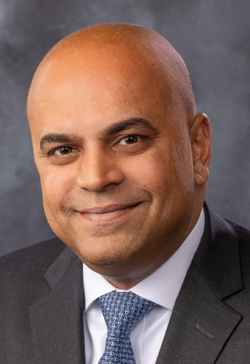
Al Abdelaziz
100% support rate
Top opponent
Al Barlas
0% support rate
Ranked legislators
10
5 support · 5 oppose
Key legislators

Who's moving criminal justice in New Jersey

Legislators moving criminal justice in New Jersey
Legislator Party Stance Support rate Decisive votes
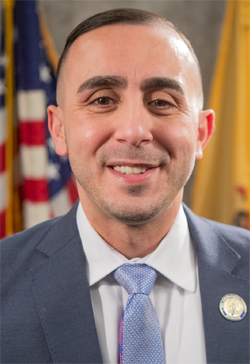
Al Abdelaziz
Al Abdelaziz House · District 35
D
Strong +
100% 8
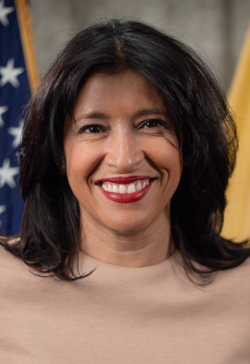
Alixon Collazos-Gill
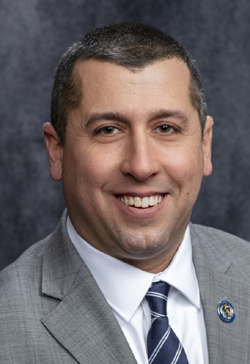
Alixon Collazos-Gill House · District 27
D
Strong +
100% 8
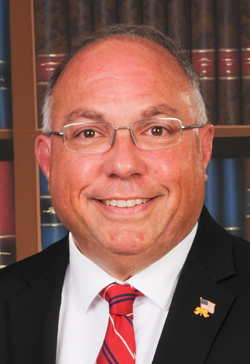
Angela McKnight
Angela McKnight Senate · District 31
D
Strong +
100% 8
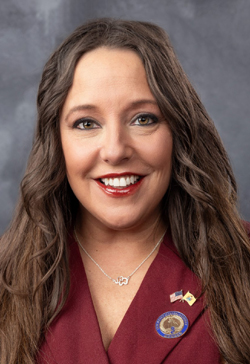
Annette Quijano
Annette Quijano House · District 20
D
Strong +
100% 8
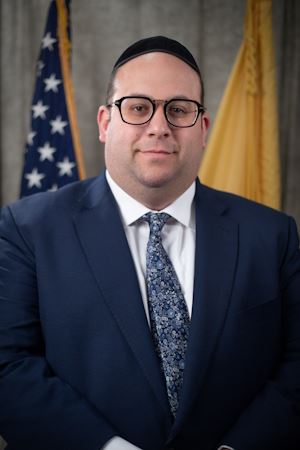
Avi Schnall
Avi Schnall House · District 30
D
Strong +
100% 8
Al Barlas
Al Barlas House · District 40
R
Strong −
0% 8
Bob Auth
Bob Auth House · District 39
R
Strong −
0% 8
Brian Bergen
Brian Bergen House · District 26
R
Strong −
0% 8
Carmen Amato
Carmen Amato Senate · District 9
R
Strong −
0% 8
Dawn Fantasia
Dawn Fantasia House · District 24
R
Strong −
0% 8
Showing 201–210 of 1,156 bills

All criminal justice bills

in committee · New Jersey · General Assembly Feb 19, 2026

A 4215: Upgrades offense of prostitution as patron; directs fines collected to "Human Trafficking Survivor's Assistance Fund."

This bill upgrades penalties for repeat offenses of buying sex (prostitution as a patron) in New Jersey. A first offense remains a disorderly persons offense, but a second or third offense becomes a fourth-degree crime, and a fourth or subsequent offense becomes a third-degree crime. The bill also requires that fines collected from these offenses be directed to the "Human Trafficking Survivor's Assistance Fund" to support survivors of human trafficking. It applies specifically to individuals who repeatedly engage in purchasing sexual services.
Sub-Topics Human Trafficking
in committee · New Jersey · General Assembly Feb 19, 2026

A 3503: Requires State entities purchase five percent of goods and services from Central Nonprofit Agency; requires Division of Purchase and Property establish training protocols for all purchasing agents; grants Central Nonprofit Agency right of first refusal.*

This bill requires all New Jersey state agencies, counties, municipalities, school districts, and other local government entities to purchase at least 5% of their goods and services from the Central Nonprofit Agency (CNA), which supports rehabilitation facilities. It grants the CNA a "right of first refusal" for any goods/services typically bought through cooperative purchasing catalogs, provided they can match prices within 15% of fair market value. The bill also mandates that the Division of Purchase and Property create training protocols for all purchasing agents to ensure awareness of the CNA program, with annual reporting on compliance by all affected entities. These requirements apply to all state and local government bodies authorized to make purchases.
in committee · New Jersey · General Assembly Jan 13, 2026

A 811: Prohibits sex offenders from residing within 1,000 feet of victim's home or workplace.

This bill prohibits registered sex offenders from living within 1,000 feet of their victim's home or workplace. It makes this a fourth-degree crime punishable by up to 18 months in prison, a $10,000 fine, or both. Exceptions apply if the offender is in a correctional facility, receiving mental health treatment, or established their residence before the law takes effect. The sponsor states this closes a gap in Megan's Law by explicitly restricting proximity to victims.
Sub-Topics Corrections
in committee · New Jersey · General Assembly Jan 13, 2026

A 2902: Expands implied consent law to include blood testing; establishes per se standard for driving under influence of marijuana and certain controlled dangerous substances.

This bill expands New Jersey's implied consent law to include blood testing for marijuana and certain controlled substances, not just alcohol. It establishes a "per se" standard, meaning drivers with specific levels of these substances in their blood would automatically be considered impaired under the law. The law applies directly to drivers operating vehicles in New Jersey who are found to have these substances in their system. Key mechanisms include requiring police to request blood tests when suspected of impairment from these substances and creating automatic violations based on test results, rather than requiring proof of actual impairment.
Sub-Topics Drug Policy Policing
in committee · New Jersey · General Assembly Feb 19, 2026

A 4221: Permits court to order transfer of billing responsibility for, and rights to, wireless telephone number to certain victims of domestic violence or stalking.

This bill allows courts to transfer ownership of a wireless phone number and its billing responsibility to victims of domestic violence or stalking who are not the account holder. Upon a victim's request and after a final restraining order is issued, the court can order the phone provider to transfer the number directly to the victim. The victim then assumes all future costs for the phone, service, and devices, and the provider must notify the court and victim within 72 hours if they cannot complete the transfer due to technical issues. The bill ensures victim contact information remains private during proceedings and requires providers to follow standard account setup procedures for the transfer.
in committee · New Jersey · Senate Feb 5, 2026

SCR 81: Requests President and Congress take action to permit federal Medicaid funding for certain substance use disorder programs.

SCR 81 is a New Jersey concurrent resolution requesting the U.S. President and Congress to amend federal Medicaid rules to permit federal funding for substance use disorder treatment programs currently excluded under the "IMD exclusion." This exclusion prevents Medicaid reimbursement for inpatient and outpatient treatment in facilities classified as Institutions for Mental Diseases (IMDs), forcing states to cover full costs. The resolution seeks to repeal or modify this exclusion - allowing states like New Jersey to use federal Medicaid funds for these programs - thereby reducing state financial burdens and expanding access to treatment for individuals with substance use disorders.
in committee · New Jersey · General Assembly Feb 19, 2026

A 2738: Creates penalty for child endangerment via use of social media.

New Jersey bill A 2738 amends the state's child endangerment law to create penalties for using social media to endanger children. It specifically targets individuals who knowingly share or distribute content via electronic communication (including social media platforms) that harms a child's physical, mental, or moral welfare under age 18. The law defines "child endangerment" through electronic communication as actions likely to cause harm, with penalties ranging from a third-degree crime for most people to a second-degree crime if the person has legal care responsibility for the child. The bill excludes Section 230 providers (like social media platforms themselves) from liability under this provision.
in committee · New Jersey · Senate Feb 24, 2026

S 3699: Requires Medicaid reimbursement of mental health rehabilitation services provided via clubhouse program.

This bill (S 3699) requires New Jersey Medicaid to reimburse mental health rehabilitation services provided through "clubhouse programs." Clubhouse programs are peer-run community centers where people with mental health conditions receive support and services to help them recover and reintegrate into society. The bill amends existing Medicaid law to explicitly include these clubhouse services under covered "rehabilitative services" (previously listed under subsection 12). This change directly affects mental health clinics operating clubhouse programs and Medicaid recipients who use these specific services, ensuring they receive coverage without additional barriers.
Sub-Topics Medicaid Mental Health
in committee · New Jersey · General Assembly Jan 13, 2026

A 3014: Allows victims and relatives to witness parole hearings.

This bill (A 3014) allows victims of first- or second-degree crimes and the nearest relatives of murder victims to witness the entire parole hearing for offenders, not just submit statements or testify. It amends existing law to require parole boards to notify these individuals of their right to observe the hearing and provide their contact information. Currently, victims could only submit written/videotaped statements or testify, but this bill adds the right to attend the full hearing proceedings. The change applies to inmates whose crimes meet specific severity thresholds outlined in the bill.
in committee · New Jersey · General Assembly Jan 13, 2026

A 110: Increases degree of crime for unlawful taking of motor vehicle.

This bill increases penalties for unlawfully taking motor vehicles without the owner's consent in New Jersey. It raises the offense of simply taking a vehicle (without risk) from a fourth-degree crime to a third-degree crime, punishable by 3-5 years in prison or a $15,000 fine. It also elevates the offense of taking a vehicle in a way that risks injury or property damage from a third-degree to a second-degree crime, carrying 5-10 years in prison or a $150,000 fine. The bill directly affects anyone who takes, operates, or rides in a vehicle without consent, including typical "joyriding" cases. These changes adjust the legal classification and penalties without altering the core definition of the offense.
Sub-Topics Corrections
Showing 201 to 210 of 1,156 bills
Previous 1 20 21 22 116 Next