This resolution expresses the sense of the Senate that (1) clean water is a national priority, and (2) the 2020 final rule titled The Navigable Waters Protection Rule: Definition of "Waters of the United States" should not be withdrawn or vacated.
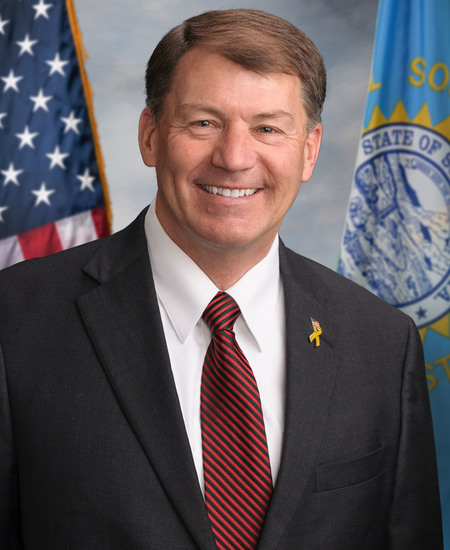
Sen. Mike Rounds
Sponsored bills
Regulations from the Executive in Need of Scrutiny Act of 20 21 This bill revises provisions relating to congressional review of agency rulemaking. Specifically, the bill establishes a congressional approval process for a major rule. A major rule may only take effect if Congress approves of the rule. A major rule is a rule that results in (1) an annual effect on the economy of $100 million or more; (2) a major increase in costs or prices for consumers, individual industries, government agencies, or geographic regions; or (3) significant adverse effects on competition, employment, investment, productivity, innovation, or the ability of U.S.-based enterprises to compete with foreign-based enterprises. In addition, the bill establishes a congressional disapproval process for a nonmajor rule. A nonmajor rule may only take effect if Congress does not disapprove of the rule.
Justice for Victims of Sanctuary Cities Act of 2021 This bill provides a private right of action against state and local jurisdictions with certain policies that limit cooperation with federal immigration enforcement efforts, and contains additional provisions related to such jurisdictions. Currently, such cooperation is generally not required. An individual (or certain relatives of such an individual) who is the victim of any felony for which an alien has been arrested, convicted, or sentenced to a prison term of at least one year may sue a state or local jurisdiction if the jurisdiction failed to comply with (1) certain Department of Homeland Security (DHS) requests related to arresting and detaining aliens, and (2) a DHS request to detain the alien in question or provide a notification about the release of the alien. A jurisdiction that accepts certain federal grants may not assert immunity in such a civil action. A jurisdiction (or employee of a jurisdiction) that complies with certain DHS detainer requests shall be deemed to be acting as an agent of DHS. A complying jurisdiction or employee of the jurisdiction shall not be liable in any lawsuit relating to compliance with such requests. In a lawsuit against an employee of the jurisdiction, the United States shall be substituted in as the defendant, and remedies shall be limited to provisions for bringing tort claims against the federal government.
Pain-Capable Unborn Child Protection Act This bill establishes a new criminal offense for performing or attempting to perform an abortion if the probable post-fertilization age of the fetus is 20 weeks or more. A violator is subject to criminal penalties—a fine, a prison term of up to five years, or both. The bill provides exceptions for an abortion (1) that is necessary to save the life of the pregnant woman, or (2) when the pregnancy is the result of rape or incest. A physician who performs or attempts to perform an abortion under an exception must comply with specified requirements. A woman who undergoes a prohibited abortion may not be prosecuted for violating or conspiring to violate the provisions of this bill.
Immigration Detainer Enforcement Act of 2021 This bill expands statutory provisions to authorize the Department of Homeland Security (DHS) to request a law enforcement agency to detain an individual who has been arrested for violating any law (if the individual is believed to be an unlawfully present alien), where current provisions only explicitly authorize detainer requests for individuals arrested for violating controlled substances laws. The bill also modifies other related provisions. A law enforcement agency that has received a detainer request may hold the targeted individual for up to 48 hours. DHS may enter into agreements with law enforcement agencies to indemnify such agencies against claims for wrongful detention resulting from a detainer request. No provision of federal, state, or local law may restrict any government entity from (1) providing DHS with access to databases with information relating to issued detainers, or (2) holding an individual subject to a detainer. DHS shall periodically certify to Congress as to which state or local entities have not complied with a detainer request. Such entities shall be ineligible for compensation for costs related to honoring detainer requests. State and local entities that comply with DHS detainer requests shall have prioritized access to (1) certain law enforcement-related grants, and (2) certain excess federal property.
This resolution supports the recognition of a Day of Tears and encourages memorializing those who have lost their lives to abortion by lowering the U.S. flag to half-staff on January 22, 2021.
This resolution honors the memory of U.S. Capitol Police Officer Brian D. Sicknick for sacrificing his life in the line of duty on January 6, 2021, and it calls for justice to be brought to those responsible for the attack on the Capitol and the death of Officer Sicknick.
This bill establishes a bipartisan advisory committee within the Election Assistance Commission (EAC) to study the integrity and administration of the November 2020 general election. The committee must also make recommendations to the EAC, state legislatures, and Congress on best practices for administering federal elections, including best practices to prevent improper voting and increase the security of vote-by-mail ballots.