Maddy summaryS 364, titled the "Hearing Protection Act" (though it regulates firearm silencers, not hearing protection), changes federal law to treat firearm silencers like firearms for tax and regulatory purposes. It imposes a 10% federal tax on silencers (similar to firearms), preempts state laws that tax or regulate silencers beyond federal rules, and requires the destruction of existing silencer registration records within one year. The bill clarifies definitions of "firearm silencer" in federal law and modifies licensing requirements for these devices. This directly affects silencer owners, manufacturers, and state governments that previously imposed additional restrictions or taxes.
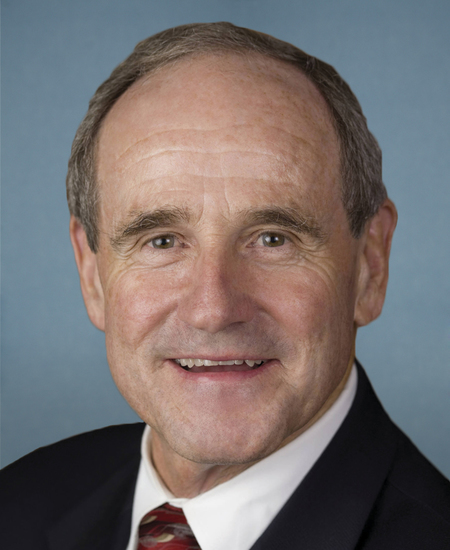
Sen. James E. Risch
Sponsored bills
Maddy summaryThis bill permanently prohibits U.S. foreign assistance funds from being used for abortions, involuntary sterilizations, or related biomedical research. It amends the Foreign Assistance Act of 1961 and the Peace Corps Act to block funding for organizations supporting coercive abortion or sterilization programs. The law directly affects all U.S. government programs distributing foreign aid, including international health and development initiatives. It ensures funds cannot cover abortion services as family planning, lobbying on abortion, or programs involving coercion.
Maddy summaryThis bill authorizes the posthumous presentation of a Congressional Gold Medal to Fred Korematsu, a Japanese American civil rights advocate who challenged the WWII internment of Japanese Americans. The medal, designed by the Treasury Secretary and displayed at the Smithsonian Institution, commemorates his lifelong fight against racial discrimination and his role in exposing government deception regarding the internment. The bill creates no new legal obligations or policy changes - it solely establishes a symbolic honor recognizing Korematsu's legacy of justice and equality.
Nancy Gardner Sewell Medicare Multi-Cancer Early Detection Screening Coverage Act This bill allows, beginning in 2028, for Medicare coverage and payment for multi-cancer early detection screening tests that are approved by the Food and Drug Administration and that are used to screen for cancer across many cancer types, if the Centers for Medicare & Medicaid Services determines such coverage is appropriate. Coverage is limited to those under a certain age (age 68 in 2028, increased by one year every year thereafter) and to one test every 11 months.
Maddy summaryThis resolution designates the week of January 26-February 1, 2025, as "National School Choice Week" to recognize the range of K-12 education options available to families, including public schools, charters, private schools, and homeschooling. It does not create new policies, funding, or requirements but encourages parents to learn about educational choices and promotes public awareness through events. The Senate formally acknowledges this annual observance without binding legislative action.
Maddy summaryThe WALL Act of 2025 appropriates $25 billion for constructing a physical barrier along the southern U.S. border. It implements new Social Security number requirements for tax credits like the child tax credit and earned income tax credit, with exceptions for individuals prohibited from working in the U.S. The bill also mandates E-Verify checks for eligibility for certain federal benefits, including housing assistance, and increases civil penalties for illegal entry and overstay. These provisions directly affect immigrants seeking tax benefits, housing assistance, and those who enter the country without authorization.
Maddy summaryThis bill establishes tax credits for individuals and corporations who contribute to scholarship granting organizations that provide educational scholarships for eligible students. The individual tax credit is limited to 10% of adjusted gross income or $5,000, while corporate credits are capped at 5% of taxable income. The bill defines "eligible students" as those from households with income not exceeding 300% of the area median gross income, and specifies that scholarships can cover tuition, materials, tutoring, and educational therapies. The bill includes a $10 billion annual cap on tax credits, with a first-come, first-served allocation system, and requires scholarship organizations to meet specific financial and operational standards.
Grizzly Bear State Management Act of 2025 This bill requires the Department of the Interior to remove the Greater Yellowstone ecosystem population of grizzly bears from the list of endangered and threatened wildlife.
Laken Riley Act This act requires the Department of Homeland Security (DHS) to detain certain non-U.S. nationals ( aliens under federal law) who have been arrested for burglary, theft, larceny, shoplifting, assault of a law enforcement officer, or any crime that results in death or serious bodily injury to another person. The act also authorizes states to sue the federal government for decisions or alleged failures related to immigration enforcement. Under this act, DHS must detain an individual who (1) is unlawfully present in the United States or did not possess the necessary documents when applying for admission; and (2) has been charged with, arrested for, convicted of, or admits to having committed acts that constitute the essential elements of the above crimes. The act also authorizes state governments to sue for injunctive relief over certain immigration-related decisions or alleged failures by the federal government if the decision or failure caused the state or its residents harm, including financial harm of more than $100. Specifically, the state government may sue the federal government over a decision to release a non-U.S. national from custody; failure to fulfill requirements relating to inspecting individuals seeking admission into the United States, including requirements related to asylum interviews; failure to fulfill a requirement to stop issuing visas to nationals of a country that unreasonably denies or delays acceptance of nationals of that country; violation of limitations on immigration parole, such as the requirement that parole be granted only on a case-by-case basis; or failure to detain an individual who has been ordered removed from the United States.
Maddy summaryThis bill amends U.S. law to make the American Community Survey (ACS) truly voluntary. It removes penalties for households that refuse to answer ACS questions and requires the Census Bureau to include a clear statement on the survey itself stating participation is voluntary. The bill directly affects all households receiving the ACS, which collects detailed demographic data for communities. Key changes are: (1) eliminating civil penalties for non-response, and (2) mandating a voluntary participation notice on the survey form. These changes apply to the current ACS and any future successor survey.