

In committee Sep 24, 2026
1 co-sponsor
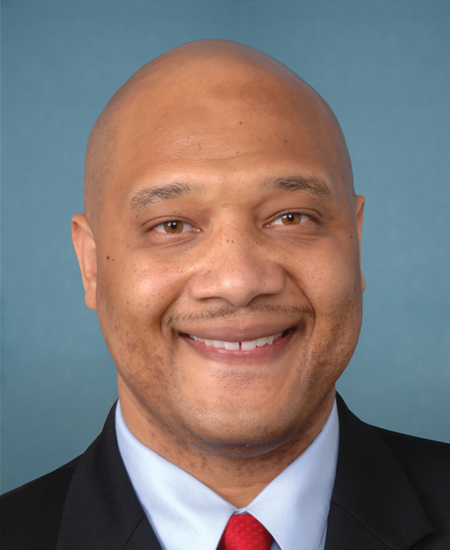
Rep. André Carson
Total votes
2,837
all sessions
Attendance
99%
40 missed
Near the chamber average
With party
98%
of cast votes
Near the chamber average
Bipartisan score
1%
crosses aisle rarely
Near the chamber average
Sponsored
2,956
bills & resolutions
Higher than 98% of chamber peers
Committees
4
assignments
2,956 bills and resolutions
Sponsored bills
Total
2,956
Primary
62
Co-sponsor
2,894
This page
2,956
matching current filters
In committee Sep 24, 2026
1 co-sponsor
Expressing support for the designation of September 22, 2026, as "National Hispanic Nurses Day" and recognizing the National Association of Hispanic Nurses as the leading organization representing and advocating for Hispanic nurses.
Maddy summaryThis House resolution expresses support for designating September 22, 2026, as "National Hispanic Nurses Day" to honor the contributions of Hispanic nurses to the U.S. healthcare system. It specifically recognizes the National Association of Hispanic Nurses as the leading organization representing and advocating for this group of professionals. The bill encourages the public to observe the day with ceremonies and activities that highlight the role of these nurses in reducing health disparities and providing culturally competent care.
HealthcareSupports HealthcareThe bill supports designating 'National Hispanic Nurses Day' and recognizes an organization advocating for Hispanic nurses, which indirectly supports healthcare by acknowledging and promoting a vital part of the healthcare workforce.
Labor & EmploymentSupports Labor & EmploymentThe bill recognizes and supports Hispanic nurses and their professional organization, which advocates for their interests. This implicitly supports the labor and employment aspect of this specific group of workers.
In committee Sep 21, 2026
1 co-sponsor
To designate the facility of the United States Postal Service located at 501 West Memorial Drive in Muncie, Indiana, as the "Officer Blake A. Reynolds Post Office Building".
This bill designates the facility of the United States Postal Service located at 501 West Memorial Drive in Muncie, Indiana, as the "Officer Blake A. Reynolds Post Office Building".
In committee Sep 21, 2026
1 co-sponsor
Expressing support for "Military Sexual Trauma Awareness Day".
Maddy summaryThis House resolution expresses support for Military Sexual Trauma Awareness Day, observed on September 25, 2026, and affirms a commitment to supporting survivors of sexual assault or harassment in the Armed Forces. It encourages the Department of Defense and the Department of Veterans Affairs to expand access to related services and ensure they are well-publicized and available to all veterans. The resolution also promotes transparency and accountability in how these agencies handle cases to build trust and prevent retaliation for survivors. Finally, it underscores a commitment to working with the Department of Defense to address the root causes of military sexual trauma with the goal of eradicating it.
HealthcareSupports HealthcareBill encourages DoD and VA to expand access to services for sexual trauma survivors and ensure they are well-publicized, directly advancing healthcare support.
VeteransSupports VeteransBill explicitly supports survivors of military sexual trauma and urges DoD/VA to expand access to services for veterans.
In committee Sep 17, 2026
1 co-sponsor
To designate the facility of the United States Postal Service located at 401 North Elm Street in Tuskegee, Alabama, as the "Tuskegee Airmen Memorial Post Office".
This bill designates the facility of the United States Postal Service located at 401 North Elm Street in Tuskegee, Alabama, as the "Tuskegee Airmen Memorial Post Office".
Passed Sep 17, 2026
1 co-sponsor
Expressing support for the recognition of Nigerian Heritage Month and celebrating the heritage, culture, and contributions of Nigerians and Nigerian Americans in the United States.
Maddy summaryThis House resolution expresses support for recognizing Nigerian Heritage Month to celebrate the history, culture, and contributions of Nigerians and Nigerian Americans in the United States. It highlights the strong bilateral relationship between the two nations and notes that Nigerian Americans are a highly educated immigrant group making significant impacts in fields such as medicine, technology, and business. The bill encourages federal, state, and local governments, along with educational institutions, to observe this month through programs and ceremonies that highlight Nigerian heritage.
In committee Sep 16, 2026
1 co-sponsor
Justice for Ukrainian Children Act
Maddy summaryThe Justice for Ukrainian Children Act directs the U.S. government to support efforts to locate and rescue Ukrainian children forcibly transferred by Russia, while imposing mandatory sanctions on foreign individuals who facilitate these transfers. The bill authorizes at least $15 million annually from fiscal years 2027 through 2032 to fund evidence collection, maintain a centralized database, and assist in the rehabilitation of affected children. It requires the President to block the assets and revoke the visas of any foreign person found to have knowingly participated in the abduction or indoctrination of Ukrainian minors, with limited exceptions for humanitarian aid and national security needs. Additionally, the legislation allocates $10 million annually to expand U.S. media broadcasting services in Ukraine and neighboring regions to counter disinformation.
Budget & TaxesSupports Budget & TaxesThe bill authorizes at least $15 million annually from fiscal years 2027 through 2032, directly impacting government spending and appropriations for a specific program.
Criminal JusticeSupports Criminal JusticeThe bill supports international efforts to address crimes against children, which aligns with broader criminal justice principles of accountability and victim support, although it is not domestic criminal justice reform.
In committee Sep 16, 2026
1 co-sponsor
ASAP Act
Maddy summaryThis bill would require Medicare to cover early detection screening tests for Alzheimer's disease and related dementias starting January 1, 2028. It defines eligible tests as FDA-cleared genomic blood tests, blood product analyses, or equivalent medical imaging methods (like protein expression or whole genome sequencing) that detect pre-symptomatic or early-stage conditions. Medicare beneficiaries would receive this coverage without cost-sharing for these specific screenings. The bill amends Medicare coverage rules to explicitly include these tests under Section 1861(nnn) of the Social Security Act.
In committee Sep 16, 2026
1 co-sponsor
Medically Tailored Home-Delivered Meals Program Pilot Act
Maddy summaryThis bill creates a 6-year Medicare pilot program providing medically tailored home-delivered meals and nutrition counseling to specific high-risk Medicare patients after hospital discharge. It targets individuals with diet-impacted conditions (like diabetes or heart failure) who live at home, have limited mobility, and are at high risk of hospital readmission. Selected hospitals must meet quality standards, screen patients using approved tools, and deliver at least two meals daily meeting nutritional needs while respecting cultural/religious dietary requirements, all without patient cost-sharing. The program requires hospitals to submit data for the Secretary to evaluate health outcomes, readmission rates, and cost savings compared to non-participants. Funding comes from the Medicare Hospital Insurance Trust Fund, offset by reductions to other hospital payments to maintain budget neutrality.
Budget & TaxesSupports Budget & TaxesBill creates federal funding for Medicare pilot program targeting high-risk patients, advancing essential healthcare spending through government appropriation.
HealthcareSupports HealthcareCreates Medicare-funded pilot for medically tailored meals to reduce readmissions, expanding coverage for diet-impacted conditions like diabetes.
In committee Sep 16, 2026
1 co-sponsor
Ask Maddy
·
AI policy assistant
Ask Maddy about André Carson
Scope: new-hampshire
Hi! I can help you understand André Carson's legislative record. What would you like to know?
Try one of these
i
Maddy answers using official bill text and legislative records. Always verify before sharing.
Sources cited inline