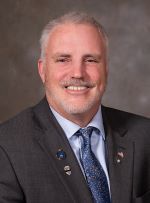
Key legislators
Who's moving healthcare in New Hampshire
Showing 11–15 of 15
bills
All healthcare bills
SB 543 establishes provisional eligibility for Medicaid nursing facility services in New Hampshire, directly affecting long-term care applicants and nursing facilities. The bill requires the Department of Health and Human Services to grant temporary coverage within 90 days of application submission if a facility agrees to comply with program terms, without waiting for full application completion. This provisional status lasts up to 18 months or until a final eligibility decision, with facilities receiving payments during this period and required to reimburse funds if final approval is denied. The bill appropriates $1 for the 2026-2027 biennium to fund this program and creates two new positions within the department to manage it (per RSA 167:8).
HB 1635 modifies New Hampshire school suicide prevention training requirements by requiring all school faculty, staff, and contracted personnel to complete suicide awareness training within 30 days of hire and every two years thereafter (replacing the prior annual requirement). The training must cover youth suicide risk factors, warning signs, response procedures, referrals, and community resources, and may use existing professional development programs or self-training materials. School districts determine how to administer the training, including whether it applies to volunteers per district policy. The bill takes effect September 1, 2026.
HCR 12 is a New Hampshire legislative resolution urging the state's federal congressional delegation to support Medicare for All. It requests federal lawmakers pursue legislation establishing universal health coverage through Medicare, including comprehensive benefits like dental, vision, and prescription drugs without deductibles, and transitioning current Medicaid recipients into the program. The resolution outlines six key provisions for such a system, emphasizing preventive care, provider choice, cost controls, and quality oversight. As a non-binding resolution, it does not change federal law but expresses the legislature's position on health care policy.
HB 1760 repeals a requirement that the New Hampshire Department of Health and Human Services seek a waiver to impose pharmacy copayments and premiums on Medicaid beneficiaries, including those in the New Hampshire Advantage Health Care Program and the Children's Health Insurance Program. It removes specific law sections (2025, 141:65; RSA 126-AA:2-a; and RSA 126-A:3, IX) that would have mandated these cost-sharing measures. The bill appropriates funds to the Department of Health and Human Services to cover the resulting revenue shortfall for the 2026-2027 biennium. This change directly eliminates new costs for Medicaid participants while maintaining program funding stability.
HB 1313 repeals New Hampshire's current law (RSA 132:37-40) that prohibited people from entering or remaining on public sidewalks adjacent to reproductive health care facilities. This directly affects individuals and groups seeking to engage in free speech activities - such as handing out literature or speaking - near clinic entrances. The key provision removes the buffer zone restriction, allowing people to approach sidewalks without legal penalty. The bill takes effect immediately upon passage and has no estimated fiscal impact on state or local governments.