Maddy summaryThis bill mandates the automatic creation of "Trump accounts" for every newborn in the United States by utilizing data collected during the Social Security Administration's Enumeration at Birth Program. It requires the Commissioner of Social Security to modify existing procedures to gather and transmit necessary information to the Secretary of the Treasury, who is then obligated to open an account on behalf of each child identified through this process.
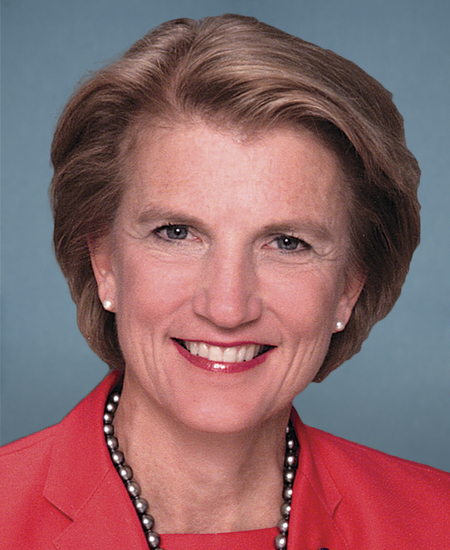
Sen. Shelley Moore Capito
Sponsored bills
Maddy summaryThe Protect College Sports Act of 2026 establishes new rules to protect student athletes and regulate college sports broadcasting by amending existing federal laws. It requires colleges and athletic associations to allow athletes to earn money from their name, image, and likeness without losing eligibility, while mandating that athletes disclose agreements worth more than $600 annually. The bill also introduces stricter health and safety standards, including independent medical authority for return-to-play decisions and expanded medical coverage for injuries sustained during competition. Additionally, it creates a new commission to study the future of college athletics and modifies broadcasting laws to ensure local market access for games and prevent large conferences from merging in ways that reduce the number of participating schools.
Maddy summaryThe Kids Online Safety Act (S 1748) requires major social media platforms, online video games, and other "covered platforms" to implement specific safety features for minors (under 17). These features include default privacy settings that limit harmful design features like infinite scrolling and auto-play, parental controls for managing minors' accounts, and restrictions on advertising illegal products to minors. The bill also mandates annual transparency reports about how platforms are used by minors and requires platforms to provide clear notices about their content algorithms. It creates a Kids Online Safety Council to advise Congress on online safety issues for children. The law applies to platforms with more than 10 million monthly users in the U.S. and takes effect 18 months after enactment.
Maddy summaryThe College Transparency Act establishes a federal data system to collect and analyze student-level information about college enrollment, costs, completion rates, and post-graduation outcomes. The National Center for Education Statistics must develop this system within 4 years, collecting data on student demographics, program of study, financial aid, and earnings while prohibiting sensitive information like health data or citizenship status. The system will provide public, aggregated data through an online tool that allows students and families to compare institutions and make informed education decisions. The bill repeals a previous prohibition on such a data system and amends requirements for colleges to submit data, aiming to reduce reporting burdens while improving transparency. It includes privacy protections, an advisory committee with diverse representation, and prohibits using the data for federal rankings or to limit student services.
Maddy summaryThe RCORP Authorization Act establishes a new program to provide funding for preventing, treating, and recovering from opioid and other substance use disorders in rural areas. This program allows the Health Resources and Services Administration to award grants to states, tribal organizations, and other eligible entities for up to five years. The funds can be used for planning, implementing evidence-based treatment models, addressing emerging public health issues, and providing technical assistance, but they cannot be used to buy or improve real property. The legislation authorizes $165 million annually for each fiscal year from 2027 through 2031 to support these efforts.
Maddy summaryThe Expanding Capacity for Health Outcomes Act of 2026 authorizes the Secretary of Health and Human Services to award grants to networks of organizations that use technology to improve health outcomes. These networks must consist of at least three entities with experience in collaborative learning and capacity building models. Recipients are required to use a shared dataset at the end of the grant period to demonstrate the impact of their work on significant public health issues such as infectious or chronic diseases. Additionally, the act extends the funding period for these grants from 2022 through 2026 to 2027 through 2031.
Maddy summaryThis bill expands the Shenandoah Valley Battlefields National Historic District to include additional counties in both Virginia and West Virginia, allowing the area to be managed as a partnership between federal and state entities. It establishes a specific funding stream of $1.25 million annually for management and park maintenance, while also authorizing $2.5 million per year from 2027 to 2033 for acquiring new land and providing technical assistance to partners. The legislation ensures that the district remains eligible for National Heritage Area grants and exempts it from certain funding formulas used for other national heritage sites. Finally, it requires the Secretary of the Interior to submit a report to Congress within two years suggesting how this partnership model could be applied to other locations in the National Park System.
Maddy summaryThe Rural Emergency Hospital Designation Improvement Act expands eligibility for facilities to convert into rural emergency hospitals by relaxing certain operational requirements and clarifying rules for units providing psychiatric, rehabilitation, or obstetric care. It establishes a new payment structure that increases reimbursement by 5 percent for diagnostic laboratory tests starting in 2027 and allows these hospitals to use swing beds for extended care services. The legislation also ensures that rural emergency hospitals are recognized as health professional shortage areas to attract medical staff and includes their services in Medicaid coverage plans. Additionally, the bill permits facilities that revert to critical access hospital status to regain their previous necessary provider designation and makes them eligible for specific improvement grants.
Maddy summaryThis bill directs the National Park Service to conduct a feasibility study for establishing Washington's Trail - 1753 as a National Historic Trail. The proposed trail would follow the historic route taken by George Washington in 1753, stretching approximately 500 miles from Williamsburg, Virginia, to Fort LeBoeuf in Pennsylvania. By amending the National Trails System Act, the legislation authorizes an official evaluation to determine if the trail meets the criteria for designation. This process involves assessing the trail's historical significance and potential for public access without yet committing to its final creation.
Maddy summaryThis bill redesignates a specific playground in West Virginia's New River Gorge National Park and Preserve as the "Hearts of Gold Playground: In Honor of West Virginia Children and Families Impacted by Childhood Cancer." It directly honors local children and families affected by childhood cancer by renaming the primary playground in the Grandview area (south of the amphitheater). The bill updates all official references in federal records to reflect this new name, with no new funding, regulations, or policy changes. As a commemorative measure, it does not alter park operations or create new programs.