

Maddy summaryThe International Human Rights Defense Act of 2023 establishes a permanent Special Envoy for LGBTQI+ human rights at the Department of State to lead U.S. foreign policy efforts addressing discrimination and violence against LGBTQI+ people globally. The bill requires the Special Envoy to develop an annual global strategy to prevent and respond to criminalization, discrimination, and violence against LGBTQI+ individuals, with mandatory reporting on countries that criminalize same-sex relationships or discriminate based on sexual orientation, gender identity, or sex characteristics. It directs U.S. foreign assistance to support programs that protect LGBTQI+ rights, including health initiatives addressing HIV/AIDS in LGBTQI+ communities, and requires training for U.S. personnel and foreign officials on LGBTQI+ rights issues. The bill also mandates regular congressional briefings on the status of LGBTQI+ rights worldwide and U.S. government efforts to address abuses.
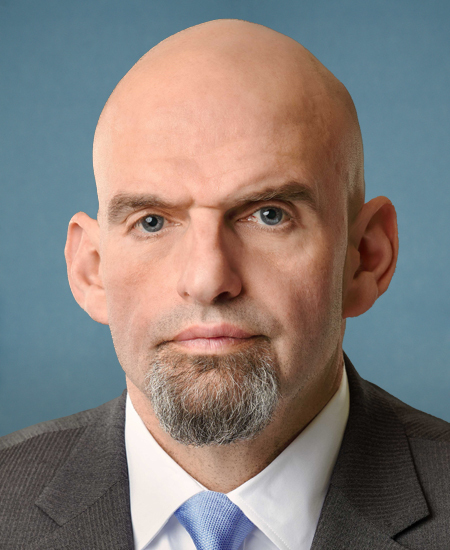
Sen. John Fetterman
Sponsored bills
Maddy summary# Summary of the Agriculture Resilience Act of 2023 This comprehensive agricultural legislation contains multiple titles addressing conservation, renewable energy, and food waste reduction: **Conservation Programs:** - Expands Conservation Reserve Program to 32 million acres by 2028 - Creates "Grassland 30" pilot program for 30-year conservation contracts - Establishes new Private Grazing Land Conservation program with focus on advanced grazing management - Creates Alternative Manure Management Program with $1.5 billion funding (2024-2028) to reduce methane emissions from livestock operations - Makes composting a recognized conservation practice **Renewable Energy:** - Amends Rural Energy for America Program to include greenhouse gas reduction criteria - Requires carbon accounting assessments for renewable energy systems - Establishes agrivoltaic systems research and demonstration program ($15 million annually) **Food Waste Reduction:** - Standardizes "quality date" (BEST If Used By) and "discard date" (USE By) labeling - Requires federal contractors to report on food waste disposal - Creates School Food Waste Reduction Grant Program - Establishes grants for composting and anaerobic digestion food waste-to-energy projects ($100 million annually) **Additional Provisions:** - Amends Federal Food Donation Act to require food donation - Creates Food Waste Research Program with 5 regional partner institutions - Includes $20 million for Processing Resilience Grants to increase meat processing capacity - Requires technical assistance for conservation programs with specific funding allocations The legislation emphasizes climate resilience, greenhouse gas reduction, and sustainable agricultural practices while providing significant funding for conservation programs and food waste reduction initiatives.
Maddy summaryThis concurrent resolution (SCONRES 8) expresses Congress's formal opinion that tax-exempt fraternal benefit societies - mutual aid organizations operating under IRS Section 501(c)(8) - have long provided essential community benefits. It highlights that these societies, with approximately 7 million members nationwide, contribute over $3.8 billion annually through charitable work, volunteerism, and financial security programs. The resolution affirms that their tax-exempt status continues to support their mission and relieve pressure on government safety net programs. As a non-binding statement of congressional sentiment, it does not change tax law or create new obligations.
Maddy summaryS 956, the Health Care Fairness for Military Families Act of 2023, eliminates a separate premium for young adult dependents under the TRICARE Young Adult Program. It directly affects military service members' children aged 21-26 who previously paid an additional fee to remain covered after turning 21. The bill amends Title 10, U.S. Code, to remove the separate premium requirement (by striking subsection (c) of section 1110b) and adjusts related eligibility rules, simplifying coverage continuity without additional cost for these dependents.
Maddy summaryThis bill amends the federal Food and Nutrition Act to allow Puerto Rico to transition from its current nutrition assistance system to the Supplemental Nutrition Assistance Program (SNAP), which provides federal benefits to low-income households. It requires Puerto Rico to submit a transition plan to the U.S. Department of Agriculture within 60 days, with the agency having 180 days to approve it. Puerto Rico would operate under a 5-year transition period from its existing block grant system, during which the federal government must provide technical assistance and annual reporting. The bill directly affects Puerto Rico residents eligible for nutrition assistance and modifies federal funding formulas to support this transition.
Maddy summaryThe E-BIKE Act (S 881) creates a 30% federal tax credit for individuals who purchase new, qualified electric bicycles, up to $5,000 per bike. It directly affects individual consumers by reducing the cost of qualifying e-bikes, which must meet specific safety and technical standards (e.g., motors under 750 watts, speed limits of 20-28 mph, UL 2849 certification, and unique VIN labeling). The credit phases out for higher earners, with income limits of $150,000 (single), $225,000 (head of household), and $300,000 (joint returns). The bill also includes rules to prevent double benefits and requires retailers to provide clear pricing details if consumers transfer the credit to them at purchase.
Medicare and Medicaid Dental, Vision, and Hearing Benefit Act of 2023 This bill provides for Medicare coverage of dental, vision, and hearing care. Coverage includes (1) routine dental cleanings and exams, basic and major dental services, emergency dental care, and dentures; (2) routine eye exams, eyeglasses, and contact lenses; and (3) routine hearing exams, hearing aids, and exams for hearing aids. With respect to such care, the bill establishes special payment rules, limitations, and coinsurance requirements. The bill also increases the Medicaid Federal Medical Assistance Percentage (i.e., federal matching rate) for dental, vision, and hearing services.
Maddy summaryS 844 creates a new federal fund to reimburse local emergency responders after train incidents involving hazardous materials. The bill provides immediate initial funding of at least $250,000 and up to $3 million per incident to cover costs like equipment replacement, overtime pay for firefighters/police, and operational expenses incurred during response efforts. It requires railroads transporting hazardous materials to provide local emergency groups with advance warnings about train loads and real-time location data. Shippers and carriers of hazardous materials by rail will pay annual fees to fund this reimbursement program, which is administered by the Federal Railroad Administration. The bill directly affects state/local emergency response agencies (fire, police, emergency services) in communities impacted by such train incidents.
Maddy summaryThis bill creates a federal grant program to help states and tribal governments improve their systems for licensing firearms dealers. To qualify, a state must already have a law requiring dealers to be licensed (with licenses valid up to 3 years, regular inspections, and penalties for violations like suspension or fines). Grants, capped at $2.5 million per year, can fund developing, implementing, or evaluating these licensing programs. Recipients must report annually on inspections, violations, and license statuses, and the federal government will publish annual reports to Congress on all grant activities.
Maddy summaryThis is a ceremonial Senate resolution (SRES 110) honoring the late James George Abourezk, the first Arab American to serve in the U.S. Senate (1973-1979) from South Dakota. It commemorates his legacy, including his work re-establishing the Senate Committee on Indian Affairs and co-authoring key Native American rights legislation like the Indian Child Welfare Act. The resolution directs the Senate to adjourn in his memory and send a copy to his family, acknowledging his service as a representative and advocate for Native American communities. As a procedural resolution, it has no legislative effect beyond commemoration.