Federal Death Penalty Prohibition Act This bill prohibits the imposition of a death penalty sentence for a violation of federal law. A person sentenced to death before enactment of this bill must be resentenced.
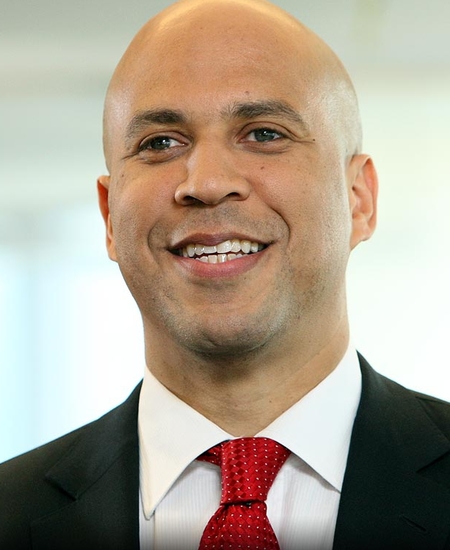
Sen. Cory A. Booker
Sponsored bills
Protecting Domestic Violence and Stalking Victims Act of 2021 This bill establishes new federal firearms restrictions for individuals who are convicted of misdemeanor stalking offenses. The bill expands the categories of persons who are prohibited from receiving, possessing, shipping, or transporting a firearm or ammunition. Specifically, it adds a new category of prohibited persons: persons convicted of a misdemeanor crime of stalking. The term misdemeanor crime of stalking means a misdemeanor stalking offense under federal, state, tribal, or municipal law and a course of harassment, intimidation, or surveillance of another person that (1) places such person in reasonable fear of harm to themselves, an immediate family member, a household member, or a spouse or intimate partner (including a current or former dating partner); or (2) causes emotional distress to such person. The bill also specifically prohibits dating partners who are convicted of a misdemeanor crime of domestic violence or who are subject to certain restraining orders from receiving, possessing, shipping, or transporting a firearm or ammunition. Currently, such restrictions generally only apply to spouses, co-parents, and cohabitants.
Shareholder Protection Act of 2021 This bill requires shareholder authorization of certain political expenditures by a publicly traded company. A violation of this requirement is considered a breach of fiduciary duty, and the officers and directors who authorized the expenditure are subject to joint and several liability. A publicly traded company must require a board vote with respect to political expenditures in excess of $50,000 and, within 48 hours, make publicly available the individual votes of each board member.
Butch Lewis Emergency Pension Plan Relief Act of 2021 This bill modifies the funding rules and provides financial assistance for certain pension plans that are underfunded or insolvent. First, the bill expands the authority of, and provides funding for, the Pension Benefit Guaranty Corporation (PBGC) to provide special partition assistance to a multiemployer pension plan that is insolvent or at risk of insolvency. The bill expands eligibility for partition assistance, provides funding for a plan to reach a projected funded ratio of 80% over a 30-year period, and does not require a plan to repay such assistance. The bill further permits a multiemployer pension plan to elect to retain its funding zone status from the previous year for either (1) the first plan year beginning during the period from March 1, 2020, through February 28, 2021; or (2) the next succeeding plan year, as designated by the plan sponsor. A plan may also extend by five years the funding improvement or rehabilitation period if the plan is designated as in endangered or critical status for a plan year beginning in 2020 or 2021. A plan in critical and declining status may not suspend payment of plan benefits. Additionally, the bill adjusts the minimum funding standards for a multiemployer pension plan to account for investment losses and other losses related to the COVID-19 pandemic and modifies the PBGC guarantee formula to increase the maximum potential benefits under a multiemployer pension plan.
Background Check Expansion Act This bill establishes new background check requirements for firearm transfers between private parties (i.e., unlicensed individuals). Specifically, it prohibits a firearm transfer between private parties unless a licensed gun dealer, manufacturer, or importer first takes possession of the firearm to conduct a background check. The prohibition does not apply to certain firearm transfers, such as a gift between spouses in good faith.
This concurrent resolution commends the service and professionalism of the U.S. Capitol personnel who ensured Congress was able to continue operating in the wake of the security breach on January 6, 2021, and it expresses appreciation for the members of the news media reporting on the work of Congress despite the risk to their own safety.
This resolution supports the designation of February 20-February 27, 2021, as National FFA Week. It also (1) recognizes the important role of the National FFA Organization (Future Farmers of America) in developing the next generation of leaders who will change the world, and (2) celebrates 50 years of National FFA alumni and supporters.
Electric Vehicles for Underserved Communities Act of 2021 This bill requires the Department of Energy (DOE) to support the deployment of electric vehicle charging infrastructure in underserved or disadvantaged communities. Specifically, DOE must establish an EV Charging Equity Program. Under the program, DOE must provide technical assistance and award grants to increase the deployment and accessibility of electric vehicle charging infrastructure in such communities. If practicable, DOE must ensure that relevant programs promote electric vehicle charging infrastructure, support clean and multimodal transportation, provide improved air quality and emissions reductions, and prioritize the needs of such communities.
Mental Health Justice Act of 2021 This bill creates a grant program for states and local governments to train and dispatch mental health professionals to respond, instead of law enforcement officers, to emergencies that involve people with behavioral health needs. The Substance Abuse and Mental Health Services Administration (SAMHSA) must manage the program in consultation with the Department of Justice (DOJ). SAMHSA may cancel grants that increase incarceration or institutionalization. Grantees must use funds for purposes including de-escalation and anti-racism training. The Department of Health and Human Services and the DOJ must evaluate this program.
Unemployment Insurance Technology Modernization Act of 2021 This bill requires the Department of Labor to study and report on the technology needs of federal and state unemployment compensation programs. Based on this study, Labor must develop, operate, and maintain a modular set of technology capabilities to modernize the delivery of unemployment compensation. Before the deployment of the technology capabilities to all states, Labor must select at least four states to participate in a pilot program to test the technology capabilities and demonstrate that they meet requirements. The bill establishes accessibility requirements for filing online unemployment compensation claims. In addition, it prohibits the technology capabilities from relying solely on a high-risk automated decision system to (1) deny a claim for unemployment compensation, (2) reduce the amount of unemployment compensation for which a claimant is eligible, or (3) deny a claimant's right to appeal an unemployment compensation decision.