Maddy summaryThis Senate resolution commemorates the 35th anniversary of Ukraine’s independence from the Soviet Union and recognizes the resilience of the Ukrainian people in pursuing sovereignty and democracy. The text affirms U.S. support for Ukraine’s territorial integrity, specifically rejecting the annexation of Crimea, while condemning Russia’s 2022 military invasion. It encourages the U.S. government to provide strong security guarantees to facilitate a lasting peace agreement and to integrate lessons from Ukraine’s defense innovations into American military readiness. Additionally, the resolution urges Ukraine to continue implementing reforms related to anti-corruption measures, free markets, and the rule of law.
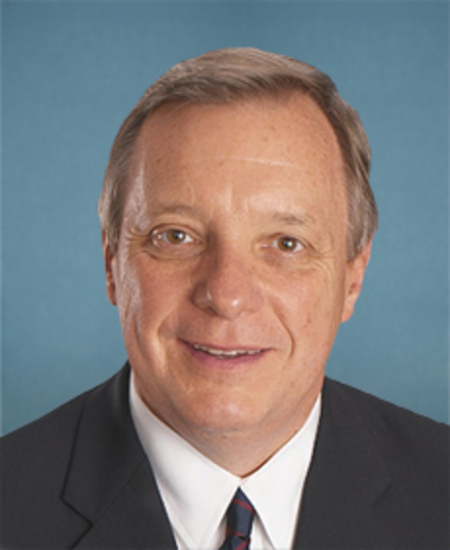
Sen. Richard J. Durbin
Sponsored bills
Maddy summaryThis resolution designates the week of August 22 through August 30, 2026, as "National Park Week." It directly affects the public by encouraging responsible visits and support for the National Park System, which includes parks, battlefields, and historical sites located across the United States and its territories. The measure serves as a formal declaration to highlight the parks' role in recreation, education, and economic activity without altering any laws or funding.
Maddy summaryThis resolution establishes a mandatory process for the U.S. Senate to address the long-term fiscal stability of Social Security by creating a bipartisan working group that must submit legislative proposals within specific deadlines. The bill requires the Senate to introduce and consider legislation that ensures the Social Security Trust Funds can pay 100 percent of scheduled benefits for at least 50 years, restricting debate to 30 hours and limiting amendments to those that meet this solvency standard. Passage of the final bill in the Senate requires a three-fifths supermajority vote, and the resolution prohibits the inclusion of any provisions unrelated to changing Social Security outlays, revenues, or financing.
Maddy summaryThe Protect American Values Act of 2026 prohibits the use of federal funds to implement or enforce a specific Department of Homeland Security rule regarding the "Public Charge" ground of inadmissibility. This legislation directly affects immigrants and their families by preventing the government from using financial resources to carry out policies that could restrict access to essential services like food, medical care, and housing. The bill includes a statement of congressional intent arguing that the targeted rule would harm community health, increase poverty, and circumvent established immigration laws. By blocking funding for this specific regulatory action, the act aims to maintain current eligibility standards for public assistance without altering the underlying statutory framework.
Maddy summaryThis legislation directs the United States Postal Service to create unique ZIP Codes for 75 specific communities located across multiple states. The bill requires the Postal Service to finalize these designations within one year after the law is enacted. Communities affected by this requirement include towns and neighborhoods in states such as California, Colorado, Florida, and others. Ultimately, the measure ensures that each listed location has its own distinct postal code for mailing purposes.
Maddy summaryThe Kids Online Safety Act (S 1748) requires major social media platforms, online video games, and other "covered platforms" to implement specific safety features for minors (under 17). These features include default privacy settings that limit harmful design features like infinite scrolling and auto-play, parental controls for managing minors' accounts, and restrictions on advertising illegal products to minors. The bill also mandates annual transparency reports about how platforms are used by minors and requires platforms to provide clear notices about their content algorithms. It creates a Kids Online Safety Council to advise Congress on online safety issues for children. The law applies to platforms with more than 10 million monthly users in the U.S. and takes effect 18 months after enactment.
Maddy summaryThis Senate resolution reaffirms U.S. policy to support a peaceful democratic transition in Venezuela through free and fair elections. It urges the interim government led by Delcy Rodríguez to immediately organize transparent presidential elections and calls for the unconditional release of all political prisoners. The document also declares that any harm inflicted on individuals seeking public office would be presumed to have the approval of senior Venezuelan officials and could lead to U.S. accountability actions.
Maddy summaryThis resolution designates the week of August 2 through August 8, 2026, as "National Farmers Market Week" to honor the importance of local food markets. It serves as a symbolic gesture to recognize how these markets support farmers' livelihoods, strengthen local economies, and connect urban and rural communities. The bill does not create new laws or funding but instead formally acknowledges the role farmers markets play in promoting sustainable farming and public health.
Maddy summaryThe Lori Jackson-Nicolette Elias Domestic Violence Survivor Protection Act expands federal firearm restrictions to include individuals subject to any domestic violence restraining order, including temporary or emergency orders issued without the abuser's presence. It broadens the legal definition of an "intimate partner" to cover dating partners and other relationships protected by state laws, closing previous loopholes that allowed some abusers to keep guns. The bill also creates a federal grant program for states and tribes to fund the removal, storage, and return of firearms from individuals subject to these orders, requiring them to partner with local domestic violence service providers to ensure victim safety.
Maddy summaryThis bill creates a pilot program that transfers management authority for certain federal court buildings from the General Services Administration to the Administrative Office of the United States Courts. Under this new arrangement, the Director of the Administrative Office would gain the power to acquire, construct, alter, lease, and maintain court facilities, including the ability to hire contractors and manage utilities and security services. The legislation establishes a dedicated fund to finance these operations and requires congressional approval for major construction or leasing projects exceeding specific cost thresholds. Additionally, the bill mandates that the Thurgood Marshall Federal Judiciary Building be transferred to the Director's control within 181 days of the law's enactment. The program is designed to run for seven years, with a requirement to return all transferred properties to the General Services Administration by the tenth year.