This resolution reaffirms the U.S. commitment to promoting economic prosperity, security, and democratic governance throughout the Americas, and it calls on the President to lead a coordinated diplomatic effort to achieve specified goals while hosting the Ninth Summit of the Americas.
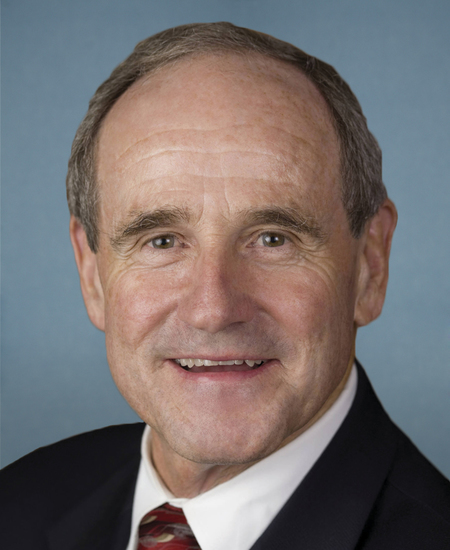
Sen. James E. Risch
Sponsored bills
Back the Blue Act of 2021 This bill establishes new criminal offenses for killing, assaulting, and fleeing to avoid prosecution for killing a judge, law enforcement officer, or public safety officer. Additionally, the bill expands the list of statutory aggravating factors in death penalty determinations to also include the killing or attempted killing of a law enforcement officer, judge, prosecutor, or firefighter or other first responder; broadens the authority of federal law enforcement officers to carry firearms; and limits federal court review of challenges to state court convictions for killing a public safety officer or judge. Finally, it directs the Department of Justice to make grants to law enforcement agencies and nongovernmental organizations to promote trust and improve relations between law enforcement agencies and the communities they serve.
Strategic Competition Act of 2021 This bill addresses various foreign relations issues, with a focus on China. Among other things, the bill requires the U.S. Agency for Global Media to take certain actions to support independent journalism and combat censorship in countries where the Chinese Communist Party or other entities are promoting disinformation; requires the Department of State to establish programs to engage partner countries on issues such as regulatory harmonization and technology partnerships; prohibits any individual who has served as Secretary of State or Deputy Secretary of State from representing a foreign government entity before the executive branch; requires the State Department to develop and implement a plan for increasing the U.S. presence in the Indo-Pacific region; authorizes various foreign military financing and diplomatic activities in Southeast Asia and the Indo-Pacific region; prioritizes the transfer of excess defense articles to Taiwan, Thailand, Indonesia, Vietnam, and Malaysia; prohibits a country from receiving certain U.S. assistance if that country hosts a Chinese military installation within its territory, with some exceptions; authorizes the U.S. representative to the Inter-American Development Bank to vote for an increase in the bank's capital stock; requires strategies to engage with other countries on issues such as managing relations with China; authorizes military training assistance activities in Latin America and the Caribbean; establishes an interagency working group to counter Chinese cyber aggression in Africa; authorizes activities to promote democracy in Hong Kong; and imposes sanctions on foreign individuals and entities responsible for certain abuses (e.g., forced labor and coercive abortions) in China's Xinjiang region.
This concurrent resolution declares that Congress should not impose any new performance fee, tax, royalty, or other charge relating to the public performance of sound recordings on a local radio station for broadcasting sound recordings over the air, or on any business for such public performance of sound recordings.
This resolution condemns all manifestations of expressions of racism and anti-Asian and Pacific Islander or ethnic intolerance and calls for specified actions by the Senate Judiciary Committee, the Department of Justice (DOJ), and federal law enforcement. The resolution (1) calls on the Senate Judiciary Committee to consider holding a hearing related to the surge in violence against Asian Americans and Pacific Islanders, and (2) applauds DOJ's commitment to conducting a 30-day review of violence against Asian Americans and Pacific Islanders. The resolution calls on federal law enforcement officials, working with state and local officials, to expeditiously and vigorously investigate all reports of hate crimes against Asian Americans and Pacific Islanders in the United States, work to improve the reporting of such hate crimes, and hold the perpetrators of those crimes accountable and bring the perpetrators to justice.
Constitutional Concealed Carry Reciprocity Act of 2021 This bill allows a qualified individual to carry a concealed handgun into or possess a concealed handgun in another state that allows its residents to carry concealed firearms. A qualified individual must (1) be eligible to possess, transport, or receive a firearm under federal law; (2) carry a valid photo identification document; and (3) carry a valid state-issued concealed carry permit, or be eligible to carry a concealed firearm in his or her state of residence.
Protecting Resources On The Electric grid with Cybersecurity Technology Act of 2021 or the PROTECT Act of 2021 This bill provides incentives for electric utilities to invest in cybersecurity. Specifically, the bill directs the Federal Energy Regulatory Commission (FERC) to provide incentives to electric utilities for investing in advanced cybersecurity technology. In addition, it establishes a grant and technical assistance program at the Department of Energy for electric utilities that are not regulated by FERC to deploy advanced cybersecurity technology.
Veterans Burn Pits Exposure Recognition Act of 2021 This bill requires the Department of Veterans Affairs (VA) to concede, for the purposes of health care benefits and wartime disability compensation, that a veteran was exposed to certain toxic substances, chemicals, and hazards from burn pits if such veteran served on active duty in a covered location during a specified time frame (unless there is affirmative evidence to establish that the veteran was not exposed during such service). A burn pit is an area used for burning solid waste in open air without equipment. Specifically, the bill covers the following locations and corresponding time periods: Iraq between August 2, 1990, and February 28, 1991, as well as from March 19, 2003, until burn pits are no longer used in this location; Southwest Asia (including Kuwait, Saudi Arabia, Oman, and Qatar) from August 2, 1990, until burn pits are no longer used in these locations; and Afghanistan, Syria, Jordan, Egypt, Lebanon, Yemen, and Djibouti from September 11, 2001, until burn pits are no longer used in these locations. Under the bill, if an exposed veteran submits insufficient evidence to establish a service-connection for purposes of disability compensation, the VA shall provide a medical examination and request a medical opinion regarding a causal link between the disability and a toxin, chemical, or hazard.
Second Amendment Mandates Equality Act or the SAME Act This bill reduces the minimum age—from 21 years to 18 years—at which an individual may obtain a handgun from a federally licensed gun dealer, manufacturer, importer, or collector.
Back to Work Bonus Act This bill permits states to provide a one-time lump sum payment, through July 1, 2021, to individuals who (1) were eligible for COVID-19 pandemic unemployment compensation during any week after enactment of this bill, and (2) are no longer eligible as a result of becoming thereafter reemployed. Payments of $1,200 shall be paid to individuals who work at least 30 hours and $600 to individuals who work at least 20 hours but less than 30. The payments are available for claimants (1) who are not employed by a government entity, (2) who return to work for at least four consecutive weeks, and (3) whose annual salary does not exceed $75,000. Before receipt of a payment, the individuals' employers must verify their hours and earnings. Additionally, the bill (1) accelerates a scheduled increase in funding for reemployment services and eligibility assessments (RESEA), (2) allows states to use RESEA funds to serve all workers receiving unemployment benefits, and not just those most likely to exhaust their benefits; and (3) allows states to provide reemployment services to individuals receiving pandemic unemployment assistance and pandemic emergency unemployment compensation. Finally, the bill reinstates the requirement that unemployment claimants certify they are able, available, and actively seeking work.