

Customs Trade Partnership Against Terrorism Pilot Program Act of 2023 or the CTPAT Pilot Program Act of 2023 This bill requires the Department of Homeland Security to carry out a pilot program that assesses whether allowing certain entities to participate in the Customs Trade Partnership Against Terrorism (CTPAT) would enhance port security, combat terrorism, prevent supply chain security breaches, or otherwise satisfy the goals of CTPAT. Such entities are (1) non-asset-based third-party logistics providers that arrange international freight transportation and are licensed or bonded by specified federal agencies; or (2) asset-based third-party logistics providers that facilitate cross-border activity, are licensed or bonded by specified federal agencies, and execute logistics services using their own warehousing assets and resources. The bill requires the Government Accountability Office to report on the effectiveness of CTPAT.
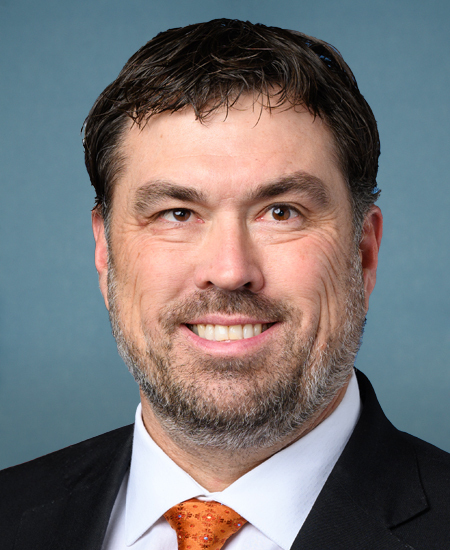
Rep. Morgan Luttrell
Sponsored bills
Maddy summaryHR 6524, the Federal Cybersecurity Workforce Expansion Act, creates a new federal apprenticeship program to address the cybersecurity workforce shortage by training individuals for cybersecurity roles within federal agencies. The program partners with community colleges, career and technical schools, and other educational institutions to provide training aligned with federal cybersecurity needs. It also establishes a pilot program specifically for veterans and military members transitioning to civilian life, offering cybersecurity training with portable credentials that can be used across the job market. The bill requires coordination with multiple federal agencies and includes reporting requirements to assess program effectiveness and track participant employment outcomes.
Maddy summaryThis bill expands eligibility for government-furnished headstones, markers, or medallions for Medal of Honor recipients. It directly affects veterans who have received the Medal of Honor but were previously excluded from this benefit due to a specific rule. The key change modifies eligibility rules to remove an exclusion (previously applying to certain recipients), ensuring all Medal of Honor recipients qualify for these headstones or markers. The bill also corrects a reference to the wrong section of law in the existing statute.
Maddy summaryHR 6734 prohibits the use of federal funds to finalize, implement, or enforce the Bureau of Alcohol, Tobacco, Firearms, and Explosives' (ATF) proposed rule (2022R-17) defining "engaged in the business as a dealer in firearms." This bill directly affects the ATF by blocking funding for this specific regulatory rule, which was proposed in August 2023. The legislation does not create new requirements but prevents federal resources from being used to advance this particular ATF regulation.
Maddy summaryThe Veteran Appeals Decision Clarity Act (HR 5891) requires the Board of Veterans' Appeals to include clearer explanations in its written decisions. Specifically, it mandates that the Board state: (1) when evidence was not considered and why (including the date the evidence was received and the relevant law that barred its late submission), and (2) whether a veteran’s notice of disagreement was filed on time and in proper form. This directly affects veterans appealing benefit claims and the Board itself, as decisions must now explicitly address these two points. The goal is to make appeal outcomes more transparent and understandable for veterans navigating the process.
Maddy summaryHRES 793 is a resolution passed by the U.S. House of Representatives calling on Hamas to immediately release all 199 hostages taken during Hamas' October 7, 2023 attack on Israel. The resolution condemns Hamas for the attack, the taking of hostages, and threats against hostages, while stating that holding hostages violates international humanitarian law under the Geneva Conventions. It demands the immediate release of all hostages and expresses sympathy for victims and their families. As a symbolic resolution, it does not create legal obligations but formally expresses the House's position.
Maddy summaryHRES 683 is a non-binding resolution expressing the House's support for diplomatic efforts to encourage Mexico to fulfill annual water delivery commitments under the 1944 U.S.-Mexico treaty. The treaty requires Mexico to deliver an average of 350,000 acre-feet of water annually (over a 5-year cycle) to the U.S., but Mexico has historically delayed deliveries until the cycle ends. The resolution specifically acknowledges water shortages faced by South Texas farmers and urges Mexico to meet its annual obligations, while supporting negotiations for more reliable water agreements. It does not create new legal requirements but formally encourages diplomatic action to address the delivery delays.
Maddy summaryThis bill appropriates $14.3 billion in supplemental security funding to Israel following the October 7, 2023 attacks. The funding includes $4 billion for Iron Dome and David's Sling defense systems, $1.35 billion for the Iron Beam defense system development, and $3.5 billion for foreign military financing. The bill requires regular reporting to Congress on security assistance provided to Israel and designates all funds as "emergency requirements" under federal budget law. It also modifies existing laws to facilitate the transfer of defense articles and services to Israel, aiming to strengthen Israel's defense capabilities against rocket threats.
This resolution honors the service, sacrifice, and contributions of Texas veterans and their families. The resolution also expresses that the House of Representatives commits to working with the Department of Veterans Affairs to ensure that veterans are provided timely care and applicable benefits and compensation as a result of their service.
Maddy summaryHR 6383 prohibits the Department of Homeland Security (DHS) from using federal funds to implement or enforce a "remain in Texas policy." This policy would require migrants released by DHS or HHS to stay in Texas after entering the U.S. The bill's key mechanism is a funding ban, blocking DHS from enforcing such requirements without congressional approval. It directly affects migrants subject to release by DHS/HHS and DHS operations. The policy change is purely procedural, restricting how federal funds can be used for migration management in Texas.