

Processing Revival and Intrastate Meat Exemption Act or the PRIME Act This bill exempts from federal inspection requirements animals and meats that are slaughtered and prepared at custom animal slaughter facilities for distribution within the state. Under current law, a custom slaughter exemption applies if the meat is slaughtered exclusively for personal, household, guest, or employee uses. Specifically, the bill expands the federal inspection exemption to include the slaughter of animals or the preparation of carcasses, meat, and meat food products that are slaughtered and prepared at a custom slaughter facility in accordance with the laws of the state where the facility is located; and prepared exclusively for distribution to household consumers in the state or restaurants, hotels, boarding houses, grocery stores, or other establishments in the state that either prepare meals served directly to consumers or offer meat and food products for sale directly to consumers in the state. The bill does not preempt any state law concerning (1) the slaughter of animals or the preparation of carcasses, meat, and meat food products at a custom slaughter facility; or (2) the sale of meat or meat food products.
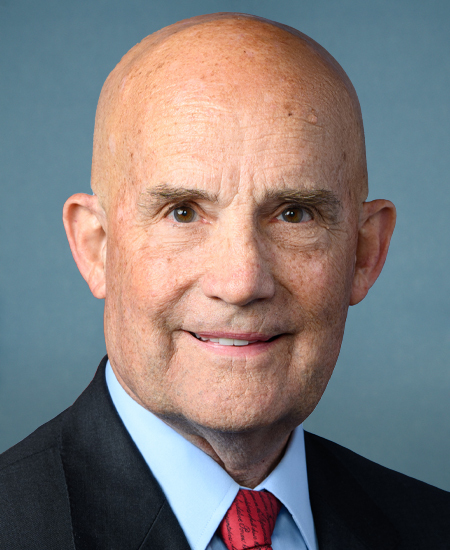
Rep. Keith Self
Sponsored bills
Maddy summaryHJRES 61 is a resolution seeking to block a Department of Labor rule published in March 2023. The rule would have removed legal requirements related to religious exemptions under the Equal Opportunity Clause in federal employment regulations. If passed, this resolution would prevent the rule from taking effect, maintaining the existing requirements for religious exemptions. It uses a specific congressional disapproval process under Title 5 of the U.S. Code to stop the rule without requiring presidential action.
Maddy summaryHRES 396 is a non-binding House resolution recognizing motherhood on Mother's Day. It expresses support for the term "mother" and criticizes language alternatives like "pregnant people" or "birthing person," while stating mothers are defined as women. The resolution contains no policy changes or concrete effects - it is purely symbolic, affirming traditional definitions of motherhood without altering laws or impacting any programs. It was introduced by multiple House members and referred to the Education and Workforce Committee.
Maddy summaryHR 3175, the Regulation Reduction Act of 2023, requires federal agencies to repeal two existing regulations before issuing a new rule, and three for "major rules" (those with significant economic impact). For major rules, the new rule's cost must not exceed the cost of the repealed rules, and the Office of Management and Budget must certify this. Agencies must also submit a 90-day review to Congress identifying costly, ineffective, duplicative, or outdated regulations. This bill directly affects federal agencies and the businesses, states, and local governments subject to federal regulations.
Airlines Independent of Restrictions Act or the AIR Act This bill directs the Department of Transportation (DOT) to rescind no fly zone restrictions over Disney World in Orlando, Florida, and Disneyland in Anaheim, California, imposed under Federal Aviation Administration Notices to Air Missions (NOTAMs) and stop maintaining the restrictions imposed under such notices. DOT may not issue a regulation or a NOTAM to impose a no fly zone over Disney World or Disneyland for a period longer than 30 days, with specified exceptions for national security concerns.
Maddy summaryHR 1690 (ORDER Act) establishes a framework for U.S. diplomatic agreements with Mexico, Honduras, El Salvador, and Guatemala to manage immigration flows in the Western Hemisphere. It requires Mexico to process asylum claims for migrants from other countries within Mexico and accept migrants waiting for U.S. asylum decisions, while also mandating Honduras, El Salvador, and Guatemala to process asylum claims for migrants in their territories. The bill commits the U.S. to accelerating asylum adjudications, supporting asylum capacity in partner countries, and conducting a feasibility study for a U.S. law enforcement center in southern Mexico to combat crime and reduce migration. These provisions directly affect migrants seeking asylum, the governments of the four partner nations, and U.S. immigration enforcement coordination.
Scope 3 Act This bill prohibits any securities law requirement that an issuer of securities must disclose the greenhouse gas emissions of its value chain (i.e., scope 3 emissions).
Maddy summaryThis bill prohibits financial institutions (like banks and credit card processors) from using special transaction codes that separately identify firearm or ammunition sellers. It directly affects gun retailers and the financial services they use, ensuring these businesses are treated the same as other merchants for payment processing. The key provision amends the Truth in Lending Act to ban covered entities from categorizing firearm transactions differently, requiring uniform handling of all business types. This changes how payment systems classify transactions but does not alter gun ownership laws.
Maddy summaryThe Employee Rights Act (HR 2700) amends key labor laws to strengthen employee rights in collective bargaining and privacy. It requires employers to use secret ballot elections for selecting bargaining representatives and to provide labor organizations with voter lists containing employee names and one form of contact information (chosen by the employee) within two business days of an election. The bill prohibits employers from using employee personal information for non-organizing purposes and mandates written authorization for using union dues on non-bargaining activities, with authorizations expiring after one year. Additionally, it clarifies joint employment standards to prevent misclassification and adds tribal sovereignty protections to labor law definitions.
Maddy summaryThis bill adjusts veterans' disability and survivor benefits to match the annual cost-of-living increase for Social Security. It requires the Veterans Affairs Secretary to raise specific payments - such as disability compensation for veterans, dependency payments for spouses and children, and clothing allowances - effective December 1, 2023, by the same percentage as the Social Security COLA for that year. The adjustment directly affects veterans receiving disability compensation under 38 U.S.C. § 1114, surviving spouses under § 1311, and children under §§ 1313-1314, as well as those receiving clothing allowances. The change ensures these benefits keep pace with inflation, using the Social Security Act’s established adjustment formula.