Maddy summaryHCONRES 68 would require the President to remove U.S. military forces from Venezuela unless Congress has explicitly authorized their use through a declaration of war or a specific law. This applies to any U.S. Armed Forces currently stationed in Venezuela without such authorization. The resolution is based on the War Powers Resolution, which mandates congressional oversight of military deployments. It directs the immediate withdrawal of unapproved forces without adding new time limits or conditions.
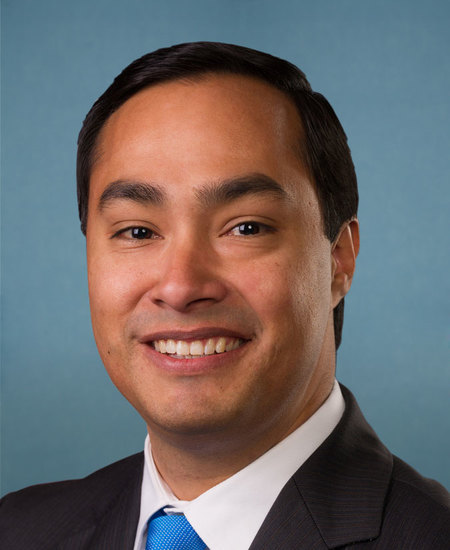
Rep. Joaquin Castro
Sponsored bills
Maddy summaryThis resolution (HRES 1012) is a ceremonial recognition, not a policy bill. It honors Cristina M. Rodríguez for her historic appointment as the first Latina dean of Yale Law School, acknowledging her role as the first tenured Hispanic law professor at Yale and her leadership as a trailblazer for Hispanic legal scholars. The resolution expresses the House's appreciation for her academic achievements, public service (including her role cochairing the Presidential Commission on the Supreme Court), and commitment to mentoring students. It does not create new laws or alter policy; it solely serves to formally recognize her appointment through a House resolution.
Maddy summaryHRES 996 is a resolution introduced by multiple House members to impeach Kristi Lynn Arnold Noem, the Secretary of Homeland Security, for alleged violations of law and the Constitution. It outlines three articles of impeachment: obstructing congressional oversight by denying access to detention facilities and withholding funds, violating public trust through warrantless arrests and excessive force (including tear gas on children), and self-dealing by awarding federal contracts to associates without competitive bidding. If approved by the House, this resolution would formally charge Noem, triggering a Senate trial to determine her removal from office. The resolution itself does not enact new policy but initiates the constitutional impeachment process against a sitting Cabinet official.
Maddy summaryHR 7059, the "No Unauthorized War in Mexico Act," prohibits the use of federal funds for military force in or against Mexico without specific congressional authorization after its enactment. It requires Congress to either declare war or pass a new law meeting War Powers Resolution standards for any military action during the period starting when the bill becomes law and ending December 31, 2026. The bill directly affects the U.S. military and federal agencies managing defense spending, preventing unilateral military operations without explicit congressional approval. An exception exists for actions consistent with existing War Powers Resolution provisions for immediate threats.
Maddy summaryHR 6088, the *Restoring Food Security for American Families and Farmers Act of 2025*, repeals specific sections (10101-10108) from a prior reconciliation law. This action revives previous provisions related to food security programs that were modified by those repealed sections. The bill directly affects federal food assistance and agricultural support programs by restoring their prior legal framework. It does not create new policies but reverses recent changes to existing food security measures.
Maddy summaryThe MORE Act (HR 5068) would remove cannabis from the federal list of controlled substances, effectively decriminalizing it at the federal level while establishing a new tax on cannabis products. The bill creates an Opportunity Trust Fund that would distribute tax revenues to support communities disproportionately impacted by cannabis prohibition, including funding for expungement programs, job training, and equitable licensing initiatives for minority business owners. It also includes provisions to prevent discrimination based on cannabis use in federal programs, immigration proceedings, and workplace policies. The bill would require federal courts to expunge non-violent cannabis convictions and establish a process for resentencing individuals currently serving time for such offenses. These provisions aim to address racial disparities in cannabis enforcement and create more equitable opportunities in the legal cannabis industry.
Maddy summaryHR 7016, the "No Funds for NATO Invasion Act," blocks federal funding for any U.S. military invasion of a North Atlantic Treaty Organization (NATO) member country or territory covered by NATO's Article 5 mutual defense clause. The bill prohibits using any federal funds for such invasions and bans U.S. officials from executing these actions. It directly affects U.S. military operations and funding decisions involving NATO members. The law applies to all federal spending, preventing the use of existing budgets for this specific purpose.
Maddy summaryThis concurrent resolution (HCONRES 69) commemorates the 15th anniversary of the January 8, 2011, Tucson shooting that killed six people and injured 13, including former Congresswoman Gabby Giffords. It honors the victims, survivors, and Giffords - now a prominent advocate for gun violence prevention - and recognizes her leadership in promoting civility and reducing gun violence. The resolution also commends Tucson residents and first responders for their resilience and reaffirms Congress’s commitment to respectful dialogue and opposing political violence. As a ceremonial resolution, it does not create new laws or policies.
Maddy summaryHR 6980, the NOVA Act of 2026, prohibits the use of federal funds to support U.S. possession, control, or sovereignty over Venezuela's territory or resources, including military deployments there. It allows limited exceptions: the President may acquire Venezuelan property for diplomatic use (with local government approval) or use existing U.S. properties in Venezuela for embassies. The bill does not apply to properties owned by the U.S. before January 1, 2026, and explicitly states it won't affect funding for emergency humanitarian aid. This bill directly affects U.S. government agencies and programs seeking to fund activities related to Venezuela's governance or military presence.
Maddy summaryThis resolution (HRES 969) expresses support for designating the week beginning September 8, 2025, as "National Hispanic-Serving Institutions Week." It recognizes colleges and universities with at least 25% Hispanic undergraduate enrollment (known as Hispanic-Serving Institutions or HSIs) and their role in serving diverse, low-income students. The resolution does not create new policies or funding but encourages public observance through ceremonies and activities to honor HSIs’ contributions to higher education access and economic mobility. It applies symbolically to all 615+ HSIs across the U.S. and Puerto Rico.