Maddy summaryThis bill directs the U.S. President to identify Pakistani officials responsible for undermining democracy and human rights within 180 days of enactment, then impose Global Magnitsky sanctions on them. It targets senior government, military, or security officials found to have committed gross human rights violations or interfered with democratic processes, such as during Pakistan’s 2024 elections or through constitutional changes. Sanctions would include asset freezes and travel bans, with exceptions for humanitarian aid, UN obligations, and national security activities. The bill expires on September 30, 2030, and aims to pressure Pakistan to uphold democratic norms, human rights, and judicial independence.
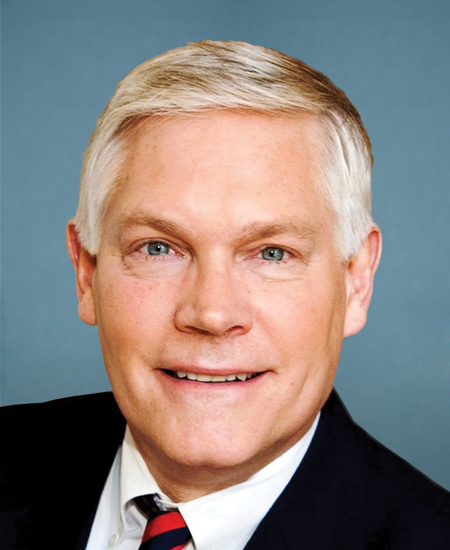
Rep. Pete Sessions
Sponsored bills
Maddy summaryThe FIREARM Act (HR 3770) changes how federal firearm licensees (like dealers) handle violations of firearms laws. It requires the Attorney General to give licensees 30 business days to correct minor, self-reported violations - such as clerical errors - with assistance and training, instead of automatically revoking licenses. The bill also adds a 15-day window for licensees to challenge revocations in federal court, where courts must review the case anew and only uphold revocations if the licensee willfully violated the law. Additionally, it applies retroactively to licensees whose licenses were revoked under a 2021 enforcement policy, allowing them to reapply if they meet compliance requirements.
Maddy summaryHR 2808, the Homebuyers Privacy Protection Act, restricts how consumer reporting agencies share credit reports during mortgage applications. It prevents agencies from sending these reports to third parties unless the request is tied to a firm credit offer and the recipient has either the homebuyer’s explicit written consent or is directly involved in the mortgage (like the lender, loan servicer, or the homebuyer’s bank holding an active account). This directly affects homebuyers applying for residential mortgages by limiting unsolicited sharing of their credit information. The law amends the Fair Credit Reporting Act to strengthen privacy protections around mortgage-related credit data.
Maddy summaryH.J.Res. 118 is a symbolic resolution proposing that September 12, 2025, be designated as "The Day of the Bible" in the U.S. It does not create new laws or affect specific groups. The resolution asks Congress to express support for the designation and encourages schools, civic groups, and communities to hold educational activities about the Bible's historical role. It also requires the President to issue an annual proclamation for this day, recognizing the 1782 approval of the Aitken Bible as a milestone in American history. The bill is purely ceremonial with no legal obligations.
Maddy summaryHR 5031, the *Preserving Patient Access to Long-Term Care Pharmacies Act*, requires Medicare Part D plans and Medicare Advantage plans with drug coverage (MA-PD) to pay long-term care pharmacies an additional supply fee for each specified prescription dispensed to eligible beneficiaries during 2026 ($30) and 2027 (adjusted for inflation). This fee must be paid alongside existing reimbursements for drug costs and dispensing, with a $10,000 penalty for non-payment. The bill also directs the GAO to study long-term care pharmacy payment sustainability under Medicare, analyzing historical payments for brand/generic drugs and dispensing fees. It aims to ensure uninterrupted pharmacy access for Medicare beneficiaries in long-term care settings, particularly in rural areas.
Maddy summaryHR 4863, the Fairness for Khobar Act of 2025, provides lump sum catch-up payments to victims of the 1983 Beirut barracks bombing and 1996 Khobar Towers bombing who were previously denied compensation due to confusing Department of Justice guidance. The bill requires the Special Master to authorize these payments to individuals who relied on outdated guidance stating they could not apply for lump sum payments if already eligible for regular distributions. Victims can prove their reliance through documentation, sworn statements, or other methods approved by the Special Master. Payments will be made from a reserve fund or the main compensation fund, ensuring those who were wrongly excluded can now receive full compensation they were entitled to under the law.
Maddy summaryHR 4788 would amend a 1932 District of Columbia law to allow Members of Congress (Senators and Representatives) to carry concealed firearms in Washington, D.C., if they hold a valid concealed carry license from a state where they are permitted to carry, or are otherwise legally allowed to carry concealed in their home state. The bill requires these members to not be federally prohibited from possessing firearms, to carry a valid state-issued license or proof of residency rights, and to present photo identification. This exception applies only to Members of Congress and does not alter D.C.'s general concealed carry laws for other individuals. The provision would take effect upon the bill's enactment.
Maddy summaryThis bill transitions individuals with disabilities from segregated employment under special certificates (which allow subminimum wages) to competitive integrated employment with fair wages. It creates grant programs for states and employers to facilitate this transition, requiring employers to pay at least minimum wage (increasing over time) and providing necessary supports. The bill phases out special certificates entirely within 4 years, while ensuring individuals with disabilities receive ongoing support during the transition. It also establishes evaluation requirements to track progress and ensure compliance with the new standards.
Maddy summaryHR 940 (FAIR Exams Act) requires federal banking regulators to deliver final examination reports to financial institutions within 60 days after an exit interview or when additional information is provided. It creates an Office of Independent Examination Review led by a presidentially appointed Director to handle appeals of material supervisory determinations, including investigating complaints and reviewing exam procedures. Financial institutions gain the right to request an independent review of exam findings within 60 days, with the Director making final recommendations to regulators within 60 days, and prohibits retaliation for using these appeal rights. The bill directly affects all federally regulated banks, credit unions, and their representatives subject to federal examinations.
Rescissions Act of 2025 This act rescinds specified unobligated funds that were provided to the Department of State, the U.S. Agency for International Development (USAID), various independent and related agencies, and the Corporation for Public Broadcasting. The rescissions were proposed by the President under procedures included in the Congressional Budget and Impoundment Control Act of 1974. Under current law, the President may propose rescissions to Congress using specified procedures, and the rescissions must be enacted into law to take effect. Specifically, the act rescinds funds that were provided to the State Department or the President for Contributions to International Organizations; Contributions for International Peacekeeping Activities; Global Health Programs (excluding funds for programs addressing HIV/AIDS, tuberculosis, malaria, nutrition, or maternal and child health); Migration and Refugee Assistance; the Complex Crises Fund; the Democracy Fund; the Economic Support Fund (excluding funds for assistance to Jordan, Egypt, or the Countering PRC Influence Fund); Contributions to the Clean Technology Fund; International Organization and Programs; Development Assistance (excluding funds for Feed the Future Innovation Labs, the Countering PRC Influence Fund, or commodity-based food aid); Assistance for Europe, Eurasia, and Central Asia; International Disaster Assistance (excluding funds for commodity-based food aid); and Transition Initiatives. The act also rescinds funds that were provided for USAID Operating Expenses, the Inter-American Foundation, the U.S. African Development Foundation, the U.S. Institute of Peace, and the Corporation for Public Broadcasting.