

Online Accessibility Act This bill sets forth requirements for consumer-facing websites and mobile applications owned or operated by a private entity and guidance regarding standards for website accessibility by the disabled. Specifically, the bill prohibits the exclusion of an individual, by reason of disability, from participation in or being denied the full and equal benefits of the services of such a website or application or from being subjected to discrimination by a private owner or operator of such a website or application. Such a website or application shall be considered compliant if it is in substantial compliance with the Web Content Accessibility Guidelines 2.0 Level A and Level AA standard established by the Accessibility Guidelines Working Group. A noncompliant entity shall provide an alternative, equivalent means of access by individuals with disabilities. The Access Board must publish related standards. The bill sets forth provisions regarding administrative remedies and reporting of violations and enforcement by the Department of Justice and through private rights of action.
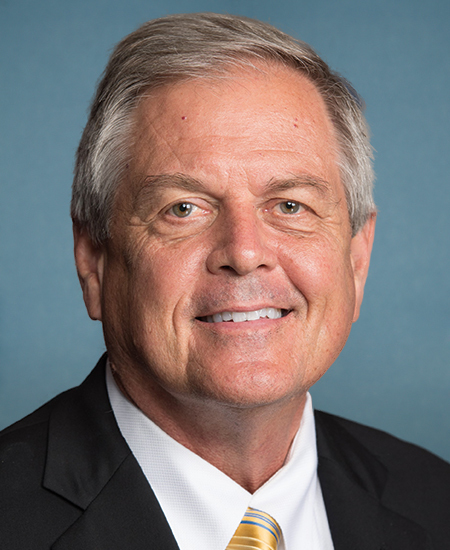
Rep. Ralph Norman
Sponsored bills
This resolution honors the life and legacy of Rush Limbaugh and commends him for his devotion to the United States.
Intelligence on Nefarious Foreign Leaders Using Education Networks for Corrupt Enrichment Act or the INFLUENCE Act This bill lowers the disclosure threshold regarding gifts or contracts from a foreign source that institutions of higher education (IHEs) must report to the Department of Education (ED). It also requires IHEs to disclose information related to foreign involvement in sensitive projects. Under current law, an IHE is required to disclose to ED a gift or contract that is from a foreign source and is valued at $250,000 or more, considered alone or in combination with all other gifts from or contracts with a foreign source. The bill instead requires the IHE to disclose such a gift or contract that is valued at $50,000 considered alone or $100,000 or more in combination with all other gifts or contracts. Further, ED must update annually on its website a database of the disclosed information, and an IHE that receives a gift or contract from a foreign source must post certain information on its website. Information made publicly available must not include sensitive information. Additionally, the bill requires IHEs to disclose information related to foreign involvement in sensitive projects. It also requires a specific contract provision for a cultural or language program that is funded by the Chinese government to operate at an IHE. Finally, ED must establish a process to notify federal agencies of violations of the bill. ED must also report on foreign and national security issues affecting IHEs.
Earmark Elimination Act of 2021 This bill establishes a point of order in the House of Representatives against considering legislation that contains a congressional earmark, limited tax benefit, or limited tariff benefit. If the point of order is raised and sustained, the congressional earmark, limited tax benefit, or limited tariff benefit shall be deemed to be stricken from the legislation.
Iran Hostages Congressional Gold Medal Act This bill requires the Speaker of the House of Representatives and the President pro tempore of the Senate to arrange for the award of a Congressional Gold Medal commemorating the bravery and endurance of the 53 hostages of the Iran Hostage Crisis. Following its award, the medal shall be given to the National Museum of American History of the Smithsonian Institution for display and research. The Department of the Treasury must strike duplicate medals in silver for presentation to a hostage (or the personal representative of a deceased hostage), and Treasury may also strike and sell duplicate medals in bronze.
Stop Foreign Donations Affecting Our Elections Act This bill requires political committees, when accepting a credit card contribution over the internet, to collect the credit card's verification value. The card's billing address must be in the United States unless the contributor is a U.S. citizen living outside of the United States, in which case the contributor must provide his or her voter registration address.
Creating Hope and Opportunity through Increased Choice in Education Act or the CHOICE Act This bill directs the Department of Education to make grants to parents of eligible students for certain education-related expenses. Eligible student refers to a student who (1) is served by a local educational agency that will not provide in-person instruction in a manner consistent with the 2019-2020 school year, and (2) is from a household with a household income that is less than 200% of the reduced-price lunch rate income. Grant funds may be used for tuition and fees for private elementary or secondary schools, private tutoring, home school expenses, or educational materials.
Retirement Freedom Act This bill allows an individual to opt out of Medicare hospital services benefits without also having to opt out of Old Age, Survivors, and Disability Insurance benefits and without having to repay Medicare hospital services benefits already received. The bill also allows an individual to opt back in with no penalty.
Opposing Business with Chinese Military Companies Act This bill requires the President to exercise certain economic powers, such as investigating or prohibiting payments, with respect to an entity that is engaging in economic activities in the United States and is (1) affiliated with China's government or military, or (2) owned or controlled by an entity affiliated with China's defense industrial base. (The President currently has such powers but is not required to exercise them.) The bill extends to December 31, 2026, a provision requiring the Department to Defense to annually report to Congress an updated list of such entities.
This resolution requests that the President transmit to the House of Representatives documents related to the amount of funding that was provided in specified laws regarding COVID-19 (i.e., coronavirus disease 2019) and is currently unspent. The specified laws include the Coronavirus Preparedness and Response Supplemental Appropriations Act, 2020; the Families First Coronavirus Response Act; the Coronavirus Aid, Relief, and Economic Security Act (CARES Act); the Paycheck Protection Program and Health Care Enhancement Act; and Division N of the Consolidated Appropriations Act, 2021.