

Maddy summaryThis bill requires the Department of Defense to review and eventually ban contracts with retailers that use payment processing systems from specific countries deemed a national security risk, such as China, Russia, Iran, and North Korea. Effective January 1, 2027, the Defense Department will be prohibited from entering into agreements for payment equipment or services if those tools rely on technology developed, owned, or controlled by entities in these nations. The law defines covered systems broadly to include hardware, software, and firmware linked to these countries, aiming to prevent potential foreign access to sensitive military financial data. Retailers wishing to continue working with the Department of Defense must replace their payment processing infrastructure with systems that do not involve these restricted technologies.
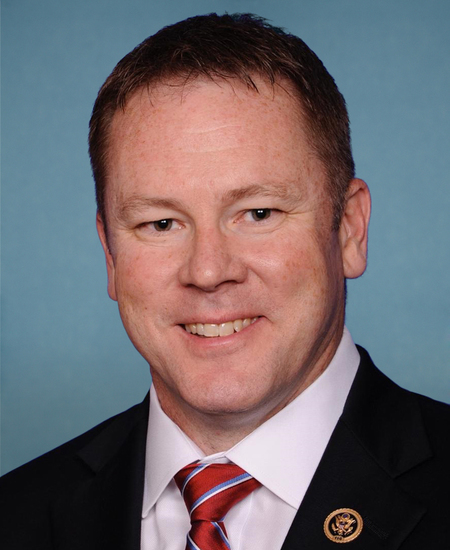
Rep. Warren Davidson
Sponsored bills
Maddy summaryThe Bereaved Parents Rights Act requires hospitals and birth centers to notify parents of miscarriages or stillbirths about their options for burial, cremation, or hospital disposal. This notification must occur within six hours of the event or the parent's discharge, using a standardized form provided by the government. If parents choose burial or cremation within 72 hours, the facility must follow the same state laws that apply to other fetal deaths. The bill also allows parents to sue in federal court if these notification requirements are not met.
Maddy summaryThis bill, titled the No Capital Gains Tax on Family Farms Act, would allow farmers to sell their land to immediate family members without paying capital gains tax on the profit. To qualify, the property must have been used as a farm for at least two years within the eight years prior to the sale, and the buyer must be a spouse, lineal descendant, or their spouse. If the new owner keeps the farm for ten years, the property's tax basis will be adjusted upward to reflect its fair market value at the time of the sale. The law applies to sales occurring after its enactment and requires the IRS to issue regulations to guide its implementation.
This bill designates the facility of the United States Postal Service located at 189 East Main Street in Xenia, Ohio, as the "Gilman 'Gil' Whitney Post Office Building".
Maddy summaryThis resolution expresses the U.S. House of Representatives' disapproval of actions by the United Kingdom government that it claims restrict free speech and expression. The bill directly addresses Prime Minister Keir Starmer and UK officials, citing specific incidents such as arrests for online comments, protests, and silent prayer. It calls on the Trump Administration to consider sanctions, visa revocations, and other measures against UK officials accused of infringing on American constitutional rights. The document also urges the U.S. to refuse recognition of UK laws that the resolution deems to undermine freedom of speech.
Maddy summaryThis bill modernizes housing assistance programs for Native American tribes and Native Hawaiians by streamlining environmental reviews, extending funding authorization through 2032, and expanding loan guarantee options. Key provisions include consolidating environmental review requirements to reduce paperwork for tribes, allowing 99-year leasehold interests on trust lands for housing, and creating new rental assistance specifically for homeless or at-risk Native American veterans. The legislation also clarifies rent rules, waives certain housing counseling certifications for tribal entities, exempts tribal housing projects from some federal civil rights and Buy America requirements, and establishes a direct loan guarantee process for tribal housing projects.
Maddy summaryThis bill repeals a 1957 joint resolution that authorized U.S. military force in the Middle East. It directly affects the legal framework governing U.S. military involvement in that region by removing the original authorization. The key provision is the elimination of Public Law 85-7, which previously allowed the President to use armed forces for peace and stability purposes in the Middle East. This change does not create new authority but instead rescinds an existing statutory provision from the Cold War era.
Maddy summaryHR 6624, the Biological Intellectual Property Protection Act of 2025, requires export licenses for digital files representing human- or AI-designed synthetic DNA or RNA sequences when sent to foreign entities linked to countries designated as national security concerns (like China). It directly affects biotechnology companies and researchers exporting such digital sequence data, mandating licenses for these specific exports within one year of the law's enactment. The key mechanism is a new license requirement under export controls, targeting digital files that could reveal sensitive biotechnology research. This policy change aims to prevent foreign adversaries from accessing U.S. biotech intellectual property through synthetic biology data exports.
Equal Representation Act This bill requires that the statement sent by the President to Congress after the decennial census indicating the number of persons in each state exclude noncitizens. (This statement is the basis for reapportionment of U.S. Representatives.) The bill also requires any questionnaire used in the decennial census to include a checkbox or other similar option for respondents to indicate whether the respondent and each household member is (1) a U.S. citizen, (2) a U.S. national but not a citizen, (3) a non-U.S. national ( alien under federal law) lawfully residing in the United States, or (4) a non-U.S. national unlawfully residing in the United States. The Department of Commerce must make public the number of persons in each state, disaggregated by each of these four categories.
Maddy summaryThe Stop Climate Shakedowns Act of 2026 prohibits state and local governments from suing energy companies for damages related to climate change or greenhouse gas emissions. This bill declares that regulating emissions is exclusively a federal responsibility and voids any state laws that hold energy businesses liable for alleged climate harms. Consequently, all pending lawsuits of this nature against energy producers must be dismissed immediately, preventing states from imposing retroactive penalties for past lawful operations. The legislation directly affects companies involved in the production, refinement, and sale of oil, gas, and coal by shielding them from civil liability in both state and federal courts.