

Maddy summaryThe Safeguarding Charity Act clarifies that tax exemptions for charitable organizations under the Internal Revenue Code (such as 501(c) status) do not count as "federal financial assistance" for regulatory purposes. This means tax-exempt charities and nonprofits will no longer be subject to federal rules or requirements typically applied to organizations receiving direct federal funding. The bill amends U.S. Code to explicitly exclude tax benefits from the definition of "federal financial assistance" unless a law specifically states otherwise. It does not change tax status or funding for these organizations but prevents misclassification under existing regulations. The law applies to all organizations with tax-exempt status under sections 501(c) or 401(a) of the Internal Revenue Code.
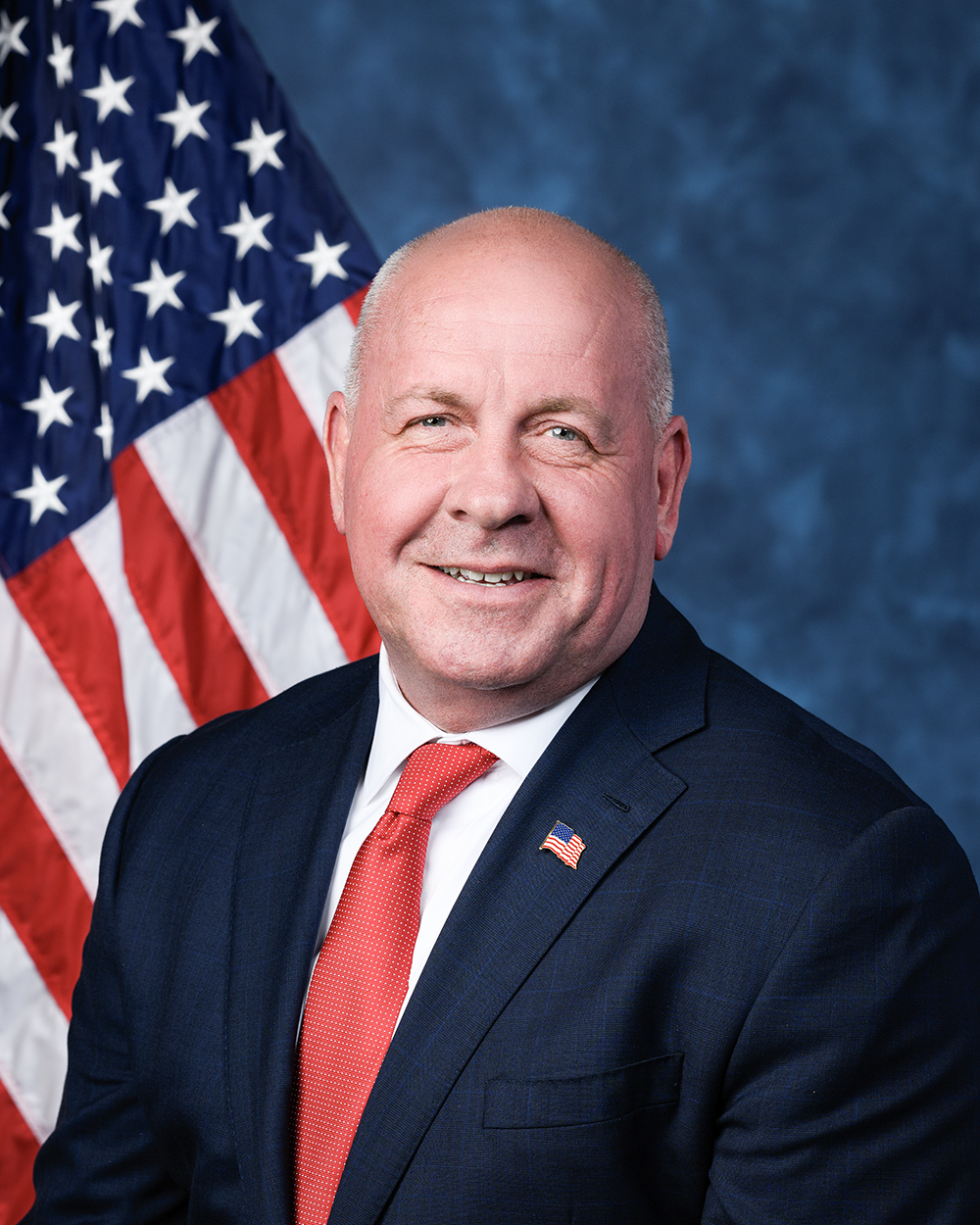
Rep. David J. Taylor
Sponsored bills
Safeguard American Voter Eligibility Act or the SAVE Act This bill requires individuals to provide documentary proof of U.S. citizenship when registering to vote in federal elections. Specifically, the bill prohibits states from accepting and processing an application to register to vote in a federal election unless the applicant presents documentary proof of U.S. citizenship. The bill specifies what documents are considered acceptable proof of U.S. citizenship, such as identification that complies with the REAL ID Act of 2005 that indicates U.S. citizenship. Further, the bill (1) prohibits states from registering an individual to vote in a federal election unless, at the time the individual applies to register to vote, the individual provides documentary proof of U.S. citizenship; and (2) requires states to establish an alternative process under which an applicant may submit other evidence to demonstrate U.S. citizenship. Each state must take affirmative steps on an ongoing basis to ensure that only U.S. citizens are registered to vote, which shall include establishing a program to identify individuals who are not U.S. citizens using information supplied by certain sources. Additionally, states must remove noncitizens from their official lists of eligible voters. The bill allows for a private right of action against an election official who registers an applicant to vote in a federal election who fails to present documentary proof of U.S. citizenship. The bill establishes criminal penalties for certain offenses, including registering an applicant to vote in a federal election who fails to present documentary proof of U.S. citizenship.
Maddy summaryHR 2777, the S-CAP Act of 2025, amends the Internal Revenue Code to increase the maximum number of shareholders allowed for a business to qualify as an S corporation from 100 to 250. This change directly affects small businesses that currently exceed the 100-shareholder limit, allowing them to maintain S-corporation tax status. The key provision modifies Section 1361(b)(1)(A) of the tax code, with the new limit applying to taxable years beginning after December 31, 2025. The bill makes no other changes to S-corporation rules and focuses solely on expanding the shareholder cap.
Maddy summaryHR 2806 prohibits the Secretary of Energy from selling petroleum products from the Strategic Petroleum Reserve to entities under Chinese Communist Party control or if the products could be exported to China. It directly affects U.S. energy sales to Chinese-linked companies and the Department of Energy’s management of the reserve. Key provisions require the Secretary to block such sales and mandate that any sale not result in exports to China. This policy change restricts access to U.S. strategic oil reserves for China-related entities.
Maddy summaryThis House resolution (HRES 301) is a ceremonial tribute honoring Ulysses S. Grant's life and 203rd birthday, recognizing his Ohio roots as a native of Georgetown (Ohio's 2nd Congressional District) and his legacy. It acknowledges his military service in the Civil War, presidency (1869-1877), and role in advancing civil rights through initiatives like the 15th Amendment and the Department of Justice. The resolution specifically credits Grant's contributions to Union victory and Reconstruction efforts, while also honoring the Land of US Grant, Inc., for preserving his historical sites in Georgetown. As a non-binding commemorative measure, it does not create new laws or affect any policies or individuals.
Maddy summaryHR 2750, the Bridging the Broadband Gap Act of 2025, allows states or local entities using Infrastructure Investment and Jobs Act broadband funds to provide vouchers to low-income households in areas lacking adequate broadband service. These vouchers cover 50% of satellite or fixed wireless equipment costs (like routers) and up to $30 monthly for service, prioritizing households in communities with below-median income. The bill restricts vouchers to unserved or underserved locations and limits coverage to a single 12-month period per household. It does not create new funding but directs existing BEAD Program grants toward these targeted household subsidies.
Maddy summaryThe Affordable Housing Credit Improvement Act of 2025 would reform the Low-Income Housing Credit program, which provides tax credits to developers of affordable housing. It would increase state allocations based on population with annual cost-of-living adjustments, modify tenant eligibility rules to allow higher income limits for some residents, and add protections for domestic violence victims in housing. The bill would simplify rules for rural and Native American housing projects, clarify credit eligibility requirements, and require greater transparency in program administration. These changes would directly affect developers, property owners, and low-income tenants in housing projects that receive LIHC tax credits.
Maddy summaryThis bill amends immigration law to expand mandatory detention for non-citizen immigrants convicted of specific property crimes. It adds trespassing, vandalism, and arson to the list of offenses that trigger detention under Section 236(c) of the Immigration and Nationality Act, alongside burglary and serious bodily injury. Non-citizen immigrants convicted of these crimes would now face automatic detention without bond, rather than potentially being released pending removal proceedings. The key change modifies existing detention criteria to include these three property crimes as grounds for mandatory immigration detention.
Maddy summaryThis bill increases loan limits for farmers under the Farm Service Agency. It raises farm ownership loan caps from $600,000/$1.75 million to $850,000/$3.5 million (for direct/guaranteed loans) and operating loan caps from $400,000/$1.75 million to $750,000/$3 million, effective 2025. It also creates a refinancing program allowing distressed guaranteed loans to convert to direct loans if borrowers prove problems can be fixed and the farm can return to financial stability. Additionally, it doubles the microloan limit from $50,000 to $100,000 and updates inflation calculations for loan adjustments using USDA land value data instead of previous metrics.
Maddy summaryThis bill establishes an Office of the Special Inspector General to monitor compliance with constitutional and civil rights laws in college admissions at institutions receiving federal funding. The inspector general will investigate complaints alleging racial discrimination in admissions or financial aid decisions, following the Supreme Court's 2023 ruling in *Students for Fair Admissions v. Harvard* that banned race-based admissions. Institutions found violating the Equal Protection Clause or Title VI of the Civil Rights Act could lose eligibility for federal student aid. The office will submit quarterly reports to Congress on investigations and violations, with a 12-year sunset provision.