Kenneth Meisel Public Servants' Claimant Fairness Act This bill requires the Department of Labor to revise regulations so as to allow at least 60 days (rather than at least 30 days) for a claimant to submit any additional evidence that is requested by the Office of Workers' Compensation Programs to support a federal workers' compensation claim.
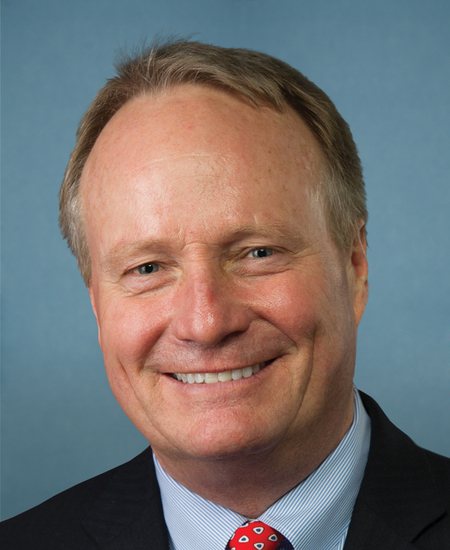
Rep. David P. Joyce
Sponsored bills
This resolution expresses support for the designation of the National Day of Awareness for Missing and Murdered Native Women and Girls.
This resolution expresses the support of the House of Representatives for recognized standards of education, training, and skills to deliver substance use disorder counseling and recognizes the addiction professionals who provide these services.
This resolution expresses support for National Sexual Assault Awareness and Prevention Month.
Railroad Employee Equity and Fairness Act or the REEF Act This bill permanently exempts payments made from the Railroad Unemployment Insurance Account from sequestration. Sequestration is a process of automatic, usually across-the-board spending reductions under which budgetary resources are permanently cancelled to enforce specific budget policy goals. Currently, this exemption ends 30 days after the termination of the COVID-19 national emergency period.
Mainstreaming Addiction Treatment Act of 2021 This bill removes the requirement that a health care practitioner apply for a separate waiver through the Drug Enforcement Administration (DEA) to dispense certain narcotic drugs (e.g., buprenorphine) for maintenance or detoxification treatment (i.e., substance use disorder treatment). Further, a community health aide or community health practitioner may dispense certain narcotic drugs for maintenance or detoxification treatment without registering with the DEA if the drug is prescribed by a health care practitioner through telemedicine. It preempts state laws related to licensure for this activity. The bill also directs the Substance Abuse and Mental Health Services Administration to conduct a national campaign to educate health care practitioners and encourage them to integrate substance use disorder treatment into their practices.
EAGLES Act of 2021 This bill reauthorizes the National Threat Assessment Center (NTAC) within the U.S. Secret Service. It reauthorizes the functions of NTAC through FY2025 and expands them to include the establishment of a national program on targeted school violence prevention.
Eliminate Network Distribution of Child Exploitation Act or the END Child Exploitation Act This bill modifies the reporting requirements for electronic communication service providers and remote computing service providers (providers) that report information to the CyberTipline of the National Center for Missing and Exploited Children on crimes involving the sexual exploitation of children. Specifically, the bill increases the amount of time—from 90 days to 180 days—that a provider must preserve the contents of a report. Additionally, the bill permits a provider to voluntarily retain the contents for longer than 180 days to reduce the proliferation of or to prevent the online sexual exploitation of children.
Pain-Capable Unborn Child Protection Act This bill establishes a new criminal offense for performing or attempting to perform an abortion if the probable post-fertilization age of the fetus is 20 weeks or more. A violator is subject to criminal penalties—a fine, a prison term of up to five years, or both. The bill provides exceptions for an abortion (1) that is necessary to save the life of the pregnant woman, or (2) when the pregnancy is the result of rape or incest. A physician who performs or attempts to perform an abortion under an exception must comply with specified requirements. A woman who undergoes a prohibited abortion may not be prosecuted for violating or conspiring to violate the provisions of this bill.
Domestic Violence Public Health Emergency Guidance Act This bill requires the Department of Justice to issue guidance to law enforcement agencies on model practices for addressing domestic violence and protecting the safety of law enforcement officers during the COVID-19 (i.e., coronavirus disease 2019) public health emergency.