Maddy summaryHRES 1082 is a symbolic resolution recognizing 250 years of Polish-American friendship and affirming U.S. support for Poland’s democracy, sovereignty, prosperity, and security. It specifically calls for continued U.S. military stationing in Poland to support defense coordination and training with Polish forces, and expresses gratitude for Poland’s historical and ongoing partnership, including recent support for Ukraine. The resolution highlights key milestones like Poland’s NATO membership, defense investments, and refugee assistance for Ukrainians. As a non-binding resolution, it does not change laws but formally strengthens diplomatic recognition of the alliance.
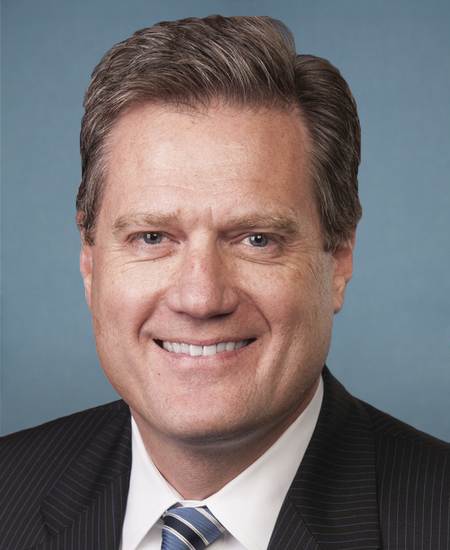
Rep. Michael R. Turner
Sponsored bills
Maddy summaryHRES 1077 is a non-binding resolution expressing the House of Representatives' support for the U.S. Postal Service to honor Lieutenant Colonel Charity Adams Earley with a commemorative stamp. It directly requests the Citizens’ Stamp Advisory Committee (part of the USPS) to recommend such a stamp to the Postmaster General. The resolution highlights Adams Earley’s historic role as the first Black officer in the Women’s Army Corps (WAC), her leadership of the 6888th Central Postal Directory Battalion during WWII, and her post-war advocacy for Black leadership development. This resolution does not create new law or funding but formally urges the USPS to recognize her legacy through a postage stamp.
Maddy summaryHR 7557, the Respect NATO Allies Act, requires congressional approval before the President can impose or increase tariffs on goods imported from NATO member countries. The bill mandates that any such tariff action must be accompanied by a joint resolution of approval passed by both House and Senate, following specific procedural rules. This directly affects the President's trade authority and U.S. trade relations with NATO allies, ensuring Congress has a formal role in decisions impacting these key security partners. The law does not change existing tariff rules but adds a new approval step for actions targeting NATO members.
Maddy summaryThis bill authorizes the U.S. Mint to produce two types of commemorative $2.50 coins for the 250th anniversary of the Declaration of Independence: a circulating coin for everyday use and a numismatic (collector) coin. Both would feature designs based on the 1926 Sesquicentennial coin - showing allegorical liberty holding the Declaration on one side and Independence Hall on the other - with "1776-2026" inscriptions. The bill requires the Mint to issue these coins by July 4, 2026, if technically and economically feasible, but does not mandate their production or affect any specific groups beyond the public who may purchase them.
Maddy summaryThis bill modifies federal budget rules for unspent agency funds. It requires federal agencies to allocate 49% of unused funds to the next fiscal year, 49% toward paying the national debt, and 2% for retention bonuses (capped at 10% of an employee's base pay). Agencies must also limit future budget requests to the previous year's amount adjusted for inflation. The bill directly affects all executive branch agencies (excluding the Red Cross), altering how they manage leftover budget authority. It does not create new savings programs for individuals but changes government fiscal management procedures.
Maddy summaryThis bill prevents state or local governments from banning or restricting energy connections (like installation, modification, or access) based on the type or source of energy, such as electricity, natural gas, or renewable fuels. It directly affects consumers choosing energy providers and energy companies seeking to offer services. The key provision prohibits local laws, regulations, or policies that limit energy services sold in interstate commerce, covering all energy types listed in the bill’s definitions. It does not create new programs but limits regulatory authority at the state or local level. The law aims to ensure open access to diverse energy sources without source-based restrictions.
Maddy summaryThis bill amends federal energy conservation law to require federal agencies to consider mechanical insulation as a standard energy-saving measure during building evaluations. It defines "mechanical insulation property" as materials that reduce energy loss in mechanical systems while meeting ASHRAE 90.1 standards, including insulation placed in service with those systems. The law adds mechanical insulation to the list of measures agencies must evaluate for potential installation in federal buildings as part of their required energy and water assessments. This directly affects federal agencies managing buildings, ensuring they formally assess this specific efficiency measure during routine evaluations.
Maddy summaryThe CLOSE Act terminates three federal unemployment assistance programs established under the CARES Act, ending all future payments 30 days after the bill's enactment. It cancels unspent funds that were allocated for these programs, requiring states to return unused money to the federal government. This directly affects states administering the CARES Act unemployment programs but does not change current benefits for individuals already receiving assistance. The bill focuses on ending future funding and reclaiming unused resources, with no impact on existing recipients.
Maddy summaryThis bill amends the Social Security Act to provide work incentives for Purple Heart recipients receiving disability benefits. It removes the standard earnings penalty that would reduce benefits when veterans earn above the "substantial gainful activity" (SGA) threshold, instead allowing benefits to continue with a reduced rate ($1 reduction for every $4 earned above the threshold, but not below $0). It also specifically applies a higher SGA earnings limit to Purple Heart recipients under Social Security disability rules. The changes affect veterans who received a Purple Heart for a service-connected injury and are currently receiving Social Security disability benefits. The bill takes effect six months after enactment.
Maddy summaryHR 6662, the Department of Defense and Department of Veterans Affairs Medical Credentialing Integration Act of 2025, requires the Defense and Veterans Affairs departments to create a single, unified system for medical provider credentialing and privileging. It directly affects military and VA medical staff (like doctors and nurses) by replacing separate, non-interoperable systems currently used by each department. Key provisions mandate a joint report on existing systems within 120 days, selection of one unified system by January 2027, and full implementation by January 2028, ensuring seamless sharing of provider credentials across both departments. This eliminates redundant credentialing processes and improves administrative efficiency for medical providers working across DoD and VA facilities.