Maddy summaryThis bill, known as the Diabetes Foot Health Access and Modernization Act of 2026, makes two main changes to federal healthcare programs. First, it allows Medicaid to cover foot and ankle care services provided by podiatric physicians, ensuring patients have access to this specialized care. Second, it updates Medicare rules to clarify documentation requirements for diabetic shoes, specifying conditions under which patients can receive extra-depth or custom-molded footwear. The changes take effect on January 1, 2026, for Medicaid services and January 1, 2028, for Medicare shoe coverage.
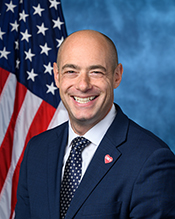
Rep. Greg Landsman
Sponsored bills
Maddy summaryThe Gas Prices Relief Act of 2026 would temporarily suspend federal gasoline taxes and the Leaking Underground Storage Tank Trust Fund financing rate from its enactment until October 1, 2026, aiming to reduce costs for consumers who purchase gasoline. Specifically, it sets the federal excise tax on gasoline to zero during this period. To prevent funding shortfalls, the bill directs the Treasury to transfer equivalent amounts from the general fund to the Highway Trust Fund and the Leaking Underground Storage Tank Trust Fund. It also includes a policy that the tax reduction should be passed on to consumers and empowers the Secretary of the Treasury to ensure this, potentially through monetary penalties for producers and dealers who do not reduce prices.
Maddy summaryThis bill would require infant formula manufacturers to conduct standardized testing for specific pathogens and microorganisms in both their facilities and finished products. It mandates that companies report positive test results to the FDA within one business day and retain records of these findings for inspections. The legislation also requires the FDA to notify congressional committees within one business day of receiving positive test results or issuing certain inspection classifications. Additionally, the bill establishes clear inspection standards that apply to all infant formula products regardless of where they are made.
Maddy summaryThis bill creates the Extraordinary Protection Reimbursement Program within the Department of Homeland Security to provide financial reimbursement to state, local, Tribal, and territorial law enforcement agencies for costs related to protecting designated non-governmental properties of high-profile individuals. The program allows agencies to receive grants specifically for man-hours spent on protection duties and equipment purchases directly tied to securing these properties, with funds only usable when protected persons are physically present or traveling to and from the locations. To ensure accountability, the bill requires annual audits by the Department's Inspector General and mandates detailed reports on grant amounts, usage, and equipment acquisitions submitted to congressional committees. The legislation authorizes $61 million annually for fiscal years 2026 through 2028 to fund these reimbursement activities.
Maddy summaryHRES 1107 is a House resolution urging the President to issue a proclamation flying the U.S. flag at half-staff to honor Rev. Jesse Jackson. The resolution recognizes his civil rights leadership, including founding the Rainbow PUSH Coalition and his presidential campaigns in 1984 and 1988, which advanced racial equality and economic justice. This symbolic gesture directly affects the President (as the one who would issue the proclamation) and the public, who would observe the flag at half-staff.
Maddy summaryThis bill, the PrEP Access and Coverage Act of 2026, requires most health insurance plans to cover HIV prevention medication without charging patients any out-of-pocket costs. It directly affects people with private insurance, government health programs like Medicare and Medicaid, military health care, and the Indian Health Service. The law mandates that insurance companies cannot require pre-approval for these medications, cannot charge deductibles or copayments for them, and cannot deny or charge higher premiums for life, disability, or long-term care insurance based on someone taking HIV prevention medication. The bill also creates a new public education campaign to increase awareness about HIV prevention options and provides federal funding to states and community organizations to expand access to these services.
Maddy summaryThis bill, known as the Direct File Act of 2026, would establish a government-run online system allowing taxpayers to prepare and file their individual income tax returns for free. The legislation prohibits the Treasury Department from entering into agreements that restrict its ability to provide tax preparation or filing services, and it voids any existing contracts with such restrictions. The program would use IRS data to simplify filing, include customer support, be available in multiple languages, and allow users to file even if they are not required to. It also enables taxpayers in participating states to file state and local returns alongside their federal returns, with funding provided to states that meet certain standards.
Maddy summaryThe DISCLOSE Act of 2026 aims to increase transparency in election spending and prevent foreign influence. It expands the ban on foreign money to cover federal, state, and local elections, including ballot initiatives and judicial nominations, and criminalizes using corporations to conceal these funds. The bill mandates that organizations spending over $10,000 on campaign-related activities, such as independent expenditures or judicial nomination advocacy, disclose their beneficial owners and top donors. Additionally, it establishes new "Stand By Every Ad" disclaimers for political communications, requiring the highest-ranking official to approve the message and, for certain ads, list their top funders. These provisions directly affect non-candidate organizations, individuals involved in political and judicial nomination spending, and foreign nationals.
Maddy summaryHR 7803, the "Save Medicare Act," renames Medicare Advantage plans to "Alternative Private Health Plan" for all federal references, including in the Social Security Act. It requires health plans to stop using "Medicare" in their titles after enactment, imposing a $100,000 civil penalty per violation. The change applies to all Part C Medicare plans and mandates a full transition by October 15, 2023, with a temporary period allowing both terms to be used during the switch. This bill directly affects private health insurers offering Medicare Part C plans and federal agencies managing Medicare programs. The policy change is solely about terminology, not benefits or coverage.
Maddy summaryHCONRES 72 is a procedural bill authorizing the use of Emancipation Hall in the Capitol Visitor Center for a specific Holocaust remembrance ceremony on April 14, 2026. It does not create new policies or affect any individuals or groups; it only permits the Capitol Visitor Center to host this commemorative event. The Architect of the Capitol will oversee any physical preparations required for the ceremony. This is a one-time authorization for a ceremonial purpose, not a substantive legislative change.