Maddy summaryHCONRES 68 would require the President to remove U.S. military forces from Venezuela unless Congress has explicitly authorized their use through a declaration of war or a specific law. This applies to any U.S. Armed Forces currently stationed in Venezuela without such authorization. The resolution is based on the War Powers Resolution, which mandates congressional oversight of military deployments. It directs the immediate withdrawal of unapproved forces without adding new time limits or conditions.
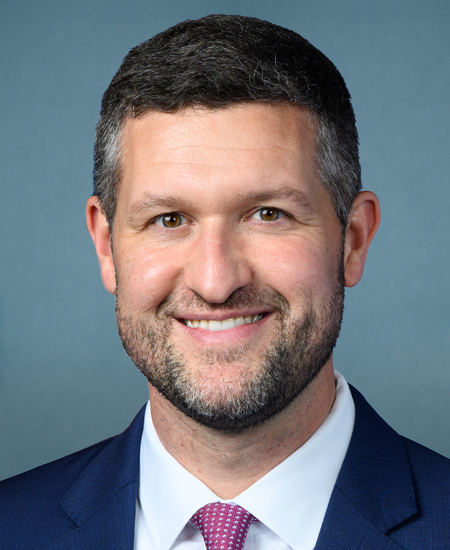
Rep. Patrick Ryan
Sponsored bills
Maddy summaryThe PORCUPINE Act amends the Arms Export Control Act to include Taiwan alongside New Zealand and Israel in specific certification and reporting requirements related to U.S. arms exports. This legislative change ensures Taiwan is treated similarly to these allied nations in certain foreign policy contexts involving defense article transfers. The bill also directs the Secretary of State to assess the feasibility of creating an expedited licensing process for military equipment transfers from designated allies to Taiwan within 90 days. Additionally, the act requires biennial reports on the implementation of these amendments and includes a provision stating that the legislation does not alter existing U.S. policy toward Taiwan under the Taiwan Relations Act. The entire measure is set to expire seven years after its enactment.
Maddy summaryThe NO NATO for Purchase Act bans federal agencies from using government funds to buy land or assets in NATO member countries. It directly affects all federal departments and agencies by prohibiting such acquisitions as defined in the 1949 North Atlantic Treaty. The key provision blocks any action or expenditure related to purchasing territory within NATO nations. This prevents U.S. government purchases of foreign territory belonging to NATO member countries.
Maddy summaryHRES 996 is a resolution introduced by multiple House members to impeach Kristi Lynn Arnold Noem, the Secretary of Homeland Security, for alleged violations of law and the Constitution. It outlines three articles of impeachment: obstructing congressional oversight by denying access to detention facilities and withholding funds, violating public trust through warrantless arrests and excessive force (including tear gas on children), and self-dealing by awarding federal contracts to associates without competitive bidding. If approved by the House, this resolution would formally charge Noem, triggering a Senate trial to determine her removal from office. The resolution itself does not enact new policy but initiates the constitutional impeachment process against a sitting Cabinet official.
Maddy summaryHR 6088, the *Restoring Food Security for American Families and Farmers Act of 2025*, repeals specific sections (10101-10108) from a prior reconciliation law. This action revives previous provisions related to food security programs that were modified by those repealed sections. The bill directly affects federal food assistance and agricultural support programs by restoring their prior legal framework. It does not create new policies but reverses recent changes to existing food security measures.
Maddy summaryHR 6997, the Community Passport Services Access Act, allows qualified public libraries to become official passport acceptance facilities and collect the standard execution fee for passport applications. It directly affects non-profit public libraries meeting U.S. State Department regulations, enabling them to serve as passport application sites - expanding access beyond current locations like post offices. Key provisions authorize new libraries to apply for this role and automatically authorize existing libraries that previously accepted passports. The bill also updates the Passport Act to formally include public libraries in the list of authorized acceptance locations. This creates a concrete policy change in where passport services are available to the public.
Maddy summaryThis concurrent resolution (HCONRES 69) commemorates the 15th anniversary of the January 8, 2011, Tucson shooting that killed six people and injured 13, including former Congresswoman Gabby Giffords. It honors the victims, survivors, and Giffords - now a prominent advocate for gun violence prevention - and recognizes her leadership in promoting civility and reducing gun violence. The resolution also commends Tucson residents and first responders for their resilience and reaffirms Congress’s commitment to respectful dialogue and opposing political violence. As a ceremonial resolution, it does not create new laws or policies.
Maddy summaryHR 6964 amends the National Security Act of 1947 to require the National Security Strategy to include "strategies and capabilities needed to ensure the safety and security of schools" at all levels - elementary, secondary, and colleges. It mandates a joint assessment by the Education and Homeland Security Secretaries of threats to these schools, including consultation with state leaders, and requires a report to Congress within 180 days of enactment. The bill directly affects all public and private elementary, secondary, and higher education institutions across the United States. This legislation shifts school safety into the formal national security framework without altering existing funding or operational procedures.
Maddy summaryThis bill prohibits the use of federal funds for any military action against Venezuela from its enactment date through December 31, 2026, unless Congress either declares war or passes new specific authorization meeting War Powers Resolution standards. It directly affects all federal agencies and military operations that would require funding for actions targeting Venezuela. The key mechanism blocks funding for military force unless Congress explicitly authorizes it through one of two specific pathways. A narrow exception allows actions already compliant with existing War Powers Resolution rules. This is a funding restriction, not a ban on military action itself.
Maddy summaryHR 4611 (EACH Act of 2025) requires all federally funded health programs - including Medicaid, Medicare, military health plans, and the Indian Health Service - to cover abortion services without restrictions, repealing the Hyde Amendment's long-standing ban on federal funding for most abortions. This directly affects millions of people enrolled in these programs, particularly low-income women, women of color (including 25% of Black women and 22% of Hispanic women on Medicaid), and young people. The bill mandates coverage in all federally administered health plans and prohibits state or private insurers from restricting abortion coverage in health insurance. It aims to eliminate current federal and state barriers that deny abortion access to people who rely on government health programs.