National Law Enforcement Officers Remembrance, Support and Community Outreach Act. [ sic ] This bill temporarily directs the Department of the Interior to award a grant to the National Law Enforcement Officers Memorial Fund for the expenses associated with operating and enhancing the community outreach, public education, and officer safety and wellness programs of the National Law Enforcement Museum.
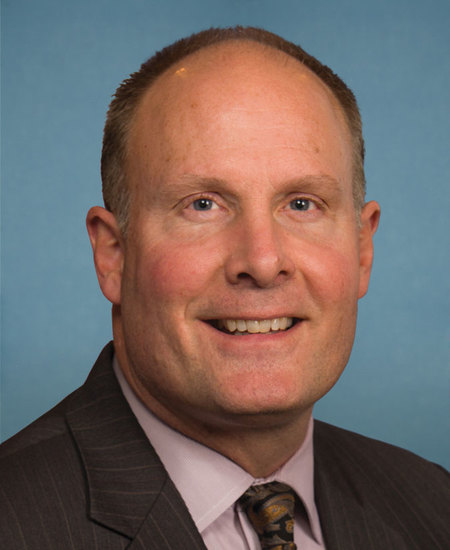
Rep. John R. Moolenaar
Sponsored bills
Maddy summaryThis House resolution formally honors the life and legacy of the late Representative Kay Granger from Texas, recognizing her historic achievements in public service. The bill highlights her roles as the first woman elected mayor of Fort Worth, the first Republican woman to represent Texas in the U.S. House, and the first Republican woman to chair the House Committee on Appropriations. It also acknowledges her contributions to national defense, including her work on the F-35 fighter jet program and the naming of a Navy ship for Fort Worth. The resolution expresses sympathy to Granger's family and directs the Clerk of the House to send an official copy of the document to her loved ones.
Maddy summaryHR 7008, the Stop Insider Trading Act, restricts Members of Congress, their spouses, and dependent children from purchasing certain investments like stocks in publicly traded companies. It requires 7-14 days' advance public notice before selling any such investment, including the sale date, description, and number of shares. Exceptions apply for work-related transactions (e.g., employer compensation) and reinvesting dividends. Violations trigger a fee of $2,000 or 10% of the investment’s value (whichever is greater), plus any net gain, paid from personal funds - not congressional allowances or campaign donations. The bill aims to prevent conflicts of interest by increasing transparency around congressional financial dealings.
Maddy summaryThis bill designates the United States Postal Service facility at 117 West Lovett Street in Charlotte, Michigan, as the "Francis C. Flaherty Post Office Building." It directly affects the specific postal location by officially changing its name in federal records and documents. The key provision ensures that all future legal and official references to this building will use the new name. This is a commemorative measure that honors an individual without altering operational policies or funding.
This bill designates the facility of the United States Postal Service located at 324 Washington Avenue, Suite 1 in Grand Haven, Michigan, as the "Ell Thomas Simantz Post Office Building".
Maddy summaryHR 6213, the Heat Workforce Standards Act of 2025, prohibits the U.S. Department of Labor from finalizing, implementing, or enforcing OSHA's proposed "Heat Injury and Illness Prevention" standard (published August 30, 2024). This bill directly blocks the specific regulatory proposal targeting heat safety in both outdoor and indoor work settings. It does not create new requirements or affect workers; it solely prevents the implementation of the existing OSHA proposal. The bill is procedural, focusing on halting a regulatory action rather than establishing new policy.
Maddy summaryHR 2306 extends the Adams Memorial Commission's authority until 2032 and authorizes $50 million in federal funds for the memorial, requiring a 1:1 non-federal match and limiting administrative costs to 4% of federal funds. It updates location rules to allow the memorial within a designated area mapped by the Commission. The bill primarily affects the Adams Memorial Commission and entities contributing to the memorial's funding. It makes no new policy changes but adjusts procedural timelines and funding requirements for an existing commemorative project.
Maddy summaryThe Stop PRC Economic Espionage Act of 2026 amends federal law to expand the definition of foreign instrumentality. This change allows the U.S. government to classify any entity domiciled in a covered nation, such as China, as a foreign instrumentality even if it is not directly owned or controlled by that government. The bill directly affects companies and organizations operating in these countries by subjecting them to stricter scrutiny under existing economic espionage laws. By broadening who can be considered a foreign agent, the legislation aims to close a loophole that previously required proof of direct government control to trigger certain legal restrictions.
Maddy summaryThe Take Care of America's Veterans Act is a comprehensive legislative bill designed to improve benefits, healthcare access, and administrative efficiency for veterans and their families. The bill directly affects veterans, their surviving spouses, caregivers, and the Department of Veterans Affairs (VA). Key provisions include expanding disability compensation for combat-related retirees, allowing remarried surviving spouses to retain certain survivor benefits, and increasing compensation rates for specific disability conditions like sleep apnea and tinnitus. The legislation also mandates significant healthcare improvements, such as establishing a pilot program to coordinate care between the VA and Medicare, creating a formulary for prosthetic items, and requiring the VA to provide lactation spaces in all medical centers. Additionally, the bill introduces administrative reforms to speed up claims processing, prohibit denying claims solely for missed medical appointments, and enhance oversight of the VA's disability rating system.
Maddy summaryThe Autocycle Safety Act establishes a new legal definition for autocycles as three-wheeled motorcycles with front-wheel drive, a fully enclosed cabin, and a steering wheel. It requires manufacturers to build these vehicles to specific safety standards, mandating features like airbags, anti-lock brakes, and electronic stability control while allowing a mix of passenger car and motorcycle safety rules for other components. The Department of Transportation has three years to finalize detailed regulations that determine exactly which safety standards apply to different parts of these vehicles. This legislation directly affects vehicle manufacturers and regulators by creating a federal framework for producing and certifying three-wheeled enclosed motorcycles.