Maddy summaryThis bill creates a five-year pilot program to provide grants to states and local governments for expanding Forensic Assertive Community Treatment teams. These specialized teams offer intensive, round-the-clock support including mental health care, addiction treatment, and housing assistance to individuals with serious mental illness who are involved with the criminal justice system. The program requires teams to include a mix of psychiatrists, employment specialists, criminal justice partners, and peer specialists with lived experience. Additionally, the legislation authorizes funding for a study by the National Academies to evaluate the program's effectiveness and develop guidelines for scaling it up.
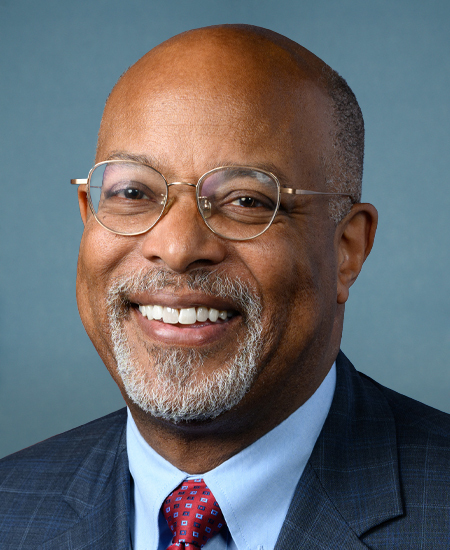
Rep. Glenn Ivey
Sponsored bills
Maddy summaryThis resolution expresses support for designating July 10th as Journeyman Lineworkers Recognition Day to honor the workers who maintain the nation's electrical grid. The bill specifically recognizes the dangerous conditions these employees face, such as working at heights near live power lines and responding to disasters like hurricanes and wildfires. It also commemorates Henry Miller, the first president of the International Brotherhood of Electrical Workers, who died on July 10, 1896, while performing his duties. Ultimately, the measure encourages the public to observe this day with reflection on the contributions of lineworkers.
Maddy summaryThe LIFT the BAR Act aims to restore access to federal benefits for lawfully present noncitizens by repealing several restrictions imposed by the 1996 welfare reform law and a 2024 reconciliation bill. Specifically, it would allow eligible noncitizens to receive SNAP food assistance, Medicaid, CHIP, and child nutrition programs, while also updating legal terminology to refer to "noncitizens" rather than "aliens" in relevant statutes. The legislation includes provisions to ensure these individuals can qualify for premium tax credits and would require federal agencies to issue implementation guidance within 180 days of enactment.
Maddy summaryThis bill authorizes the presentation of Congressional Gold Medals to the four crew members of the Artemis II mission to recognize their historic achievement in advancing human space exploration. The legislation directs the Speaker of the House and the President pro tempore of the Senate to arrange for the medals, which will feature the faces of the astronauts and be struck by the Secretary of the Treasury. In addition to the gold medals, the bill permits the minting and sale of duplicate bronze versions to help cover production costs, with any proceeds returned to the United States Mint Public Enterprise Fund.
Maddy summaryHR 2978, the GUARD Act, allows state, local, and tribal law enforcement agencies to use existing federal grant funds for investigating elder financial fraud, "pig butchering" investment scams, and general financial fraud. The bill directs these funds toward hiring specialized staff, training on blockchain tools and transnational fraud, purchasing investigative software, improving data collection, and creating financial sector liaisons to coordinate with banks. It requires annual reports from law enforcement on fund usage and outcomes, and mandates federal agencies to submit comprehensive reports to Congress on scam statistics, enforcement actions, and funding allocation. The legislation directly affects law enforcement agencies and aims to strengthen efforts against fraud targeting vulnerable populations, particularly elderly individuals.
Maddy summaryThe Keep Public Funds in Public Schools Act of 2026 eliminates a federal tax credit that allowed parents to deduct contributions to scholarship granting organizations from their income. By removing these specific tax breaks, the bill prevents the use of public tax dollars to support private school vouchers and scholarship programs. This change directly affects families who currently rely on these tax incentives to fund education outside the public school system. The provisions take effect for taxable years beginning after December 31, 2026.
Maddy summaryThe HEAR Act of 2026 makes it illegal for most people to import, sell, manufacture, transfer, or possess firearm silencers and mufflers. The law allows exceptions for law enforcement officers, campus security personnel, nuclear facility employees, and licensed manufacturers conducting authorized testing. To help individuals comply with the new restrictions, the bill requires the Attorney General to create a nationwide buy-back program that pays people who surrender their silencers. These changes would take effect 90 days after the bill is signed into law.
Maddy summaryThis resolution expresses support for designating June 5, 2026, as National Gun Violence Awareness Day and June 2026 as National Gun Violence Awareness Month. The bill calls on the public to wear orange on the designated day to honor victims and promote awareness of gun safety. It highlights statistics on gun-related deaths and injuries to underscore the need for community discussions on making neighborhoods safer.
Maddy summaryThis bill authorizes the U.S. Mint to produce commemorative $5 gold and $1 silver coins marking the 25th anniversary of the September 11, 2001, terrorist attacks. The coins must feature designs honoring victims and first responders (including the inscription "Never Forget") and will be sold only during 2027-2028. All surcharges ($35 per gold coin, $10 per silver coin) collected from sales will fund the National September 11 Memorial and Museum at the World Trade Center, with no net cost to the federal government. The coins are legal tender but primarily intended for collectors, not circulation.
Maddy summaryThe Smithsonian American Women’s History Museum Act authorizes the creation of a new Smithsonian museum dedicated to women’s history, to be located within the National Mall Reserve in Washington, D.C. If the site is managed by another federal agency, the bill requires that agency to transfer the land after notifying Congress and relevant committees. The museum must ensure exhibits and programs accurately represent diverse women’s experiences by consulting a broad range of experts and community voices. The Smithsonian will submit biennial reports to Congress detailing how the museum meets these representation standards.