Help Independent Tracks Succeed Act or the HITS Act This bill permits taxpayers to treat as currently deductible expenses the cost of qualified sound recording productions not exceeding $150,000 in a taxable year. The bill defines qualified sound recording production as certain sound recordings produced and recorded in the United States.
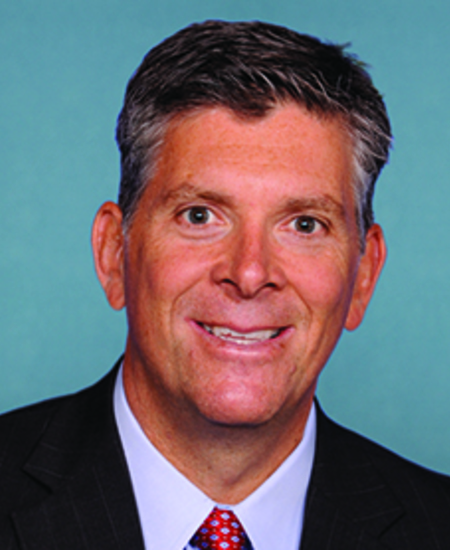
Rep. Darin LaHood
Sponsored bills
Rural and Underserved Small Hospital Protection Act of 2021 or the RUSH Protection Act of 2021 This bill applies certain modified payment limits to rural health clinics that temporarily enrolled in Medicare during the public health emergency relating to COVID-19 (i.e., coronavirus disease 2019) or that applied to enroll by December 31, 2020. The bill applies retroactively.
Veterans Economic Recovery Act of 2021 This bill addresses the employment and retraining of veterans, specifically during the COVID-19 (i.e., coronavirus disease 2019) public health emergency. The bill requires the Department of Veterans Affairs (VA) to implement a program under which the VA must provide up to 12 months of nontransferable retraining assistance (including a housing stipend) to up to 35,000 eligible veterans for the pursuit of a specified program of education. Under the bill, an eligible veteran is an individual who, among other requirements, is unemployed due to COVID-19. Veterans who receive retraining assistance may only use such assistance to pursue specified programs, including those designed to provide training for high-demand occupations. The bill requires the Department of Labor to conduct outreach to veterans participating in the program to notify them of employment placement services and facilitate employment placement. Additionally, the VA must enter into a memorandum of understanding with one or more qualified nonprofit organizations to facilitate the employment of veterans participating in the program. The Government Accountability Office must report on the outcomes and effectiveness of the retraining assistance program. The program will terminate 21 months after the date of the enactment of this bill.
Developing Responsible Individuals for a Vibrant Economy Act or the DRIVE-SAFE Act This bill directs the Department of Transportation to promulgate regulations to implement an apprenticeship program for licensed commercial motor vehicle drivers under the age of 21. Under the program, an apprentice must complete two probationary periods that total 400 hours of on-duty time, of which at least 240 hours must be driving time in a commercial motor vehicle. Additionally, the apprentice must be accompanied in the cab of the commercial motor vehicle by an experienced driver. Further, the bill requires all commercial motor vehicles used in the program for training to be equipped with safety technology such as active braking collision mitigation systems and video event capturing systems. An employer shall not knowingly allow, require, permit, or authorize a driver under the age of 21 to operate a commercial motor vehicle unless the driver is participating in, or has completed, an apprenticeship program that meets the requirements set forth in this bill.
TRICARE Reserve Select Improvement Act This bill expands TRICARE Reserve Select eligibility to include members of the Selected Reserve who are enrolled or eligible to enroll in the Federal Employees Health Benefits Program.
Death Tax Repeal Act This bill repeals the estate and generation-skipping transfer taxes. It also makes conforming amendments related to the gift tax.
Energy Storage Tax Incentive and Deployment Act of 2021 This bill allows tax credits for (1) energy storage technologies, and (2) battery storage technology. The bill expands the tax credit for investments in energy property to include equipment that (1) receives, stores, and delivers energy using batteries, compressed air, pumped hydropower, hydrogen storage (including electrolysis), thermal energy storage, regenerative fuel cells, flywheels, capacitors, superconducting magnets, or other technologies identified by the Internal Revenue Service; and (2) has a capacity of at least five kilowatt hours. The bill also expands the tax credit for residential energy efficient property to include expenditures for battery storage technology that (1) is installed on or in connection with a dwelling unit located in the United States and used as a residence by the taxpayer, and (2) has a capacity of at least three kilowatt hours.
Stop Sewage Overflow Act This bill extends through FY2030 and revises a grant program that addresses stormwater and sewer overflows into rivers or other water bodies. Under the existing program, the Environmental Protection Agency awards grants to states, which in turn provide subgrants for projects that address the infrastructure needs for municipal combined sewer overflows, sanitary sewer overflows, and stormwater management. The bill reduces the share of the cost of grant projects that financially distressed communities must pay, increases the minimum allocation for green infrastructure and other environmentally innovative activities, and prioritizes grant assistance for municipalities with high levels of sewage in rivers, lakes, and bays.
This joint resolution proposes a constitutional amendment limiting Representatives to three terms and Senators to two terms. Terms beginning before the ratification of this amendment do not count towards these term limits.
This joint resolution proposes an amendment to the Constitution to require that the Supreme Court consist of nine Justices.