

Maddy summaryHR 3773 (PROTECT Act of 2025) amends federal law to recognize tribal courts as having authority equivalent to state courts for certain electronic evidence cases. It requires that warrants for electronic communications stored 180 days or less must follow procedures from the Indian Civil Rights Act (25 U.S.C. 1302(a)(2)) when issued by tribal courts. The bill also expands tribal jurisdiction over controlled substance offenses (like drug trafficking or possession) and firearms offenses (such as possession by domestic violence offenders) by defining these terms for tribal courts. This directly affects tribal courts and tribal law enforcement by standardizing legal procedures for evidence handling and broadening their authority under federal law. The changes align tribal court processes with federal and state standards for digital evidence and criminal jurisdiction.
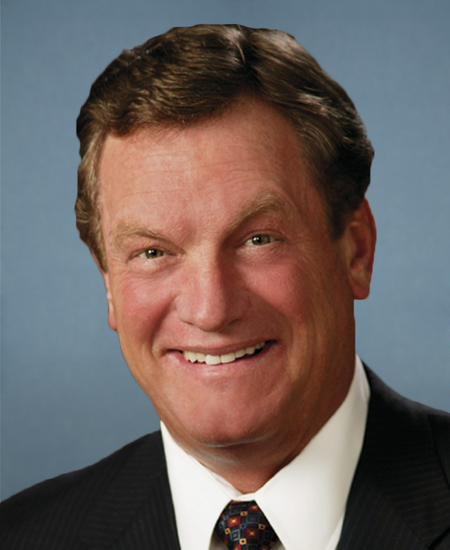
Rep. Michael K. Simpson
Sponsored bills
Maddy summaryHR 649, the Whole Milk for Healthy Kids Act of 2025, amends the National School Lunch Act to allow schools participating in the program to offer students both organic and non-organic whole milk, in addition to reduced-fat, low-fat, and fat-free options. Key provisions include clarifying that milk fat in whole milk should not count toward saturated fat limits for meal compliance, prohibiting schools from purchasing milk from Chinese state-owned enterprises, and ensuring schools cannot be barred from offering the full range of milk types listed. The bill directly affects public and private schools serving the National School Lunch Program by expanding their milk options for students. It focuses on concrete policy changes to dietary offerings and sourcing restrictions within the school nutrition program.
Maddy summaryThe Carla Walker Act (HR 3591) creates federal grants to fund forensic DNA analysis using genetic genealogy databases for law enforcement. It authorizes $5 million annually (2024-2028) for two programs: (1) grants to eligible entities like police departments and medical examiners for whole genome sequencing (100,000+ markers) to solve unsolved cases or identify human remains when standard DNA databases fail, and (2) grants to purchase forensic equipment for genetic genealogy analysis. Funds cannot cover staffing or travel, with only 10% allowed for administrative costs. Recipients must report on case outcomes, testing methods, and results, including how often identifications led to arrests. The bill directly affects state/local law enforcement, forensic labs, and medical examiner offices handling unresolved criminal cases.
Maddy summaryThis bill amends the Fair Labor Standards Act to exempt certain employees in the outdoor recreation industry from overtime pay requirements. It specifically applies to employees primarily engaged in outdoor recreational outfitting (like equipment rentals) or guiding services, but only if their business meets one of two seasonal criteria: operating for fewer than seven months annually, or having average receipts for six months that don't exceed 33 1/3% of receipts during the other six months. The exemption applies to wages and overtime compensation for workweeks starting after the bill's enactment date. This change directly affects small seasonal outdoor recreation businesses and their employees who meet the specified operational thresholds.
Maddy summaryThis bill clarifies how states, tribes, or public entities can use existing water infrastructure (like canals built before 1976) for aquifer recharge without needing new federal permits. It requires 30 days' advance notice to the Bureau of Land Management detailing the infrastructure, intended use, and a written agreement with the rights-holder. Non-profit uses of existing rights are exempt from additional rent, but for-profit operations are not. The bill also exempts these recharge activities from certain environmental laws (Clean Water Act, Endangered Species Act) and allows modifying existing infrastructure. It directly affects water management entities working with federal land rights.
Maddy summaryHR 3277, the Ensuring Lasting Smiles Act, requires group health plans and health insurance issuers to cover medically necessary outpatient and inpatient treatments for congenital anomalies or birth defects primarily affecting the eyes, ears, teeth, mouth, or jaw. This includes reconstructive procedures, dental/orthodontic support during treatment, and follow-up care, but excludes purely cosmetic surgery not tied to a medical diagnosis. Cost-sharing (like copays) for these services must not be stricter than for other medical benefits. The law takes effect for plan years beginning January 1, 2026, and mandates insurers to provide notice about this coverage to beneficiaries.
Maddy summary# Summary of Farm Workforce Modernization Act of 2025 (Electronic Verification and Labor Recruiter Provisions) This legislation establishes a new electronic verification system (Section 274E) for employment eligibility verification, replacing the previous E-Verify program. Key provisions include: 1. **Electronic Verification System**: - Requires employers to verify identity and employment authorization through an electronic system - Establishes processes for tentative nonconfirmations and appeals - Creates an Electronic Verification Compensation Account to pay lost wages for individuals wrongly denied employment due to government error 2. **Phased Implementation for Agricultural Employers**: - Larger agricultural employers (500+ employees) must comply 6 months after implementation - Smaller employers (20-100 employees) must comply 12 months after implementation - Smallest employers (1-19 employees) must comply 15 months after implementation 3. **Foreign Labor Recruiter Accountability**: - Requires electronic registration of foreign recruiters - Prohibits recruiters from charging workers fees - Mandates required disclosures to workers about their rights and employment terms - Establishes bond requirements and enforcement mechanisms - Creates penalties for violations, including fines up to $25,000 per violation 4. **Key Protections**: - Prevents employers from terminating employment based on tentative nonconfirmations - Ensures individuals can contest verification issues within 10 business days - Requires notification of final nonconfirmations to employees - Protects against unfair immigration-related employment practices 5. **Transition Provisions**: - Repeals the E-Verify program from the Illegal Immigration Reform and Immigrant Responsibility Act - Establishes coordination between Department of Homeland Security, Social Security Administration, and Department of Agriculture - Includes rural access to assistance for individuals contesting verification issues The legislation aims to modernize employment verification while protecting workers' rights and preventing exploitation in the agricultural workforce.
Maddy summaryThe ACES Act (HR 530) mandates a study by the National Academies to examine cancer rates and deaths among veterans who served as aircrew members (e.g., pilots, navigators) in fixed-wing military aircraft. The study will identify potential exposure risks (like chemicals) linked to 12 specific cancers (including brain, lung, prostate, and melanoma) and use VA, DoD, and CDC data to analyze prevalence and mortality. It does not change benefits or laws but requires a final report to the VA and congressional committees. The study directly affects veterans with the defined aircrew service history.
Maddy summaryHR 3204, the BASIC ACT, increases tax incentives for semiconductor manufacturing. It raises the advanced manufacturing investment credit from 25% to 35% for qualifying semiconductor production facilities and extends the deadline for claiming the credit from 2026 to 2030. The bill directly affects companies building or expanding semiconductor manufacturing plants in the U.S. The changes apply to property placed in service after the bill's enactment date. This provides longer-term financial support for domestic semiconductor investment.
Maddy summaryThe Housing Supply Frameworks Act (HR 2840) directs the Department of Housing and Urban Development (HUD) to create federal guidelines and best practices for state and local governments to reform zoning rules that restrict housing supply. It focuses on practical changes like reducing parking minimums, allowing more housing types (e.g., duplexes, accessory dwellings), streamlining approval processes, and increasing density near transit - aiming to address a nationwide housing shortage affecting cost-burdened households. The guidelines, developed with public input from planners, developers, and community groups, are intended to help states and localities voluntarily adopt reforms that increase housing availability across income levels. States and localities that adopt these recommendations must report progress to Congress within five years, though the bill does not mandate specific changes or provide direct housing construction funds.