Maddy summaryThis resolution commemorates the fifth anniversary of the March 16, 2021, Atlanta spa shootings that killed eight people and denounces ongoing anti-Asian hate and xenophobic rhetoric. It honors the victims, condemns the violence, and calls for improved hate crime reporting and support services for affected communities. The measure also urges efforts to combat online disinformation, promote education on Asian American history, and expand federal programs aimed at preventing hate crimes.
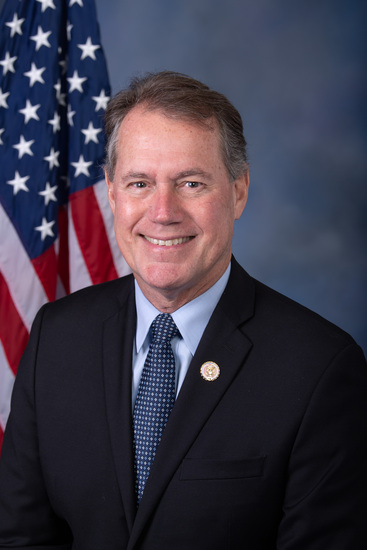
Rep. Ed Case
Sponsored bills
Maddy summaryHR 3553, the BRUSH Fires Act, requires the U.S. Forest Service to conduct a study evaluating wildfire mitigation methods in shrubland ecosystems (like chaparral and sagebrush) to reduce fire risk and damage to nearby communities. The study will assess fuel management practices, invasive species control, ember ignition prevention, and factors hindering effective wildfire management. It mandates a report within 90 days of study completion, identifying best practices, research gaps, and opportunities to improve Forest Service coordination with local entities. The bill directly affects communities near shrublands and Forest Service managers by gathering data to inform future fire prevention strategies. This is a procedural study bill, not a policy change, with no direct funding or regulatory requirements.
Maddy summaryThe DISCLOSE Act of 2026 aims to increase transparency in election spending and prevent foreign influence. It expands the ban on foreign money to cover federal, state, and local elections, including ballot initiatives and judicial nominations, and criminalizes using corporations to conceal these funds. The bill mandates that organizations spending over $10,000 on campaign-related activities, such as independent expenditures or judicial nomination advocacy, disclose their beneficial owners and top donors. Additionally, it establishes new "Stand By Every Ad" disclaimers for political communications, requiring the highest-ranking official to approve the message and, for certain ads, list their top funders. These provisions directly affect non-candidate organizations, individuals involved in political and judicial nomination spending, and foreign nationals.
Debt-to-GDP Transparency and Stabilization Act This bill requires the President's annual budget and congressional budget resolutions to include (1) the ratio of the public debt to the estimated gross domestic product (GDP), and (2) the ratio of the surplus or deficit to the estimated GDP.
Maddy summaryThis symbolic resolution expresses congressional support for designating February 2026 as "Hawaiian Language Month" or "'Ōlelo Hawai'i Month." It urges the public to celebrate the language and commits to preserving Hawaiian language use in alignment with the Native American Languages Act. The resolution does not create new laws or funding but serves as a formal statement of support for ongoing revitalization efforts. It follows decades of grassroots work to restore the Hawaiian language, which saw over 20,000 speakers and expanded immersion education by 2026.
Maddy summaryHR 3340, the Modernizing Access to Our Public Oceans Act, requires the U.S. Commerce Department to create a public online map system showing fishing restrictions and recreational access rules in federal ocean waters. The system will display areas open or closed to fishing, vessel restrictions (like motorized propulsion limits), and rules for marine protected areas, updated at least twice yearly. It prohibits sharing sensitive information, such as tribal cultural sites or private commercial fishing data, and explicitly excludes Tribal fishing areas from its requirements. This bill directly affects recreational boaters, divers, and the public by making ocean access information clearer and more accessible through a single online resource. The data will be developed with input from states, tribes, and the public to ensure usability and compliance with existing laws.
Maddy summaryHRES 1061 is a symbolic resolution recognizing the cultural and historical significance of Lunar New Year in 2026. It does not create new laws or policies, but formally acknowledges Lunar New Year's origins (over 4,000 years in China), its celebration as Seollal in Korea and Tết in Vietnam, and its observance by millions of Asian Americans and others in the U.S. The resolution expresses respect for Asian Americans and extends holiday wishes for a "happy and prosperous new year" during the Year of the Horse. As a non-binding resolution, it has no legal effect or direct impact on any individuals or groups.
Department of Homeland Security Appropriations Act, 2026 This bill provides FY2026 appropriations for various agencies and offices within the Department of Homeland Security (DHS), except for U.S. Immigration and Customs Enforcement (ICE), U.S. Customs and Border Protection (CBP), and management and oversight activities of the Office of the Secretary. Specifically, the bill provides appropriations to DHS for the Federal Protective Service, the Office of Inspector General, the Transportation Security Administration, the U.S. Coast Guard, the U.S. Secret Service, the Cybersecurity and Infrastructure Security Agency, the Federal Emergency Management Agency (FEMA), U.S. Citizenship and Immigration Services, the Federal Law Enforcement Training Centers, and the Science and Technology Directorate. The bill does not provide appropriations for some agencies and activities that have been funded in prior DHS appropriations acts, including ICE, CBP, and management and oversight activities of the Office of the Secretary.
Maddy summaryHRES 1047 designates January 2026 as "National Mentoring Month" to highlight the importance of mentoring relationships for youth development. The resolution does not create new laws or allocate funding but encourages public awareness and support for existing mentoring programs that help young people build skills, confidence, and educational opportunities. It emphasizes mentoring's role in improving academic performance, career readiness, and mental health outcomes without imposing any new obligations on individuals or organizations.
Maddy summaryThe USMCA Travel and Tourism Resiliency Act (HR 7454) directs the U.S. Trade Representative to advocate for a new Travel and Tourism Trade Working Group under the USMCA during the next joint review. This group, co-chaired by the U.S., Canada, and Mexico, would include U.S. agencies like Commerce and Homeland Security and seek input from the travel industry to boost tourism competitiveness and exports. It requires annual meetings and regular congressional briefings, aiming to support an industry that generated $214 billion in U.S. tourism exports in 2024. The bill directly affects U.S. government agencies and the travel sector, focusing on enhancing cross-border tourism cooperation.