Protecting Privacy in Purchases Act This bill prohibits payment card networks from using merchant codes that distinguish firearms retailers from general-merchandise retailers or sporting-goods retailers. The Department of Justice must enforce this bill and report annually on the resulting investigations and cases.
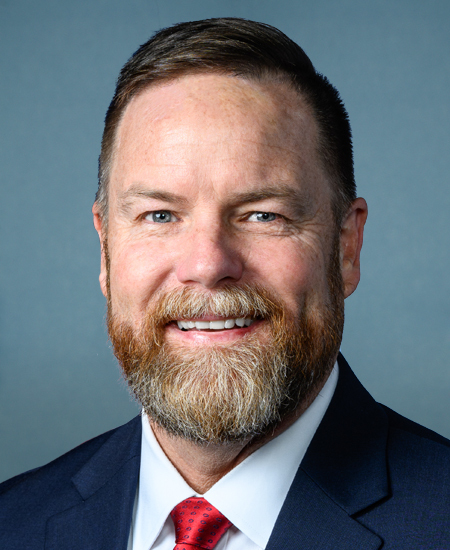
Rep. Aaron Bean
Sponsored bills
Maddy summaryThe Sunshine Protection Act of 2025 would make daylight saving time permanent across the United States, ending the current practice of changing clocks twice yearly. It repeals the 1966 law requiring seasonal time changes and adjusts time zone offsets to reflect permanent daylight saving time (e.g., shifting from "4 hours" to "3 hours" in historical references). States that currently opt out of daylight saving time (like Arizona and Hawaii) would retain their existing arrangements, while all other states would adopt permanent daylight saving time unless they choose to stay on standard time. This change would directly affect all U.S. residents by eliminating the need to reset clocks in spring and fall.
Maddy summaryThis resolution expresses support for designating July 10th as Journeyman Lineworkers Recognition Day to honor the workers who maintain the nation's electrical grid. The bill specifically recognizes the dangerous conditions these employees face, such as working at heights near live power lines and responding to disasters like hurricanes and wildfires. It also commemorates Henry Miller, the first president of the International Brotherhood of Electrical Workers, who died on July 10, 1896, while performing his duties. Ultimately, the measure encourages the public to observe this day with reflection on the contributions of lineworkers.
Maddy summaryThe SMOOTH Payments Act modifies federal tax rules to allow health insurance plans that offer a specific payment option to qualify for subsidies, whereas currently only catastrophic plans are excluded. Under this proposal, eligible plans would let enrollees choose between paying zero cost-sharing at the time of service or paying monthly, capped amounts instead. This change directly affects individuals enrolled in qualified health plans by expanding the range of plans that can receive financial assistance starting in 2027. The bill aims to simplify out-of-pocket expenses by enabling a new payment structure similar to existing capitated models.
Maddy summaryThe Medicaid RAC Improvement Act of 2026 strengthens oversight of the Medicaid Recovery Audit Contractor program to better detect and recover incorrect payments. It requires the Centers for Medicare and Medicaid Services to establish clear communication rules for when state program exceptions expire and mandates detailed annual reports on audit results, including amounts recovered and underpayments. The bill also expands the program to include Medicaid managed care plans, requiring these organizations to allow audits of their claims and cooperate with recovery efforts. Additionally, the legislation directs the government to study barriers preventing states from participating in the program and to run a five-year demonstration project to increase state involvement. Finally, it clarifies that audits can review payments made up to four years prior to the current fiscal year.
COVID Fraud Transparency Act of 2026 This bill requires the Small Business Administration's Office of Inspector General to report quarterly to Congress about fraud cases involving certain COVID-19 loans (e.g., Paycheck Protection Program loans). The report must include the number and total dollar amount of such loans, number of new cases of fraud and suspected fraud, number of fraud cases resolved, and types of such cases of fraud. The reporting requirements terminate two years after this bill is enacted.
Repealing Big Brother Overreach Act This bill repeals the Corporate Transparency Act. The act requires existing companies and newly created companies to report beneficial ownership information to the Department of the Treasury’s Financial Crimes Enforcement Network for purposes of addressing the financing of terrorism and money laundering.
Maddy summaryThis bill, known as the Stopping Harmful and Outrageous Torts Act, expands legal protections for firearm manufacturers and sellers by strengthening their immunity from civil lawsuits. It requires courts to immediately dismiss any pending cases against these companies that are based on the criminal or unlawful misuse of a gun by a third party, while also clarifying that sellers are not liable for negligence in entrusting products to others. The legislation further restricts who can file such suits by prohibiting foreign governments from bringing these claims and adding a specific exception for victims under the age of 17, though it maintains immunity for cases involving design or manufacturing defects. Additionally, the bill allows companies to move these cases to federal court and grants them the right to appeal dismissal orders immediately, along with the ability to recover legal fees if they win. Finally, it preempts state and local laws that attempt to impose liability on these entities for the same types of misuse-related harms.
Maddy summaryThis bill creates a voluntary program allowing individuals who have previously failed to report digital assets taxes to fix their errors without facing additional criminal charges or most civil penalties. To qualify, taxpayers must submit an application, file amended tax returns for affected years, and pay any owed taxes plus a specific penalty that is reduced for those who certify their actions were not willful. In exchange for full compliance, the program waives further penalties and protects participants from criminal prosecution or the use of their disclosed information for investigations. The initiative is designed to help people come into compliance with tax laws regarding digital assets while encouraging transparency through a structured disclosure process.
Maddy summaryThis bill aims to improve the integrity of the Temporary Assistance for Needy Families (TANF) program by tightening rules on how federal funds are used and reported. It requires states to apply existing federal payment integrity standards to their programs and mandates a report outlining a plan to reduce improper payments within a decade. Additionally, the legislation restricts grants to families with income below twice the poverty line and sets strict deadlines for states to spend their allocated funds, allowing only a limited reserve for future use. The bill also prohibits states from using federal money to replace their own spending and requires official certification that funds will supplement, not supplant, existing state resources. These changes are scheduled to take effect on October 1, 2027.