Maddy summaryThis bill amends federal law to allow certain prior active duty service as a regular member of an Armed Force to count toward the reduced eligibility age for retirement in the reserve components. The change directly affects members of the Ready Reserve who have served on active duty, enabling them to qualify for retirement benefits at an earlier age than previously permitted under current rules. The legislation applies retroactively to qualifying service performed after January 28, 2008, ensuring that past service is recognized for these retirement calculations.
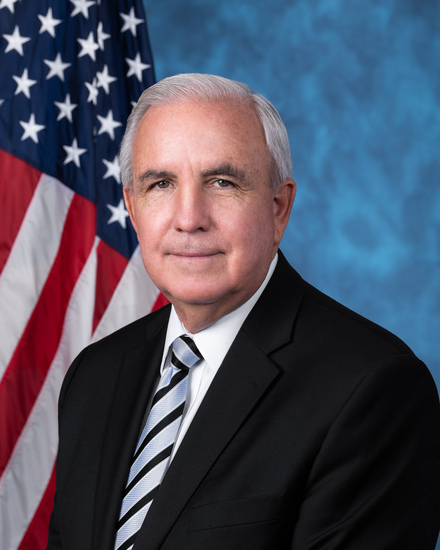
Rep. Carlos A. Gimenez
Sponsored bills
Maddy summaryThe No Antisemitism in Education Act of 2026 requires schools and universities receiving federal funds to treat antisemitism with the same seriousness as other forms of discrimination prohibited by Title VI of the Civil Rights Act. Under this law, institutions must use the official definition of antisemitism found in a prior presidential executive order to investigate complaints and enforce their own policies. The bill explicitly states that these requirements do not violate free speech rights or override existing state laws, ensuring that Jewish students and staff are protected from harassment and exclusion on campus.
Maddy summaryThis bill extends a pilot program that allows checked luggage to bypass additional security screening when traveling from specific foreign airports to the United States. Under the new rules, passengers can keep their bags with them until reaching their final destination without needing to re-screen them at U.S. airports, provided the bags were initially checked using explosives detection systems and U.S. Customs and Border Protection has received and reviewed images of the luggage. The extension also increases the program's duration from six years to ten years, allowing the Transportation Security Administration to continue testing this streamlined process for direct international flights.
Maddy summaryThe Homeland Security Capabilities Preservation Reporting Act of 2026 requires the Department of Homeland Security to submit a report every three years. This report will detail how the Urban Area Security Initiative has transitioned to jurisdictions that are no longer eligible for its funding. The law mandates that the first report be provided within 18 months of the act's enactment.
Maddy summaryThe Jewish American Security Act aims to combat antisemitism by strengthening protections for Jewish students, securing Jewish communities, and increasing transparency regarding online hate speech. For educational institutions receiving federal funds, the bill mandates the creation of specific coordinators to handle discrimination complaints, requires annual training on handling antisemitism, and establishes a new federal clearinghouse to share best practices for campus safety. To support physical security, the legislation expands grant funding for nonprofit organizations and directs the Attorney General to provide resources for law enforcement agencies protecting houses of worship. Additionally, the act requires major online platforms with over 50 million monthly users to submit detailed reports to the Federal Trade Commission on how they detect, remove, and moderate antisemitic content.
Maddy summaryThe FIREWALL Act prevents the use of federal funds administered by the FCC and NTIA to buy fiber-optic cable from companies owned by designated countries of concern or their officials. This restriction applies to all purchases made 90 days after the law is enacted and covers both solid-core and hollow-core fiber technology. The bill aims to limit financial support for telecommunications infrastructure that could be controlled by foreign adversaries, directly affecting individuals and entities seeking federal funding for cable projects.
Maddy summaryThe Boat Loan Interest Deduction Act of 2026 expands the tax deduction for interest paid on consumer loans to include recreational motorboats, alongside existing vehicles like cars and trucks. This change allows taxpayers who take out loans for boats assembled in the United States to deduct the interest they pay on their federal income tax returns, provided the boat is used primarily for recreation. The law applies to debts incurred after December 31, 2025, and requires taxpayers to report the boat's hull identification number on their tax filings.
Maddy summaryThe Securing Agriculture's Workforce Act of 2026 modernizes the H-2A visa program by transferring administrative authority to the Department of Homeland Security and introducing a unified online platform to streamline applications for employers and workers. Key provisions include establishing new housing standards with mandatory inspections, creating a system for staggered worker entry and exit, and allowing workers to transfer between employers without losing their status. The bill also defines specific job classifications for wage calculations, expands the scope of covered agricultural activities, and provides legal protections for employers who document the employment of workers seeking visa status. Additionally, it requires agencies to develop a heat illness prevention plan and allows for contract termination due to natural disasters.
Maddy summaryHR 4398, the Veteran Burial Timeliness and Death Certificate Accountability Act, requires Veterans Affairs (VA) physicians or nurse practitioners to certify the death of a veteran who dies of natural causes within 48 hours of learning of the death. This directly affects veterans' families, who previously faced delays of up to eight weeks in burial and access to survivor benefits due to slow death certifications. The bill mandates annual reports to Congress on VA compliance with the 48-hour rule, including statistics on delays and their causes. The key change is establishing a strict timeline for death certification to prevent unnecessary delays in honoring veterans' final arrangements.
Maddy summaryThis bill redesignates the existing National Parks and Public Land Legacy Restoration Fund as the America's Legacy Restoration Fund to address deferred maintenance on federal lands. It directs revenue from recreation fees and a portion of energy development income into the fund, which must be used primarily for repairing critical infrastructure like roads, trails, and buildings managed by agencies such as the National Park Service and the Forest Service. The legislation establishes strict rules requiring that most funds go toward non-transportation projects, mandates transparency through public dashboards tracking project status, and sets aside a small percentage for matching private donations. Additionally, the bill increases entrance fees for foreign visitors to ensure they contribute to the fund, while prohibiting the use of these specific funds for land acquisition or employee bonuses.