

Maddy summaryThe Never Fight Alone Act expands the Veterans Community Care Program to allow veterans who cannot access VA mental health or substance-use residential treatment programs to receive these services from qualified community providers. This expansion includes specific requirements for community facilities to be state-licensed and accredited by recognized behavioral health standards, with provisions for waivers if no suitable options exist. The bill also mandates that veterans be permitted to choose their preferred care option when multiple providers are available and prohibits denying care solely because a provider cannot meet standard wait times. Additionally, the legislation requires the VA to collect detailed data on care requests and approvals, specifically highlighting mental health cases, and restricts the VA from changing community care access rules without congressional approval.
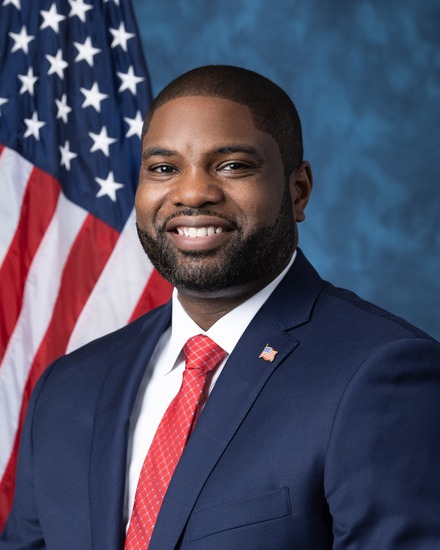
Rep. Byron Donalds
Sponsored bills
Maddy summaryThe No Safe Haven for Terrorist Families Act expands U.S. immigration rules to bar close relatives of designated terrorists, senior officials of hostile foreign governments, and sanctioned corrupt leaders from entering or remaining in the country. It defines these "covered family members" to include spouses, children, parents, siblings, grandparents, grandchildren, and nieces or nephews of the listed threat actors, applying the ban retroactively to existing relationships. The bill mandates that visas issued to these individuals be revoked and that they face deportation without eligibility for most forms of legal relief, such as cancellation of removal. To enforce these measures, government agencies must implement new screening procedures within 180 days and submit annual reports detailing the number of inadmissibility determinations, visa revocations, and removals.
Maddy summaryThis joint resolution expresses the U.S. Congress's disapproval of a specific law passed by the District of Columbia Council. The D.C. law, known as the Body-Worn Camera Transparency for Use of Force Temporary Amendment Act of 2026, was designed to increase transparency regarding how police officers use force. By submitting this resolution, Congress formally objects to the local legislation but does not change any laws or policies. The measure serves as a symbolic statement of disagreement rather than a functional change to federal or local governance.
Maddy summaryThis joint resolution expresses the U.S. Congress's disapproval of a specific law passed by the District of Columbia Council. The bill directly affects the District of Columbia by rejecting its "Full Accountability in Arrest Reporting Temporary Amendment Act of 2026," which was intended to modify how arrest data is reported. The mechanism used is a formal legislative statement that does not change any laws or policies but serves to record the federal government's opposition to the local action. This measure is a procedural response that highlights a disagreement between the federal and local governments without altering the actual operation of arrest reporting in Washington, D.C.
Maddy summaryThis bill, known as the Preventing International Surrogacy Exploitation Act, aims to stop foreign nationals from using U.S. surrogate mothers for commercial surrogacy arrangements. It would make any surrogacy contract void and unenforceable if the intended parents are foreign citizens or permanent residents, with a specific exception for married couples where at least one partner is a U.S. citizen or resident. Additionally, the law prohibits surrogacy brokers from facilitating these agreements and imposes criminal penalties, including fines and up to 10 years in prison, for those who knowingly or recklessly assist in such contracts. Children born through these invalid agreements would have their custody determined by the state where the surrogate lives, focusing on the child's best interests rather than the contract. Finally, the bill prevents foreign parents from using their U.S.-born children to gain immigration benefits or rights under U.S. immigration laws.
Maddy summaryThe Protecting Kids from Creeps Act prohibits surrogacy agencies, their employees, and sex offenders from participating in surrogacy agreements, directly affecting fertility clinics, staff, and individuals required to register as sex offenders. The bill mandates severe criminal penalties, including fines and prison sentences of at least 10 to 20 years, for knowingly or recklessly facilitating such agreements, while also stripping convicted agencies of their tax-exempt status and eligibility for federal grants. Any surrogacy agreement formed in violation of these rules is declared legally void and unenforceable, meaning it cannot be used to establish parental rights. In cases where a child is born from an illegal agreement, custody decisions will be made solely based on the best interests of the child under the laws of the state where the surrogate lives, ignoring any prior contracts. Additionally, the Attorney General can pursue civil penalties equal to the compensation received or offered for prohibited conduct.
Maddy summaryThis bill creates new grounds for deporting non-citizens who are members of or associated with criminal gangs. It defines a "criminal gang" as a group of five or more people whose primary purpose is committing serious crimes like drug offenses, violence, trafficking, or weapons violations. The Secretary of Homeland Security can designate groups as criminal gangs after consultation with the Attorney General, and these designations make gang members ineligible for asylum, temporary protected status, parole, and other immigration benefits. The bill also establishes procedures for reviewing and revoking these designations, with limited judicial review options.
Maddy summaryThis bill appropriates $3.5 billion to help Florida farmers and growers recover from the severe freeze that occurred in March 2026. The funds are distributed as block grants specifically to cover losses in crops, trees, bushes, and vines caused by the cold weather, including compensation for multi-year crops. Assistance is restricted to counties officially designated as disaster areas by the Secretary of Agriculture on March 4, 2026, and requires a request from a state agriculture department to release the money. The Secretary of Agriculture must also submit quarterly reports to Congress detailing how the funds are being used until the budget is exhausted.
Medal of Sacrifice Act of 2025 This act directs the President to issue a medal of sacrifice for eligible law enforcement officers and first responders who are killed in the line of duty. The act also directs the President to establish a commission on the medal of sacrifice and appoint its members. The act sets forth responsibilities of the commission, including to advise on the design of the medal and determine how the medal will be presented. Under the act, eligible law enforcement officers and first responders include federal, state, local, tribal, or territorial law enforcement officers or first responders who are not subject to an official act of wrongdoing (e.g., a determination that the officer or first responder acted outside the scope of their duties or in a manner that was not in accordance with official policies or procedures). A law enforcement officer or first responder who is subject to an official act of wrongdoing is generally not eligible for the medal of sacrifice. However, in the case of such an officer or first responder, the act requires the commission to investigate the circumstances surrounding the officer or first responder's cause of death and issue a final determination on their eligibility.
Maddy summaryH.Res. 1320 is a non-binding resolution that calls on all Americans to honor military personnel who died while serving in the pursuit of freedom and peace on Memorial Day 2026. The bill does not create new laws or change any policies; instead, it serves as a formal expression of gratitude and remembrance from the House of Representatives. Because it is a commemorative resolution rather than a procedural or funding measure, it has no direct legal effect on individuals or government operations.