

Maddy summaryS 6, the Born-Alive Abortion Survivors Protection Act, requires healthcare providers at facilities performing abortions to provide the same medical care to infants born alive during or after an abortion as they would to any newborn, including immediate hospital admission. The bill mandates that any provider or facility employee who witnesses a failure to provide this care must report it to law enforcement, with violations punishable by fines up to $5,000 or up to 5 years in prison. It also allows women who undergo abortions to pursue civil lawsuits for damages if providers fail to comply, including three times the abortion cost plus punitive damages. The bill defines "abortion" as procedures intended to kill the unborn child or terminate pregnancy without preserving the child's life after viability.
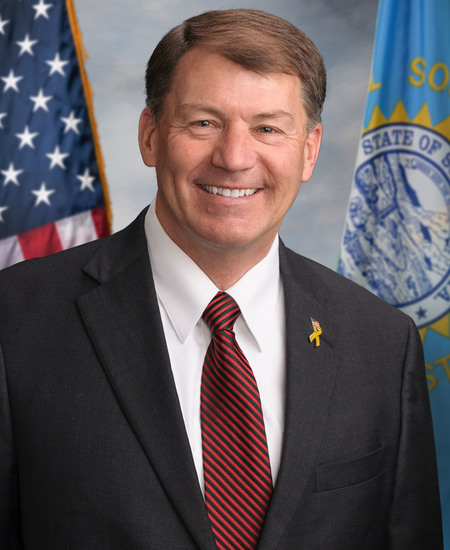
Sen. Mike Rounds
Sponsored bills
Maddy summaryS 157, the CONTAINER Act, allows border states (adjacent to the U.S. northern or southern border) to place movable, temporary structures on federal land for border security without needing a special use permit from federal agencies. The bill requires border states to provide 45 days' notice to the relevant federal agency (like the Bureau of Land Management or Forest Service) before placing such structures, which can remain for up to one year and be extended in 90-day increments if U.S. Customs and Border Protection determines operational control has not been achieved. This directly affects border states managing border security and federal land management agencies overseeing borderlands. The law streamlines the process for temporary border barriers by removing a permitting requirement, focusing on rapid deployment rather than permanent infrastructure.
Maddy summaryThe Student Empowerment Act (S 152) expands the use of 529 education savings accounts to cover more K-12 school expenses for students in public, private, religious, or homeschool settings. It allows funds to pay for tuition, curriculum materials, books, online resources, licensed tutoring (with teacher credentials), standardized tests, dual enrollment fees, and licensed educational therapies for students with disabilities. The bill directly affects families using 529 accounts who educate children in elementary or secondary school, including homeschoolers. It changes existing tax rules to include these specific K-12 expenses under 529 account distributions, effective after the bill's enactment. The policy change aims to provide greater flexibility for families managing educational costs at the K-12 level.
Maddy summaryThis bill requires U.S. border officials to implement the Migrant Protection Protocols (MPP), also known as "Remain in Mexico," for all eligible asylum seekers at the southern border. It changes the law to make MPP mandatory (replacing "may" with "shall" in immigration law), directly affecting migrants seeking asylum and border enforcement personnel. The key provision is a simple legal amendment ensuring MPP is applied without discretion, rather than allowing officials to choose whether to use it. This would require migrants to wait in Mexico while their U.S. asylum cases are processed, rather than being permitted to remain in the U.S. during the review. The bill does not alter asylum eligibility criteria or create new procedures.
Safeguard American Voter Eligibility Act or the SAVE Act This bill requires individuals to provide documentary proof of U.S. citizenship when registering to vote in federal elections. Specifically, the bill prohibits states from accepting and processing an application to register to vote in a federal election unless the applicant presents documentary proof of U.S. citizenship. The bill specifies what documents are considered acceptable proof of U.S. citizenship, such as identification that complies with the REAL ID Act of 2005 that indicates U.S. citizenship. Further, the bill (1) prohibits states from registering an individual to vote in a federal election unless, at the time the individual applies to register to vote, the individual provides documentary proof of U.S. citizenship; and (2) requires states to establish an alternative process under which an applicant may submit other evidence to demonstrate U.S. citizenship. Each state must take affirmative steps on an ongoing basis to ensure that only U.S. citizens are registered to vote, which shall include establishing a program to identify individuals who are not U.S. citizens using information supplied by certain sources. Additionally, states must remove noncitizens from their official lists of eligible voters. The bill allows for a private right of action against an election official who registers an applicant to vote in a federal election who fails to present documentary proof of U.S. citizenship. The bill establishes criminal penalties for certain offenses, including registering an applicant to vote in a federal election who fails to present documentary proof of U.S. citizenship.
Maddy summaryThe Whole-Home Repairs Act of 2025 establishes a federal pilot program to fund repairs that improve accessibility, safety, and energy efficiency in homes owned by low-income individuals or rented as affordable housing. It directly affects eligible homeowners (with income at or below 80% of area median income who occupy their primary residence) and eligible landlords (small-scale owners of affordable rental properties with specific income and ownership criteria). The program provides grants to homeowners and forgivable loans to landlords for repairs covering accessibility modifications, habitability fixes, and energy efficiency upgrades, with landlords required to maintain affordability for three years and cap rent increases. Administered by local or state entities using up to $25 million in existing HUD funds, the pilot runs until 2030 and mandates coordination with other housing programs to avoid duplication.
Maddy summaryThis bill authorizes Congress to award a single Congressional Gold Medal to wildland firefighters collectively, recognizing their service in protecting forests, grasslands, and communities. It directs the Secretary of the Treasury to strike the medal with input from the National Interagency Fire Center, with the medal to be displayed at that center for public access and research. The bill also permits the sale of bronze duplicates at cost to cover production expenses, but does not create new benefits or policy changes for firefighters. The medal honors all federal, state, local, and contract wildland firefighters who serve in high-risk conditions, including those who have died or been injured in service.
Maddy summaryThis bill requires the President to designate Ansarallah (the Houthi movement in Yemen) as a foreign terrorist organization within 30 days, imposing sanctions on the group and its officials or affiliates. It mandates a 180-day strategy to restore Red Sea navigation and degrade Ansarallah's military capabilities, including targeting their command structure and support networks. The bill also requires a report on humanitarian aid obstacles in Yemen under Ansarallah's control, detailing bureaucratic barriers, interference with aid delivery, and threats to aid workers. The provisions directly affect Ansarallah, its leadership (including key figures like Abdul Malik al-Houthi), and U.S. efforts to support humanitarian access in Yemen.
Chiropractic Medicare Coverage Modernization Act of 2025 This bill expands Medicare coverage of chiropractic services to include all services provided by chiropractors, rather than only subluxation corrections through manual manipulation of the spine.
Maddy summaryS 94, the "Miracle on Ice Congressional Gold Medal Act," authorizes three congressional gold medals for the 1980 U.S. Olympic Men's Ice Hockey Team members. The bill directs the Secretary of the Treasury to strike the medals, with one medal displayed at each of three locations: the Lake Placid Olympic Center, the U.S. Hockey Hall of Fame Museum in Minnesota, and the U.S. Olympic & Paralympic Museum in Colorado Springs. The legislation also permits the sale of bronze duplicates to cover costs, with proceeds going to the U.S. Mint. This is a commemorative measure recognizing the team's 1980 Olympic victory, not a policy change affecting current legislation or constituents.