This bill designates the facility of the United States Postal Service located at 4650 East Rosedale Street in Fort Worth, Texas, as the "Dionne Phillips Bagsby Post Office Building".
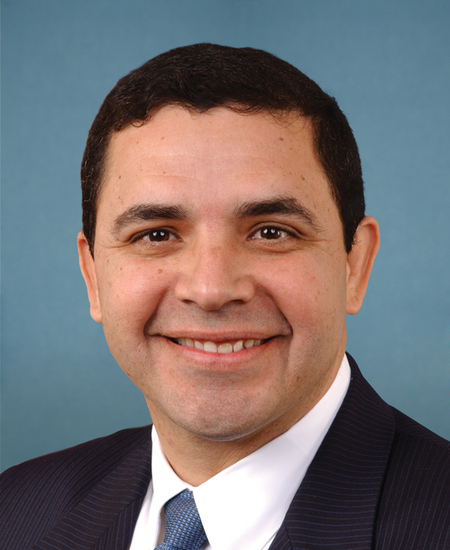
Rep. Henry Cuellar
Sponsored bills
This bill designates the facility of the United States Postal Service located at 4450 Oak Park Lane in Fort Worth, Texas, as the "United States Representative Kay Granger Post Office Building".
Maddy summaryThe Ratepayer Bill of Rights Act of 2026 requires large data centers to disclose their electricity and water usage while ensuring they pay for all infrastructure costs without shifting expenses to households, farms, or small businesses. The bill establishes ten specific rights for ratepayers, including protections against cost-shifting, guarantees of reliable water and power during emergencies, and requirements for independent assessments before new facilities are approved. It mandates that data centers post financial security and sign binding agreements to cover project-driven costs, with refunds required if any improper charges are passed on to the public. Enforcement is shared between federal agencies like the Federal Energy Regulatory Commission and the Environmental Protection Agency, while state and local governments retain authority over utility rates and land use.
Maddy summaryThis House resolution formally honors the life and legacy of the late Representative Kay Granger from Texas, recognizing her historic achievements in public service. The bill highlights her roles as the first woman elected mayor of Fort Worth, the first Republican woman to represent Texas in the U.S. House, and the first Republican woman to chair the House Committee on Appropriations. It also acknowledges her contributions to national defense, including her work on the F-35 fighter jet program and the naming of a Navy ship for Fort Worth. The resolution expresses sympathy to Granger's family and directs the Clerk of the House to send an official copy of the document to her loved ones.
Maddy summaryThis resolution expresses the sense of the House of Representatives that Charleston, South Carolina, should proceed with hosting the 2027 annual meeting of the Organization for Security and Cooperation in Europe Parliamentary Assembly. The bill cites Charleston's existing facilities as suitable for the event and notes that hosting the convention in South Carolina honors the legacy of late Senator Lindsey Olin Graham. It also highlights that the United States has not hosted this specific assembly since 2005. The measure does not change any laws or allocate funding but serves as a formal statement of support for the planned event.
Maddy summaryThis bill, known as the Deputy Darren Almendarez Act, adds a new federal crime for knowingly possessing or purchasing catalytic converters removed from vehicles with the intent to sell or distribute them. It directly affects individuals involved in the removal and resale of these parts, as well as businesses like scrap yards and repair shops, by establishing penalties of up to five years in prison and fines of $100,000 for first offenses. The law includes specific exceptions that allow for legal possession or purchase if the converter was removed by a vehicle owner, acquired during official duties by authorized entities, or bought from licensed businesses that follow state and local identification rules. For repeat offenders, the potential prison sentence increases to ten years and the fine limit rises to $200,000.
Maddy summaryThe Protecting Home-Based Care for Rural Veterans Act of 2026 aims to safeguard funding for home health services provided to veterans living in rural areas. It requires the Department of Veterans Affairs to restore any reimbursement rates for homemaker and home health aide services that were lowered after December 31, 2025, and prevents future rate cuts without notifying Congress at least 90 days in advance. Additionally, the bill mandates annual reports to Congress detailing the availability of service providers in different regions and the methods used to calculate payment rates. A one-time report must also be submitted within 90 days of the law's enactment to explain how these rates were determined and whether input was gathered from service providers.
Maddy summaryHR 6529, the Protecting Families from AI Data Center Energy Costs Act, mandates the Federal Energy Regulatory Commission (FERC) to hold a technical conference within 90 days of enactment. The conference will include AI data centers, utilities, and ratepayer advocates to develop strategies protecting residential and small commercial customers from rising energy costs caused by large energy users. FERC must then submit a report with recommendations to Congress within 180 days. This procedural bill directly affects households and small businesses facing potential rate increases due to AI data center energy demands.
Maddy summaryHR 7184, the PRESS Act, targets equipment used to manufacture illegal drugs by making it unlawful to sell specific items like tableting machines, gelatin capsules, or related chemicals when the seller knows the equipment will be used to produce controlled substances for unlawful U.S. importation. It directly affects manufacturers and distributors of these drug-making tools who have knowledge or reasonable cause to believe their products will facilitate illegal drug trafficking. The bill adds new prohibitions to the Controlled Substances Act and increases potential prison sentences for violations, with penalties reaching up to 20 years for major offenses involving large quantities of equipment or chemicals. These changes aim to disrupt the supply chain for illicit synthetic drugs by holding equipment sellers accountable for their intended use.
Maddy summaryThis bill requires Medicare Advantage plans to implement electronic pre-approval systems for medical services by 2028 and meet transparency reporting standards starting in 2027. Plans must publicly report data on approval/denial rates, appeal outcomes, response times, and technology use for pre-approval requests, including details on how denials relate to clinical criteria. It establishes a 24-hour response timeframe for certain requests and mandates annual reviews of pre-approval requirements based on data and input from seniors and providers. The law directly affects Medicare Advantage plans, seniors enrolled in these plans, and healthcare providers who submit pre-approval requests. These changes aim to make the pre-approval process faster, more transparent, and more accountable for seniors seeking covered medical services.